
Exploring the gender of Oscar fish and how to know their differences and satisfy their specific maintenance needs.
Content Table
Oscar fish (Astronotus ocellatus) are among the most popular and charismatic aquarium cichlids. Their intelligence, personality, and bold appearance make them fascinating pets. However, determining the sex (male or female) of an Oscar is notoriously challenging. This article will walk you through what is known (and what remains uncertain) about Oscar fish aquarium, how to determine Oscar fish gender, how to check them before bringing them home, how to care for them in a tank, filtration considerations, and more.

Oscar fish aquarium
Identify Male Female Oscar Fish Gender
Monomorphic nature and the challenge
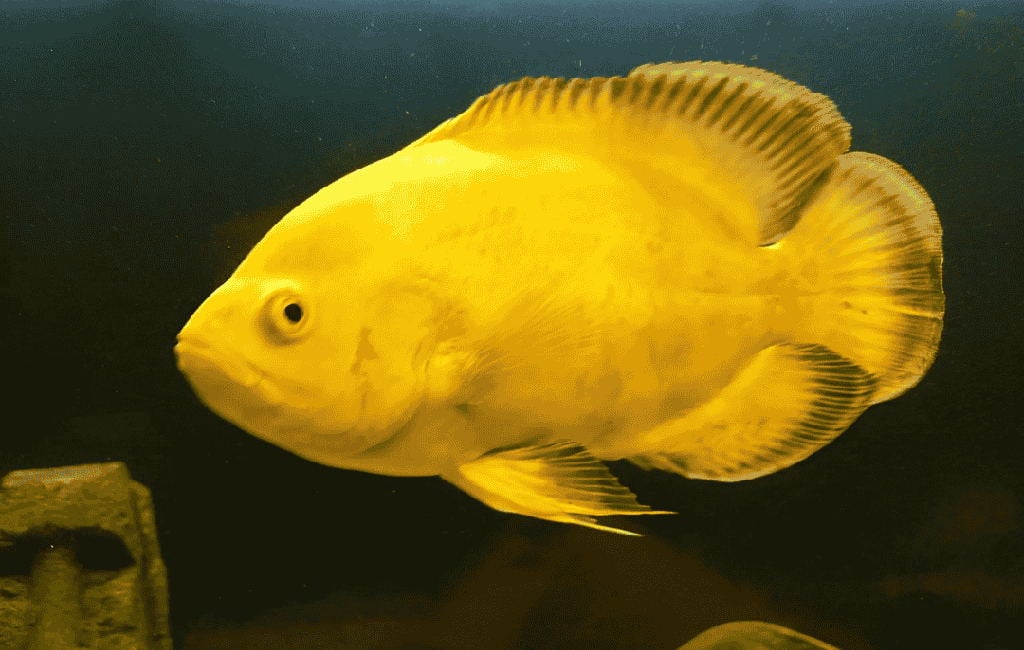
Oscars are considered monomorphic—meaning that males and females look extremely similar externally, with no obvious, reliable visual markers in many cases. Many fish keepers mention that without venting (examining the genital area), it is virtually impossible to be sure of the sex.
That said, there are certain subtle clues and behavioral traits that experienced breeders sometimes use to guess, though none are definitive on their own.
Methods and clues people use
Venting / genital examination
This is considered the most reliable method. To vent, gently net the fish, hold it carefully (often upside down or slightly tilted), and examine the two openings near its anus. In mature specimens:
- Males typically have a smaller, protruding, and pointed genital papilla (sometimes referred to as the “spawning tube”).
- Females often show a blunter, wider, downward-pointing papilla, and sometimes one hole appears larger. This method works only when the fish is sexually mature (usually over 12–15 months, or when they reach a certain size).
Breeding behavior/egg laying
If you witness breeding or egg deposition, you will see which fish is laying eggs vs which is fertilizing them. That directly indicates female vs male. However, Oscar breeding is not trivial in many tanks.
Subtle morphological or coloration hints (less reliable)
Some hobbyist observations:
- Males might develop longer or more pointed dorsal/anal fins that slightly overlap the caudal (tail) fin.
- Some report brighter coloration or more pronounced spots in males (e.g., red spots, darker dorsal marks).
- Body shape: males might be slightly more elongated, while females are slightly rounder or fuller in the belly area (especially when carrying eggs).
But again, these are all circumstantial and inconsistent. Many experienced breeders caution against relying solely on them.
Size and aggression
Some say males tend to be more aggressive, more territorial, or show more flaring behavior (for example, when seeing their reflection or during social interactions). But aggression is not a reliable sex marker because personality, environment, dominance, and tank dynamics also affect behavior.
Given all that, the only reliable method is via venting or direct observation of breeding. Many consider guesses based on external traits speculative.
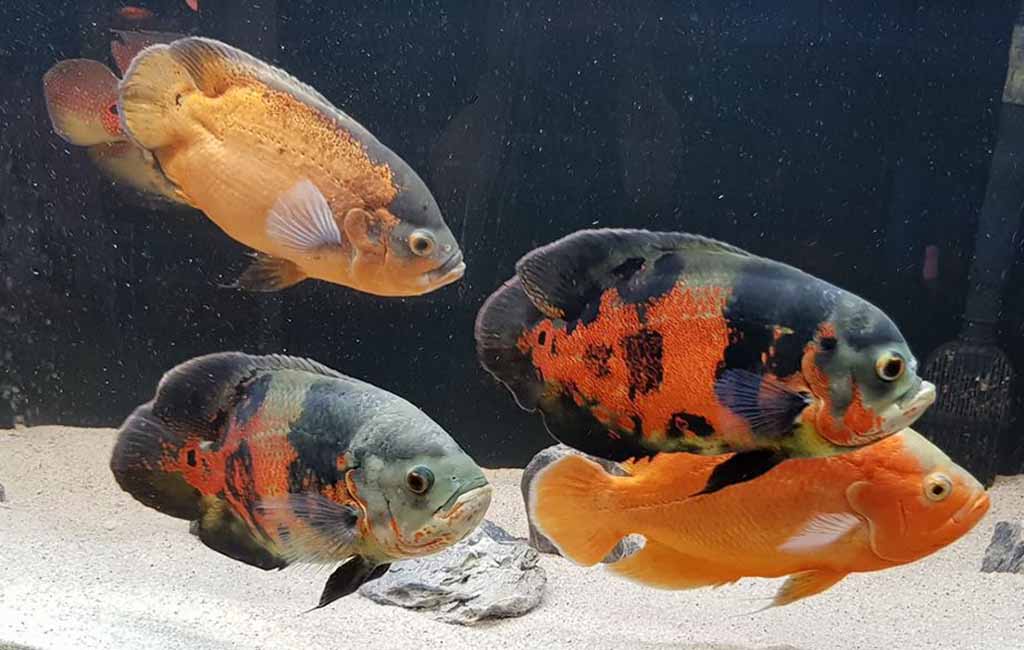
Oscar fish gender
Guide: How to Identify the Gender of Oscar Fish Before Bringing Them Home
Because sexing Oscars is hard, doing so before purchase is tricky—but there are tips you can follow to improve your chances:
- Buy from a breeder or reputable seller who has already sexed or paired Oscars. Ask for records or signs of breeding.
- Choose older or larger specimens. Juveniles are essentially impossible to sex reliably, since their vent areas and body differences are not developed.
- Observe behavior in the store tank. If fish show pairing behavior, territorial display, or chasing/flaring, that might hint at compatibility, though not reliably at sex.
- Request venting demonstration (if seller permits). Some sellers experienced with Oscar breeding will vent in front of you.
- Look for brood stock tanks. If a seller keeps a breeding colony or has visible eggs, you might have more assurance of the sexes.
- Compare multiple fish side by side. In a group, subtle differences might stand out more. But beware—differences can be small.
Whenever possible, plan for flexibility: buy multiple juveniles and allow sexing to become clear over time, or accept that sex may remain uncertain until breeding.
Difference Between Male / Female Oscar Fish
This section restates and clarifies what is known, with more emphasis on implications rather than mere traits.
- External appearance: Very minor differences only, and often inconsistent.
- Genital papilla/venting: The most reliable difference in mature fish.
- Behavioral differences: Males may show more aggression or dominance; females might focus more on nesting or brooding behavior during breeding times.
- Breeding roles: Female lays eggs, male fertilizes. This is only helpful if reproduction actually occurs.
- Physiological differences: Only internal reproductive organs differ—these are not visible externally without invasive techniques or surgery, widely impractical for hobbyists.
To sum: appearance-based sexing is uncertain, and venting/breeding observation remains the best tool.

How to determine Oscar fish gender
Oscar Fish Maintenance
Caring for Oscars properly is crucial if you want healthy, long lives and good breeding conditions. They are large, messy, and demanding, but with good setup and routine care, they thrive.
Here’s what you need to focus on:
Tank size and space
- Oscars grow large (12–14 inches or more).
- A single adult Oscar needs at least ~55 gallons; for two, 75–100 gallons or more is recommended.
- Provide plenty of free swimming space and hiding zones; Oscars often rearrange decor.
Water quality & chemistry
- Frequent water changes: 25–30% weekly or more in heavily stocked tanks.
- Monitor ammonia, nitrite (should be zero), nitrate (<20–40 ppm).
- pH target ~6.5 to 7.5; temperature 75–80°F (23–27 °C).
- Oscars are susceptible to Hole-In-The-Head disease(HLLE) when water quality is poor.
Diet & feeding
- Carnivorous: pellet diet, and meaty foods (e.g, frozen shrimp, worms).
- Avoid feeding only live fish to reduce disease risk.
- Feed two to three times daily in small portions to avoid overfeeding and water pollution.
Tank decor & substrate
- Firm rock, driftwood; avoid fragile plants (Oscars dig).
- Use an open substrate where you can vacuum leftovers easily.
Filtration and aeration
- Powerful filtration is essential—Oscars produce a lot of waste.
- Aeration or circulation helps maintain oxygen levels and prevent stagnation.
Tank mates and compatibility
- Choose robust, similarly sized fish (e.g., Silver Dollars, large plecos, other large cichlids) that won’t be eaten or overly harassed.
- Avoid small or delicate species that Oscars may view as prey.
Health monitoring
- Watch for signs of disease: white spots, lesions, loss of appetite, abnormal swimming, HLLE.
- Maintain stable water chemistry and cleanliness to prevent stress-induced illnesses.

Oscar fish maintenance
What Maintenance Do Oscar Fish Need in a Fish Tank?
Let’s break down a realistic maintenance schedule and tasks:
Weekly
- 25–30% water change
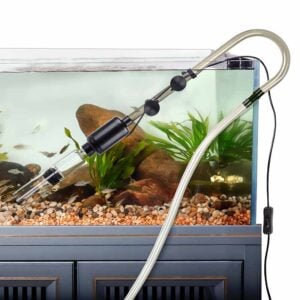
- Gravel vacuuming of the substrate
- Clean or rinse filter media(without destroying beneficial bacteria)
- Test water parameters (ammonia, nitrite, nitrate, pH, temperature)
Monthly / Bi-Monthly
- Inspect and clean filter hardware (hoses, impellers, tubes)
- Check seals, lids, and glass for leaks or buildup
- Remove algae from walls and decor
- Replace part of the filter media (never all at once)
As needed
- Trim or relocate decor if broken or moved
- Treat illness early if symptoms appear
- Re-prime pumps or filters
- Top up water for evaporation (use dechlorinated water)
Annual / Occasional
- Deep clean of entire setup (move fish if necessary)
- Inspect equipment (heaters, lights, filters) for wear
- Replace parts or upgrade filtration if fish load increases
Consistency is key—Oscars tolerate little neglect. Good water management directly correlates with health and lifespan.
Set up the Best Filter for Oscar Fish
Because Oscars produce a lot of waste, filtration is probably the most crucial factor in a successful setup. The filter must be powerful, efficient, and reliable.
What to look for in a filter
- High flow rate/turnover: At least 5–10× the tank volume per hour.
- Mechanical, biological, and chemical filtration: Sponge, bio-media, chemical media.
- Redundancy: Extra capacity or backup systems to handle emergencies.
- Quiet operation: Strong but not overly noisy—Oscars dislike stress.
- Ease of maintenance: Easy access, cleanable parts.
- Stability under load: It should handle heavy bioload without clogging instantly.
Best Filter for Oscar Fish
Example filter: A hygger option
One suitable option is the hygger Aquarium Double Sponge Filter. This dual sponge filter design emphasizes mechanical and biological filtration. While sponge filters typically suit lower bioload setups, a robust sponge filter can serve as a supplemental (not sole) filtration stage for Oscars.
In a large Oscar tank, you would use sponge filtration in tandem with a more powerful external filter (canister, sump, or hang-on-back) to provide redundancy and extra biological capacity.
Choosing the best filter for an Oscar tank
For most Oscar setups, a combination is ideal:
Primary Filter
- A high-capacity canister filter or sump system that handles large volumes.
- It covers mechanical, biological, and chemical filtration all in one.
- Must have good flow, strong pump, and durable design.
Secondary / Support Filter
- Sponge filter, like the hygger double sponge filter, acts as a buffer and maintains the bacteria culture if the main filter is cleaned or fails.
- Internal powerheads or circulation pumps to keep water moving, reduce dead zones, and increase oxygenation.
Backup & Overcapacity
- Oversize your filtration so that it runs under capacity rather than at max.
- Use external filtration accessories (e.g., pre-filters, media reactors) to extend longevity.
When setting up an Oscar tank, the best filter is the one that handles your tank size plus a margin for waste, ensures redundancy, is serviceable, and works quietly. The double sponge filter is a good choice for support/buffer capacity, though not sufficient alone in a heavily stocked Oscar tank.
Concluding Remarks
Sexing Oscar fish is one of the more frustrating challenges for aquarium enthusiasts. Because they are monomorphic, most external traits are unreliable. The venting method (examining the genital papilla) is the best home method, especially when the fish are sexually mature. Observing breeding behavior provides definitive proof, but that takes time and ideal conditions.
Meanwhile, caring for Oscars properly demands a robust, well-planned tank. Provide a large volume of water, excellent filtration, stable chemistry, high-quality diet, and consistent maintenance. Use a filtration setup that combines a powerful primary filter with supportive sponge media (such as a double sponge filter) to cope with the bioload.
If your goal is breeding, ensure both sexes are mature, provide proper conditions, and be patient. Even then, pairing may fail or take time.
I hope this article helps you understand how to approach identifying Oscar’s gender and how to care for them to ensure they thrive. Would you like me to distill this into a guide or printable checklist for quick reference?
Related Products



Leave a comment