
Honey gourami is a beautiful freshwater fish that boasts a caring and lovely temperament with a nice color. Aquarists prefer the species due to its beautiful appearance as well as its peaceful nature in a community tank. It glows with shiny golden colors, which most of the time are accompanied by gentle fin movements. This makes it a favorite of fish lovers on first use.
Content Table
The honey gourami is non-aggressive and hence suitable for both new and advanced fish keepers, unlike most colorful fish, which are sometimes aggressive. This guide will look at where they live, how long they live, what they eat, honey gourami size-how big they may get, and the tank mates that they can co-exist with. You will also learn to appreciate why the honey gourami is one of the most rewarding species to maintain.
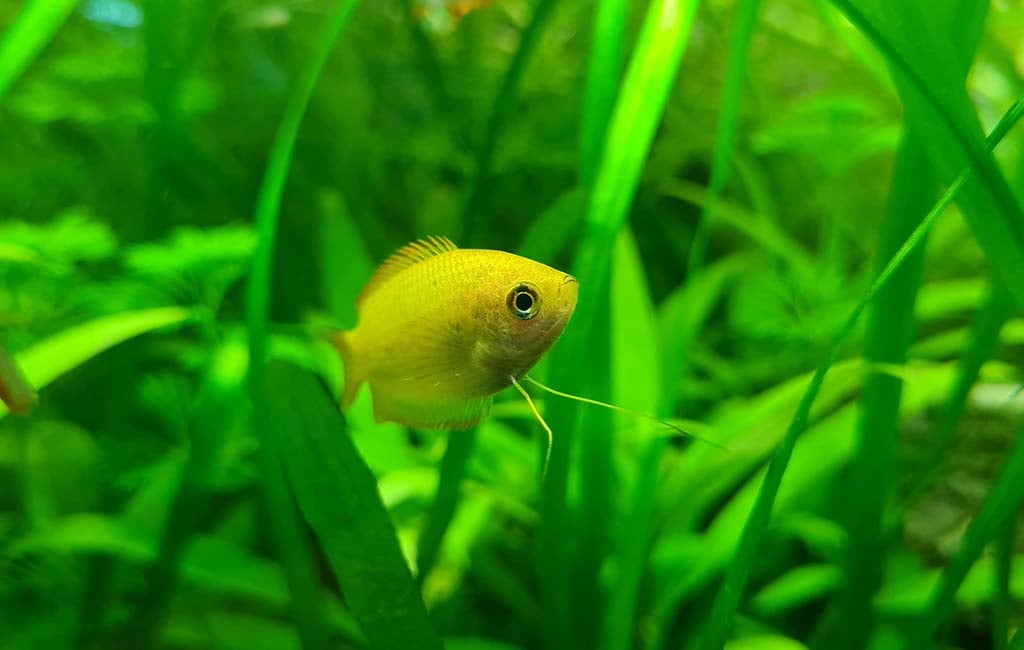
honey gourami
Brightly Colored Honey Gourami Habitat
The honey gourami, or its scientific name Trichogaster chuna, is of the Osphronemidae family with other gouramis and bettas. They are native to the slow-moving and shallow waters of India, Bangladesh, and Nepal.
These areas are characterized by tranquil rivers, ponds, and lakes that have vegetation cover, which provides shelter and breeding grounds. They have a natural habitat in the wild, where there are many places to hide, such as roots and leaves that grow underwater.
Such environments have water that is generally warm, soft, and low in acidity, which favors their survival. Their flashy coloration enables them to camouflage among plants and, at the same time, attract potential mates to be in a mating state. In-home tanks, these are all the conditions necessary to replicate and consequently maintain thriving honey gourami. They can be made to feel safe and comfortable by adding live plants and the presence of slow water movements, as well as soft lights.
Peaceful Honey Gourami Lifespan
The honey gourami is quite a sturdy species, but much of its lifespan would be determined by care. Under captive conditions, they can be expected to survive 4 to 8 years, given ideal conditions. Their longevity is also facilitated by good quality of water, a balanced diet, and a non-stressful environment.
As opposed to other short-lived tropical fish, honey gouramis can give years of sitting down together. Their lifespan can drop significantly due to poor maintenance of water, poor diet, and incompatible live mates in the tank.
They are also less prone to getting stressed out due to their more relaxed personalities than other species that tend to be aggressive, which results in them living longer. Tank parameters should be checked regularly, and they should not be overcrowded. Also, a proper diet should be offered to keep them healthy for many years. They are also easy to keep with a regular care regime and could become a permanent favorite among aquarium environments.
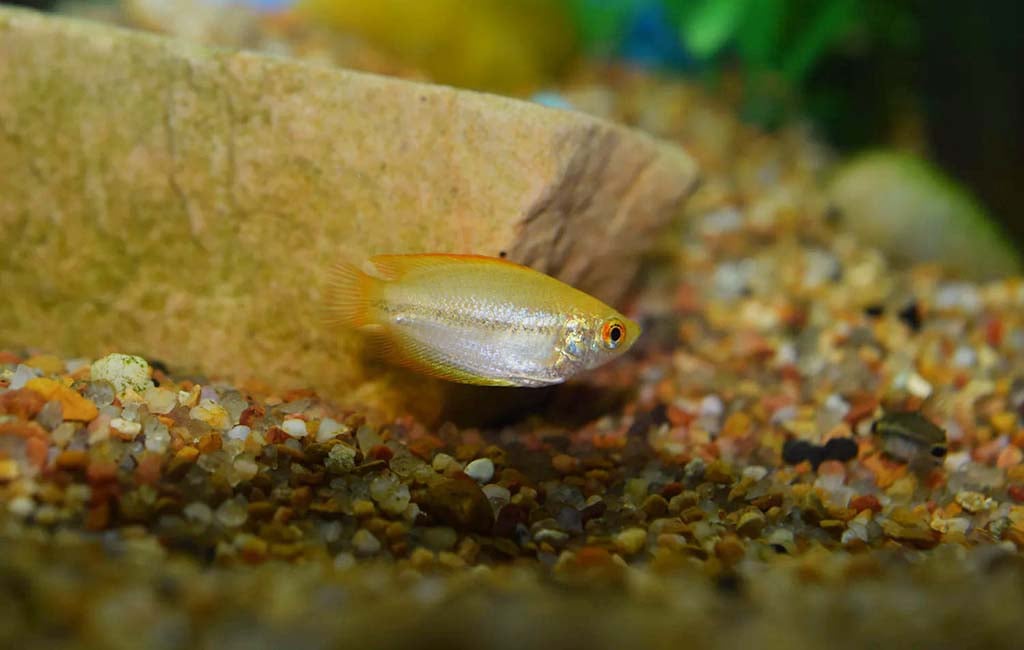
honey gourami lifespan
The Nutrition Honey Gourami Needs
Honey gouramis are omnivores, which means that they require plant and animal fare. Being in their natural habitat, they eat small insects, insect larvae, algae, etc.
When in captivity, they flourish under a mix of high-quality flake, little pellets, along live or frozen foods, such as brine shrimp, bloodworms, and daphnia. Several times a week, live or frozen foods, upon offering, can help make their coloration look better and keep them active.
They even get an introduction to a blanched vegetable now and then, like zucchini or spinach, to aid digestion. Overfeeding ought to be discouraged since it causes obesity and water contamination. The best way of feeding them is in small quantities twice or thrice a day.
Via balanced dietary nutrition, it is imperative that your honey gourami will be healthy, vibrant, and charged with energy.
How Big Do Honey Gouramis Get
Honey gouramis are not particularly large freshwater fish, and this fact qualifies them for being grown in smaller-sized aquariums. They grow in size slowly as they advance through various growth stages, with the environment and diet being a major contributor.
They generally grow to 1.5 to 2 inches in size in a well-cared-for aquarium; however, others can be a bit larger with the very best environment. Even though they can comfortably reside in smaller tanks because of their tiny size, they nevertheless need spacious swimming spaces and shelters to remain active and stress-free.
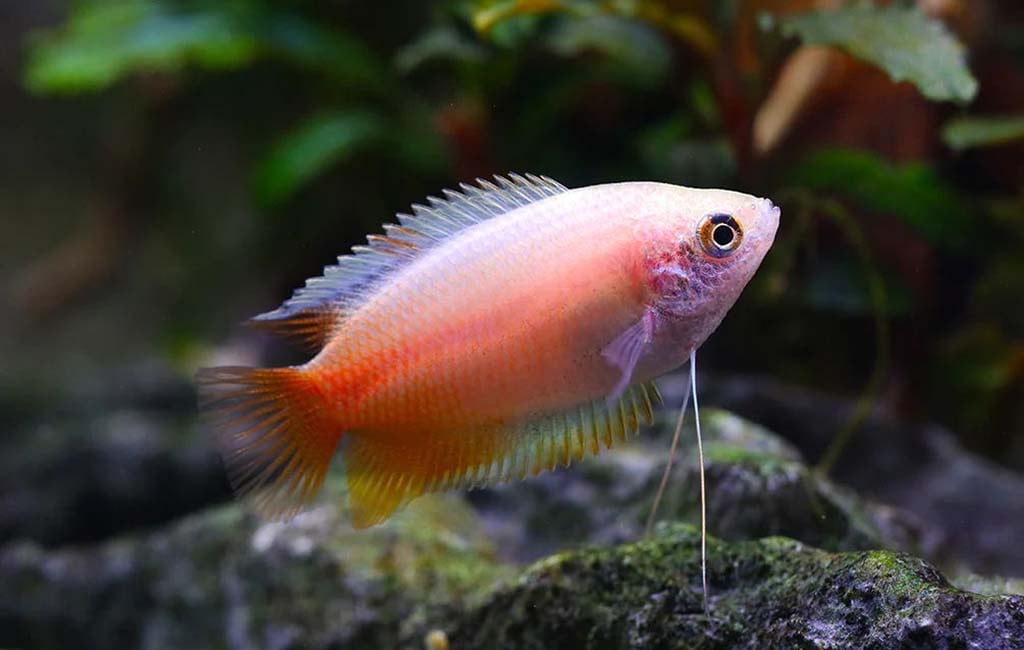
honey gourami size
Honey Gourami Size and Growth Stages
1. Juvenile Stage
Honey gouramis are about 0.5 to 1 inch in length when they have been initially introduced to the tank as juveniles. In their stage, they have not developed their color and body shape. Healthy growth is provided by giving high-quality food and stable water conditions.
2. Sub-Adult Stage
At around a couple of months of age, the honey gouramis tend to grow to a size of around 1.2 to 1.5 inches or so. They turn more distinct in colors, males being darker and females a little rounder.
3. Adult Stage
Adults grow to a size of 1.5 to 2 inches. Males could be thinner yet more colored than their female counterparts are more rounded. The same small and still elegant size fits the concept of a quiet community aquarium.
Honey Gourami Tank Mates
Honey gouramis are calm community fish that do well when maintained with other docile fish. They are relaxed in their nature and thus can coexist in a properly designed aquarium with species similar to them. Proper selection of the tankmates will ensure that the environment provided to the honey gourami is free of stress to enable its beautiful colors and smooth mannerisms to depict its true nature.
1. Neon Tetras
Neon tetras are tiny, colored schooling fish that have almost the same preference of water with honey gouramis. They have a peaceful temperament and can be a perfect choice in achieving an impressive, peaceful aquarium setup.
2. Harlequin Rasboras
Harlequin rasboras are very active, though non-aggressive, fish that provide motion and aesthetics to the tank. They love the same warm and soft water that is popular in honey gouramis.
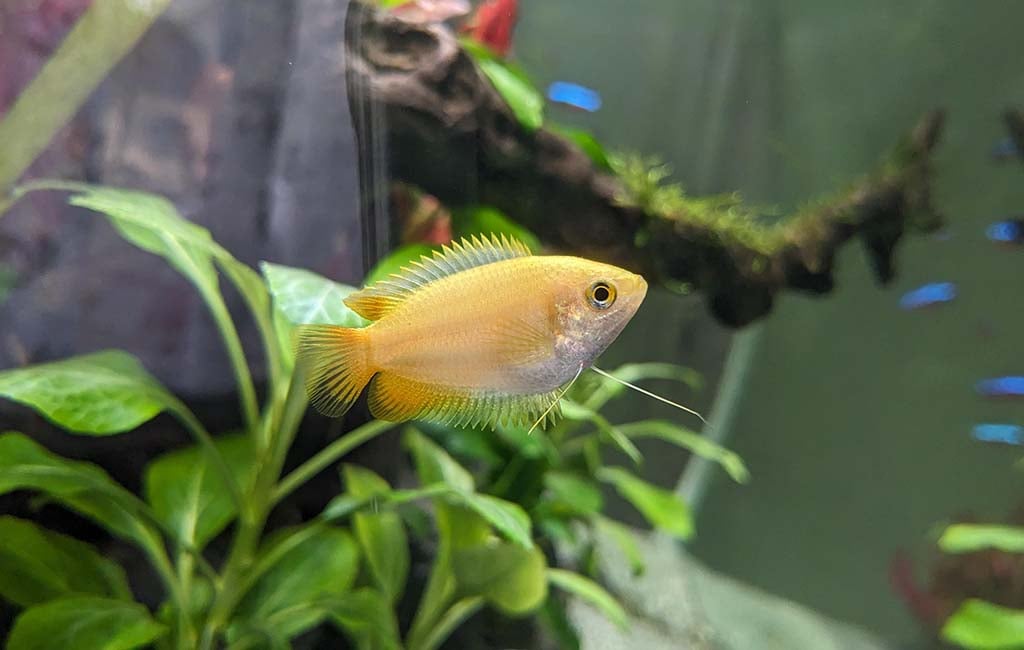
Honey Gourami Tank Mates
3. Ember Tetras
Embers have an eye-catching orange-red color and thus blend perfectly with the gold color of honey gouramis. They are non-aggressive and love to swim in large numbers, making colorful sights.
4. Corydoras Catfish
They can be good bottom feeders with small corydoras catfish that will not harass the honey gouramis. They can keep the tank clean because they scavenge on the leftover food in the tank without disturbing the other fish.
5. Peaceful Shrimp and Snails
Honey gouramis may be kept with cherry shrimp, Amano shrimp, and the nerite snails as a way to improve biodiversity. These invertebrates help in controlling algae and cleaning the tanks.
The Bottom Part
Honey gourami is a bright-colored, docile fish that can make any aquarium in freshwater aquarium look especially good. They possess golden coloration, a peaceful nature, and are not too demanding on their care, thus ideal for both novice and experienced aquarists.
With a little care in recreating their natural habitat, through balanced nutrition, and selecting appropriate tank mates, they can serve you for many years.
Having been attracted by the beauty, mellow nature, and readiness to cohabit with other fish in community tanks, honey gouramis do not disappoint in any way.
They not only bring an attractive and peaceful touch to whatever aquatic world they come into. Properly cared for, they will repay you with their elegant motions and delicate hues and will be a favorite in your home aquarium.
Related Products




Leave a comment