
Warm aquarium lights are among the best lights for a beginner and a low-tech tank. Plants and fish behave naturally in the presence of warm LED lights. As a beginner, you can also enjoy many other benefits. Moreover, optimal lumenance and suitable low-tech plants are also part of this article. Scroll down before starting with warm lighting.
Content Table
Aquarium Warmer Lighting
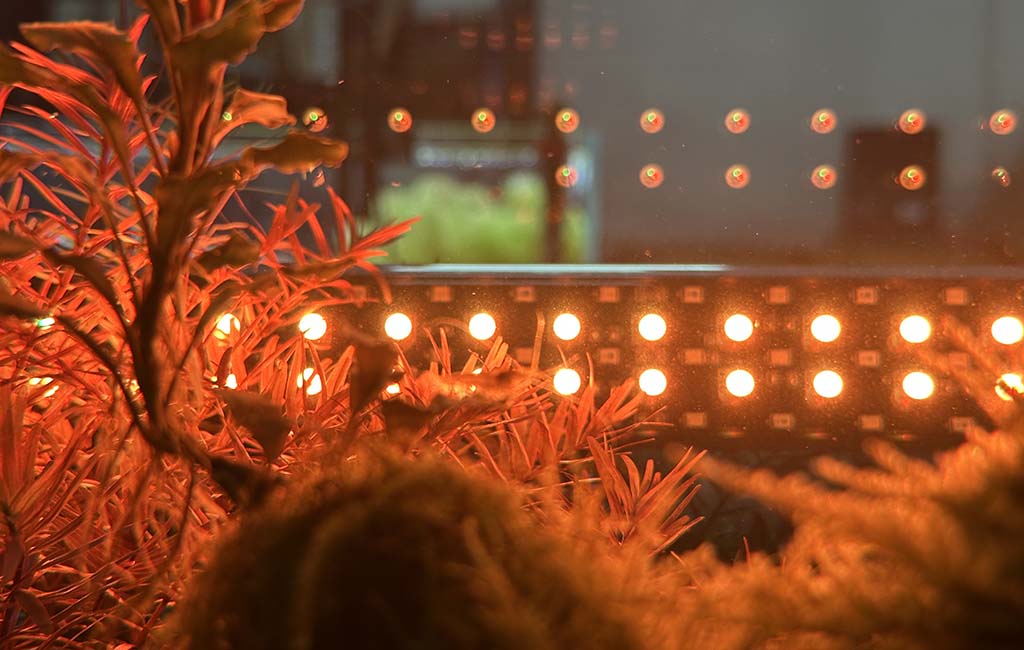
Warm aquarium lights range from 2500K to 4500K. Warm LED lights are usually rated as low kelvin. A soft glow usually characterizes these lights. They lit up just like a traditional incandescent bulb, or more specifically, like dawn and dusk. It colors like yellow, orange, reddish, etc.
What is Kelvin (K)?
Kelvin (K) is a unit to measure the warmth or coolness of light.
Here is a table for the warmth and coolness of a light.
| Lighting Type | Kelvin Range (K) | Appearance |
| Warm Aquarium Lighting | 3000 to 5000 | Golden, sunset-like, natural |
| Neutral Daylight | 5500 to 6500 | Bright white |
| Cool Aquarium Lighting | 6500 | Bluish, crisp, clinical |
The Benefits of Aquarium Warm Light
Warm aquarium light serves several benefits in a tank. Here are some of the aesthetic and biological benefits.
Color Enhancement
Warm lights enhance the fish’s color in the tank. It specifically intensifies the orange, red, and golden colors in plants and fish. If you have the following fish species and plants, you can enjoy their optimized vibrant coloration.
Fish
- Discus
- Bettas
- Goldfish
- Yellow cichlids
- Red and orange tetras
- Livebearers
Plants
- Ludwigia sp.
- Rotala rotundifolia
- Alternanthera reineckii ‘Mini’
- Ammannia gracilis
- Red Root Floater
Relaxing Environment
These lights create a relaxing, comfortable, and inviting atmosphere in the tank, just like the dawn and dusk. They don’t feel heavy on the viewer’s eyes. Moreover, they relieve the stress, encourage the natural fish behavior, etc.
Visual Constrast
If you are using them in a hybrid model with some cool lighting, e.g., white light, they help to add depth to the tank. Moreover, you can use them to create a focal point in the tank by focusing on a specific point.
Plant Photosynthesis
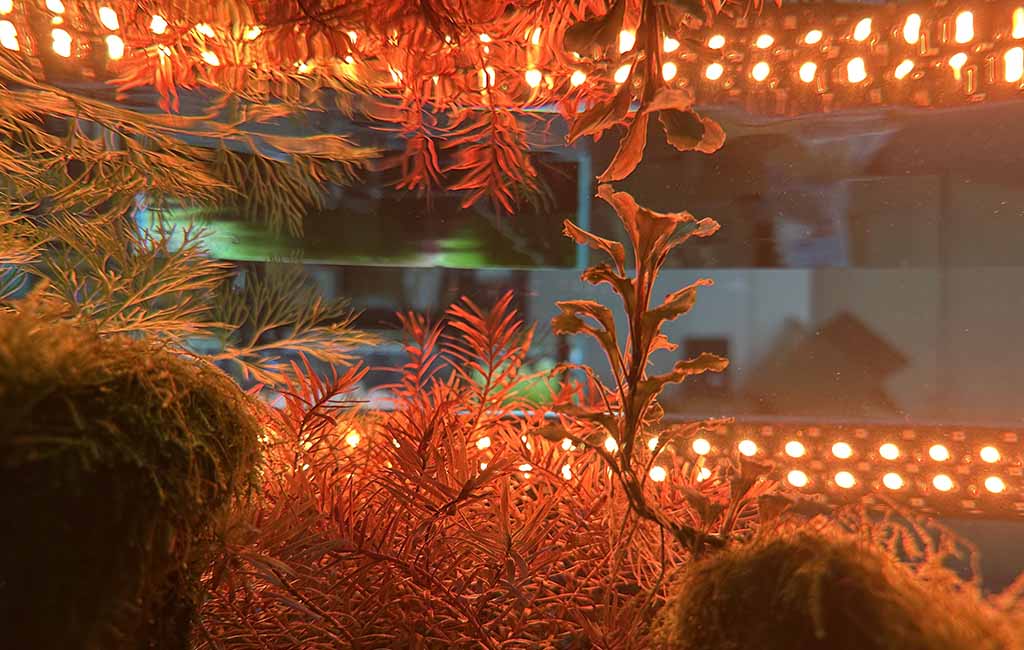
Aquatic plants efficiently absorb the red wavelength in warm light. This red wavelength is important for photosynthesis. As a result, you’ll observe the vibrant plant, i.e., healthy root and stem, in your tank. In particular, they are suitable for low- to medium-light-requiring plants. Moreover, shade-loving plants greatly benefited from these aquarium warm lights.
Natural Behavior Promotion
These cool or warm LED lights have red and blue wavelengths. These wavelengths provide lighting similar to the natural environment. As a result, fish behave and breed like a home in the tank.
Reduce Algae Growth
High-wavelength lights have more energy and cause algae bloom in the tank. In warm lights, the blue wavelength is lower than in other lighting. Therefore, warm light avoids the algae bloom in the tank.
Enough Lumens and Spread of Light for Aquatic Plants
| Plant Type | Lumens (per liter) | PAR at Substrate |
| Low-Light Plants | 20–30 lm/L | 15–30 PAR |
| Medium-Light Plants | 30–40 lm/L | 30–50 PAR |
Low Tech Aquatic Plants for Reference
Here are some low-tech aquatic plants. Consider them as a reference, as these are not super strict examples of low-tech plants.
Java Moss
This is one of the easy-going options for your low-tech planted tank. Attach to the surface, thrive in any lighting condition, and produce lush green carpet. It requires occasional trimming as it grows faster. Offers hiding spots to shrimps and fry. Tie it with driftwood or a rock, and just wait.
| Lumence (lumens/litter) | 10 to 30 |
| PAR (µmol/m²/s) | 10 to 30 |
Amazon Sword
Sword-shaped leaves and 12 to 30 inches tall, the Amazon sword is another option for a low-tech tank. It can bear with low to moderate light and does well as a background plant. If your tank has a nitrate problem, it’ll also help to solve it by uptaking it.
| Lumence (lumens/litter) | 50 to 80 |
| PAR (µmol/m²/s) | 10 to 35 |
Cryptocoryne Species
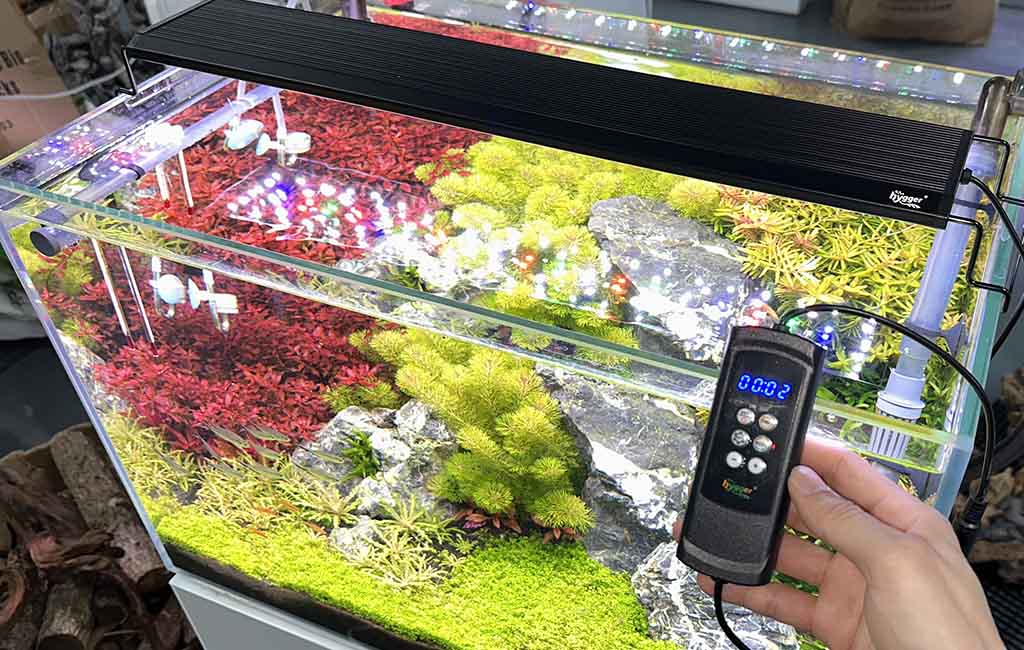
If you want to see green, bronze, and red coloration, go with the cryptocoryne species. It is hardy and can bear various conditions. However, drastic changes can melt it, but it recovers. It grows about 4 to 12 inches and is suitable for front and mid-ground placement.
| Lumence (lumens/litter) | 10 to 40 |
| PAR (µmol/m²/s) | 10 to 50 |
Anubias
Anubias have numerous low-tech tank species. These are among the ideal types as they grow slowly and don’t require frequent trimming. It produces one leaf per month. Attach it to the rock or other hardscape to avoid root rot. Moreover, it’ll survive the fish attack due to its thick leaves.
| Lumence (lumens/litter) | 10 to 20 |
| PAR (µmol/m²/s) | 10 to 30 |
Java Fern
You have varying water conditions and irregular lighting, so go with Java Fern. It is hardy and can grow up to 8 to 13 inches high at a slow rate. Due to its height, it is suitable as a midground plant. Don’t bury the rhizome, as it is prone to rot when buried. However, attach it to the driftwood or rock and enjoy the process.
| Lumence (lumens/litter) | 15 to 30 |
| PAR (µmol/m²/s) | 10 to 30 |
Cool or Warm LEDs for Your Tank
The light selection depends on the type of your aquarium. Here are some suggestions about whether to install cool or warm LEDs in your tank.
Warm LEDs
These lights help in the following.
- It enhances the red, orange, and yellow colors of fish.
- It helps to reduce the algae growth in the tank.
- It helps to create a relaxing environment in the tank.
- It helps to pop up the red, yellow, and orange colors in the tank.
Here are some suitable criteria for warm LEDs.
- Community freshwater tanks
- Blackwater or tannin-stained aquariums
- Low-tech planted aquariums
- Goldfish, betta, gourami, and livebearer tanks
- Bio-tope style streams and marsh habitats
Cool LEDs
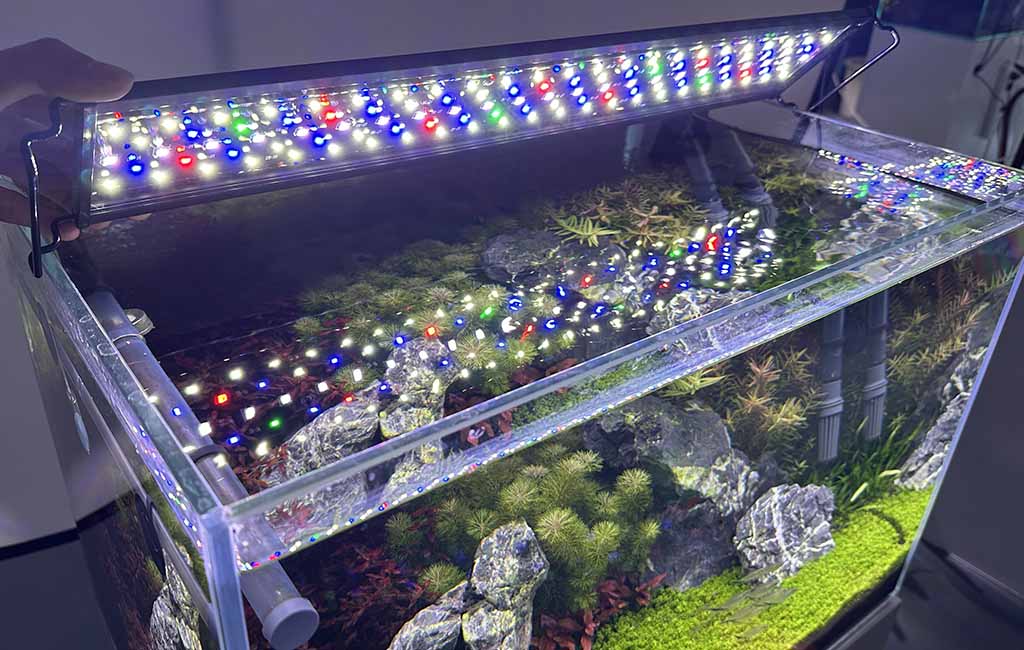
Cool LEDs are suitable for the following types of fish tanks.
- High-tech planted aquariums
- Carpeting plant aquascapes
- CO₂-injected planted tanks
- Reef and marine aquariums
- Blue, silver, and metallic fish displays
Here are the benefits that you’ll get from installing cool LEDs in the tank.
- It encourages fast and dense plant growth in the tank.
- It helps to pop up the blue and iridescent fish coloration in the tank.
- It supports the coral’s photosynthesis.
Lasting Impressions
Warm lights are suitable for creating a natural-looking atmosphere in your tank. Warm lights usually create a dawn or dusk-like calming environment that promotes natural behavior in aquatic pets. If you are going to set up a planted low-tech aquarium, it is also a perfect choice.
Related Products

Leave a comment