
Keeping turtle species in a tank is a unique and fascinating hobby. The selection of suitable turtle species sometimes becomes challenging. This hygger article will help you overcome this challenge. You’ll also learn many other things besides this challenge.
Content Table
Turtle Species in the World
Turtles have been living on Earth for 200 million years. About 356 different turtle, tortoise, and terrapin species are present there. However, about 187 turtle species are on the IUCN Red List, i.e., endangered for various reasons. Here is a rough classification of these species.

turtle species
| Class | Number of Species |
| Tortoises | 50 |
| Freshwater Turtles | 260 |
| Sea Turtles | 7 |
What Species of Turtle Can Be a Pet?
You can keep numerous turtle species as pets. Here is a list based on the experience.
Beginner and Intermediate level
- Common box turtle
- Common musk turtle
- Pond slider
- Russian tortoise
- Red-footed tortoise
- Hermann’s tortoise
- Western box turtle
- Razor-backed musk turtle
- False map turtle
- Greek tortoise
- Northern red-bellied cooter
- Chinese stripe-necked turtle
- Loggerhead musk turtle
- Peninsula cooter
- Eastern mud turtle
Experienced
- Spotted turtle
- Wood turtle
- Chinese pond turtle
- Diamondback terrapin
- African helmeted turtle
- West African mud turtle
- African spurred tortoise
- Pig-nosed turtle
- Mata mata
- Yellow-footed tortoise
- Florida soft shell turtle
- Caspian turtle
- Indian star tortoise
- Elongated tortoise
Common Pet Turtle Species and Their Peculiarities
Red-Eared Slider
They are among the most popular pet turtle species. They can live for 20 to 40 years and grow up to 12 inches. Some of their specialties are as follows.
- They are active swimmers, live in water, and require UVB lighting.
- They are territorial, and their aggression is notable in limited space.
Musk Turtle
The Musk turtle is a semi-aquatic turtle species. Usually, they have an average of 50 years. Grow up to 5 inches.
- In a threatening condition, they emit a musky odor.
- They are suitable for small setups.
- They live in shallow water, but spend most of their time on land rather than in water.

pet turtle species
Map Turtle
They are named after markings on the shell. Unlike musky turtles, they love strong water currents. However, a basking area is a must-have feature of a map turtle’s tank. They usually live up to 15 to 30 years. Their size varies according to gender, i.e., 4 to 10 inches. Here are some peculiarities.
- They have intricate map-like markings on the back, i.e., the shell.
- They dislike extensive handling, i.e., prefer to live according to their own will.
- They live in clean water with a strong current.
Box Turtle
It is most probable that your box turtle pet mimics its life stages with you, as it can live up to 50+ years. They are medium-sized turtles, with 5 to 7 inches. They prefer to live in a semi-aquatic environment. Here are some other particulars.
- They have a box-like shell, i.e., fully closable.
- Box turtles are omnivorous, i.e., eat fruits, insects, and veggies. You can feed them whatever you eat in your regular life.
- They spend most of their time on land, unlike the previous species.
African Sideneck Turtle
African Sideneck Turtles are another common pet turtle. They spend most of their time on land. They live up to 20 to 30 years. On average, they grow up to 7 to 10 inches. Here are some of their peculiarities.
- They retract their head sideways, unlike many other species.
- Sideneck turtles are hardy, i.e., capable of adapting to various environments.
- They prefer to live solo. Otherwise, they become aggressive.
Particular Turtle Species for a Tank
A few species out of 356 prefer to live in an aquatic environment. Here are some particular and common aquatic turtle species.
Red-Eared Slider
Red-eared sliders are popular aquatic turtles, i.e., mostly live in the water. They only come out of the water to bask. Prominent red stripes behind the eyes are their introduction. They live in freshwater and brackish environments, i.e., ponds, rivers, coastal regions, and marshes.
They eat aquatic invertebrates, plants, algae, and fish. They often reproduce. A female lays 2 to 23 eggs every time. Therefore, they are considered invasive. A 75+ gallon tank is suitable for this large turtle.
Common Musk Turtle
Musk turtles are semi-aquatic turtle species and native to eastern North American freshwater lakes. In threatened conditions, their glands release a musky-like smell.
Musky turtles swim in shallow water and spend most of their time on land. A 40-gallon tank is suitable to house these small and hardy species. Usually, they live up to 30 to 50 years and grow up to 5 inches.
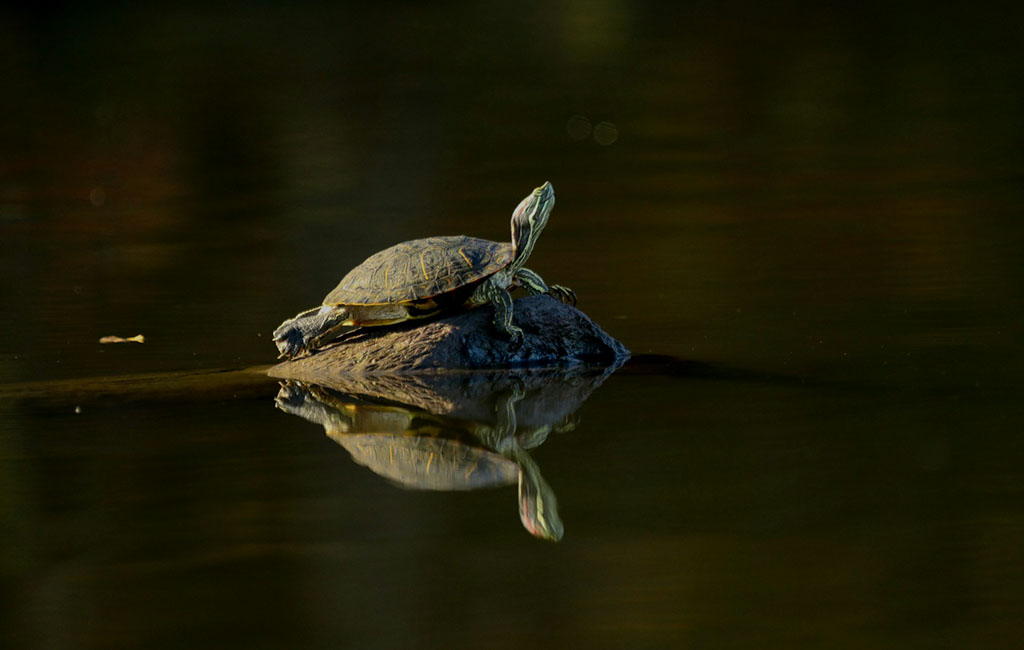
Particular Turtle Species
Map Turtle
Map turtles are also among the particular tank turtle species. They are named after a marking on the shell. They are native to North American regions. Unlike musky turtles, they love strong water currents. However, a basking area is a must-have feature in the tank.
Keep them in a 55+ gallon tank in clean and strong water current conditions. They usually live up to 15 to 30 years. Their size varies according to gender, i.e., 4 to 10 inches.
Chinese Strip-Necked Turtle
Mauremys sinensis, or the Chinese strip-necked turtle, is native to China, Laos, and Vietnam. They are named after yellow strips on the face and neck. They often live in freshwater conditions.
Keep them in a large space, i.e., 60 gallons per turtle, and keep them in a group to fulfill their social nature. Moreover, they become aggressive in overcrowded conditions.
The Safest Turtle to Have as a Pet
Safety varies from person to person. It depends on the priorities. Usually, it depends on the hobbyist’s age and experience level. If you also measure the safety with these parameters, here are some of the safest turtle species.
Common Musk Turtle
It is considered safest due to
- It is a small turtle. Therefore, it has a low biting chance.
- They are peaceful and shy.
- You can keep them in your apartment, i.e., require a 20 to 30-gallon space.
- Manages itself due to less handling.
Other Safest Turtle
- Razor-backed musk turtle
- Box turtle
- Hermann’s tortoise
- Russian Tortoise
How to Keep a Pet Turtle in a Tank?
Most pet turtles are hardy. They don’t require excessive care. However, it is wise to follow a care procedure to keep a pet turtle in your tank. Here are these steps.
Tank Size Selection
Select the tank according to your desired species. Remember a general rule: 10 gallons per inch of turtle.
| Turtle Size | Volume in Gallons |
| Small turtles | 20 to 40 |
| Medium turtles | 40 to 75 |
| Large turtles | 75 to 120+ |
Environment Temperature
Usually, pet turtles belong to tropical or warm regions. Therefore, elevate the water temperature. However, you can skip this step if your turtle is a cold-water species.
Water Temperature: 75–80°F
Basking Area Temperature: 85–95°F
Install a small submersible heater to maintain the water temperature.
Installation of UVB and Heating Lights
Calcium helps to maintain their shell. UVB lights help turtles absorb calcium. Install a UVB light and plug it in for 10 to 12 hours daily. Change this UVB light every 6 months. Install a heat lamp over the basking area to maintain the basking area temperature.
Water Filtration
Turtles produce a lot of waste. Therefore, it is important to have powerful filtration. A filter that offers a double filtration rate concerning the tank size is suitable for the tank. Regularly clean the filter to maintain its efficiency.
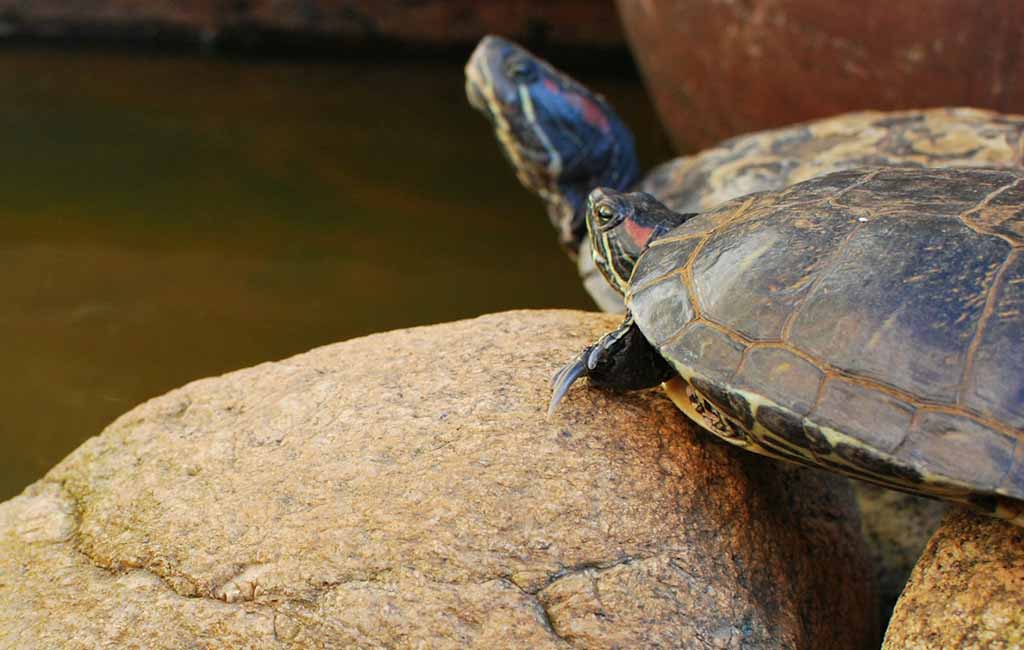
How to Keep a Pet Turtle
Water Parameters
Regularly check the water parameters and keep them optimal according to your turtle species. However, changing the water 25 to 50% weekly will maintain the water parameters.
Basking and Hiding Areas
The basking area should be dry. Otherwise, it will cause shell rot. You can use a turtle dock, smooth rocks, and a floating platform as a basking area. For hiding space, use underwater caves or driftwood.
Feeding
Build a separate feeding area in your tank. It will help to keep the main tank’s area clean. Turtle feed diet varies according to age. Feed carnivorous food to juveniles. A herbivorous diet does magic for adults. However, always maintain a balance.
In Summary
Only a few turtle species are suitable for keeping in your tank. Musk turtles, box turtles, Chinese strip turtles, etc., are some species that you can keep as pets. These pet turtle species have peculiarities, e.g., coloration and unique habits. Regularly maintain your turtle’s tank to optimize its health and lifespan.
Related Products




Great breakdown of species that can thrive in tanks, especially the emphasis on matching tank size and environment to the turtle. One thing I’ve noticed is that a lot of beginners underestimate how messy turtles are compared to fish, so even with the right species, filtration and tank size become critical pretty quickly. Most aquatic turtles need strong filtration and enough space to swim properly, otherwise water quality drops fast and affects their health.
I’ve worked a lot with RES setups and tank optimization, and this is something people often overlook early on.