
Each time the majority of the inhabitants imagine aquarium fish, they think of an elegant pair of fins and calm swimming. However, among others, not every fish is entirely harmless and toothless in its underwater habitat.
Content Table
Some species of aquarium fish have teeth that serve multiple purposes beyond just appearing threatening. Learning about fish with teeth, their purpose, and the fish that possess them is an interesting learning experience in the world of aquatic life. This hygger blog deals with fish that have teeth, the nature of teeth, and what happens to fish that do not have teeth.

fish with teeth
Fish Species Have Teeth
Some fish, more than might be supposed at first, have teeth. The various fish species in the world have evolved specialized teeth based on the nature of their habitat areas and dietary practices.
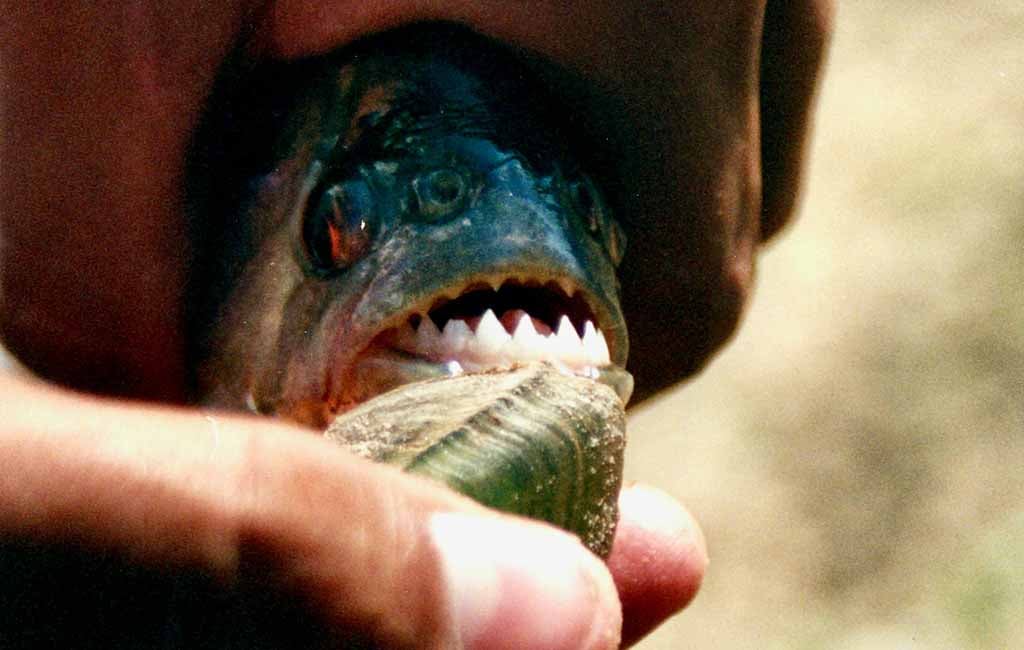
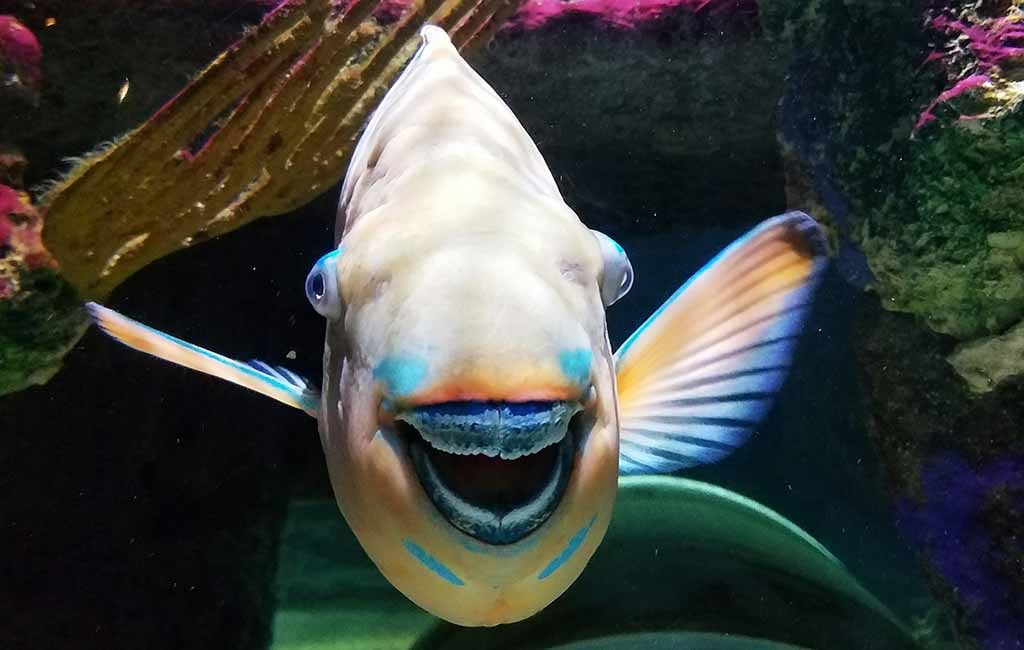
Indicatively, carnivorous fish such as piranhas have been known to have three-pointed teeth that are shaped like razors, which are used to tear flesh. Herbivorous fish, conversely, like parrotfish, have a fused set of beak-like teeth, which grind algae and coral. Even low-life creatures such as catfish have rows of tiny, card-like teeth to scrape and devour food particles.
Fish teeth are extraordinary as they are adapted to the needs of the species to survive and flourish. There are fish species with several rows of teeth that are replaced constantly during their lifespan. Others can also have teeth somewhere in their throat area, which are referred to as pharyngeal teeth. Such specialized forms help fish to bash shells, or algae, or kill moving prey with accuracy. These adaptations enable aquarists to appreciate how complex the aquatic ecosystem is.
Why Fish with Teeth
Fish teeth are mainly used to feed, defend, and adapt to the environment. The specifics of the diet of a fish normally determine the nature and arrangement of the teeth. To tear through scales, prey, and easily chew meat, carnivorous fish need sharp and cutting teeth. Conversely, the herbivorous fish require grinding teeth to either scrape the algae along rocks or even cut the fibers of the plants. The omnivores tend to show a mix of the types of teeth depending on more diverse feeding requirements.
There are also defensive advantages of teeth, which help fish to avoid predators by having a powerful means of biting. In nature, fish teeth may scare off competition or scare off possible danger. Also, in some species, which reproduce through the use of teeth, males can employ them in fights over territory or in courtship.
To make teeth, proper nutrition, genetics, and even environmental circumstances, such as the presence of calcium in the water, are necessary. This normal development process enables fish to feed and survive in their aquatic environments effectively.
fish with big teeth
Aquarium Fish with Teeth
Hobbyists can apply to any of the species of fish with visible or concealed teeth in aquariums. Although not all fish with teeth are dangerous, aquarists should learn about their nature.
Examples are common cichlids, which have teeth in the mouth that are used to crush and grind food. Another aquarium favorite is Oscars, whose teeth are visible with strong jaws that can help in attacking prey that is rich in meat. Pufferfish are also equipped with beak-like teeth, which are fused and constantly grow, needing continuous hard food to wear.
Even goldfish, which are usually deemed harmless, have pharyngeal teeth that are found deep in the throat. Although they look toothless, the teeth are used to grind food pellets or plant matter. The small but efficient rasping teeth in the catfish species, like plecos, enable them to browse on algae-covered surfaces.
All these species show that teeth are significant. Even in an aquarium environment, where they are controlled. Aquarists should be able to know how to cope with such characteristics by providing proper diets and tank mates.
aquarium fish have teeth
Top 10 Popular Aquarium Fish with Big Teeth
The following are ten interesting aquarium fish with teeth that can be observed, the profile, and placement of the fish:
1. Piranha
Piranhas are characterized by their sharp, triangular teeth, which are used to cut up flesh with precision and accuracy. They are very violent carnivores, and they need handling experience and single-species or species-specific tanks.
Myths often make these fish frightening, yet in regulated aquariums, they exhibit interesting grouping patterns, robust social organization, and beautiful metallic coloration.
2. Oscar Fish
Oscars are massive cichlids, which are characterized by strong jaws and sharp teeth. They eat live prey, pellets, and other foods containing proteins using their teeth. Oscars are smart, interactive fish, and they are aware of their owners and exhibit specific personalities.
Their coloration and patterns, such as albino and tiger, are quite colorful, as well, owing to their playful personalities. This makes them a popular subject for extensive aquarium owners.
3. Pufferfish
The pufferfish has fused and beak-like teeth that keep on enlarging and need to be filed. They feed on crustacean digests and have to be given hard food to balance the dietary needs. In addition to teeth, the pufferfish is known to have a wonderful capacity to inflate when threatened. This is to keep away predators.
Their eccentric looks, inquisitive swimming method, and humorous routines provide unending amusement to those who are old enough to patronize the aquarium.
Parrotfish with teeth
4. Arowana
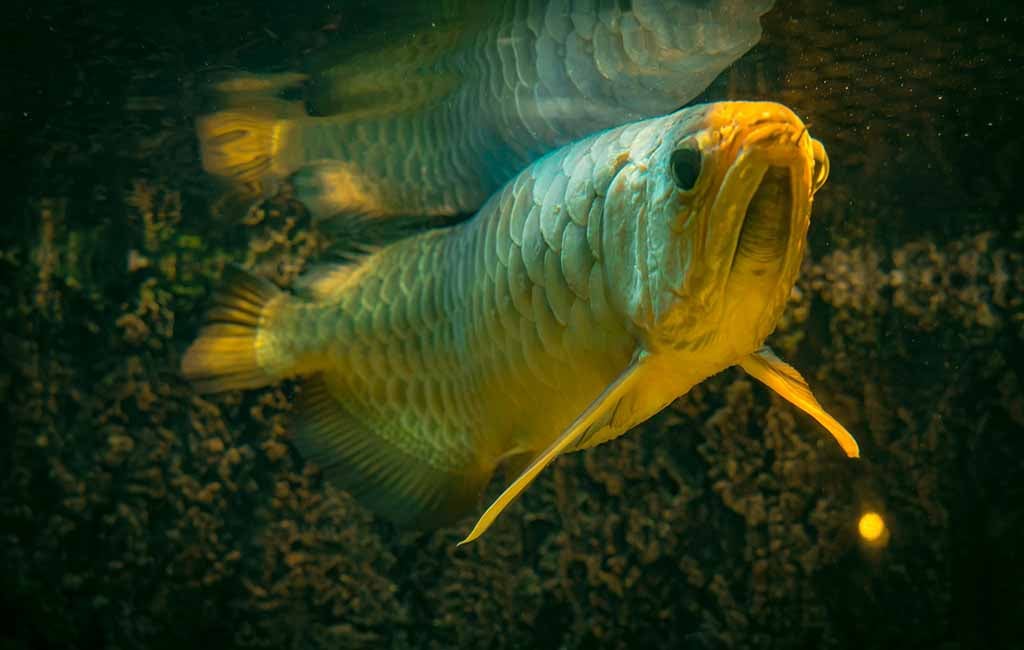
Arowanas possess long jaws with exposed teeth that prey on other smaller fish and insects. Their hunting techniques involve jumping in the water to snatch their prey. The arowanas, which are also known as dragon fish in most cultures, are associated with good fortune, prosperity, and wealth.
Their sparkling scales, swimming elegance, and grand size make them a fascinating find in aquariums. Thus, they are very popular with collectors across the globe.
5. Triggerfish
The triggerfish are characterized by massive and prominent teeth that can grind shells, coral, and invertebrates. They are highly colored, although care is needed about tank placement because of aggression.
This is because they are so named due to a distinctive dorsal fin trigger that seals them into crevices to protect them. Triggerfish are eye-catching with their striking patterns, big personalities, and strong jaws. Thus, they require seriousness and handling by aquarists who want to be challenged.
6. Moray Eel (Aquarium Variety)
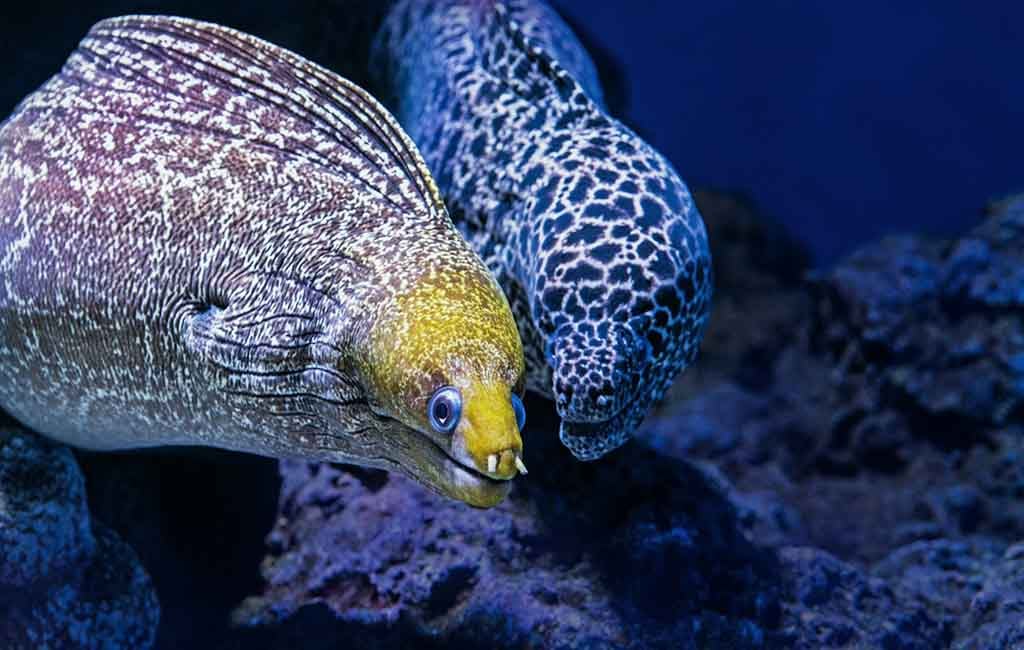
Moray eels have needle-like teeth, though they are technically not a fish that many beginners would choose. These teeth aid in catching prey, including dragging them to the conceiving areas. Even moray eels have a second group of jaws, pharyngeal jaws.
This enhances the transportation of food further into their throats. The aquariums make their mysterious appearance, nocturnal activity, and cryptic behavior give an exotic and exciting touch.
Ele fish has teeth
7. Wolf Fish
Wolf fish are long-tailed predator species that have canine-like, long, sharp teeth. They also demand great aquariums and can only survive in specialized systems of advanced aquarists. Wolf fish are known to have fierce hunting instincts and are compelling and fast in preying.
Their threatening appearance is enhanced by vibrant designs and strong jaws. Endear them to advanced hobbyists who want to have aggressive species exhibited in their tanks.
8. Parrotfish
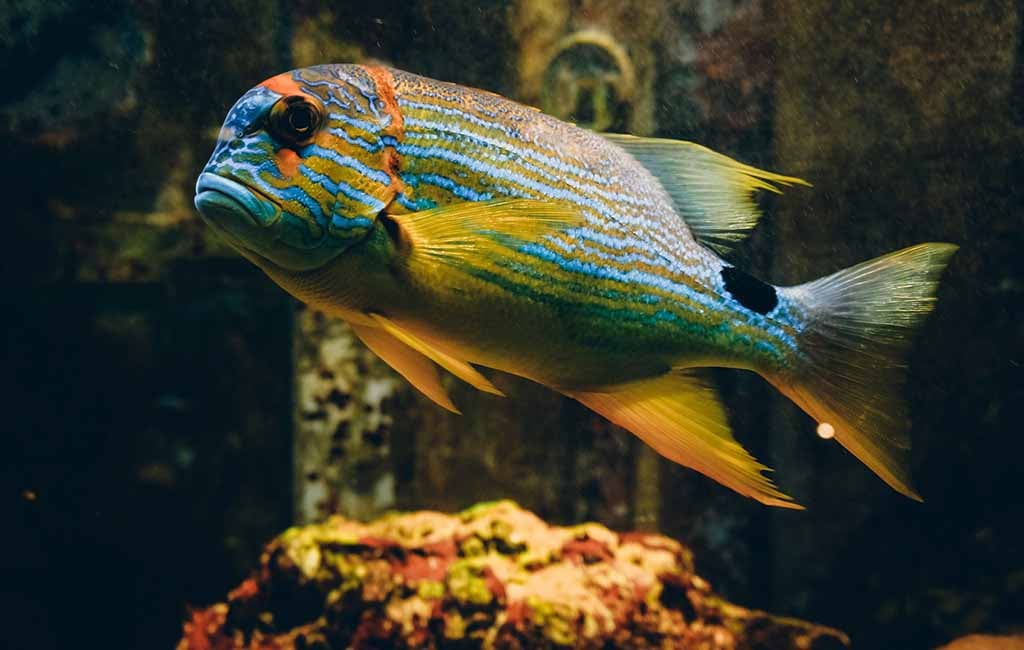
The parrotfish has teeth that are fused, forming an aspect of a parrot. They are removed from rocks and corals and are useful, although difficult, in aquariums. In addition to functional purposes, parrotfish are very colorful, and they usually change color as they grow.
They are also crucial ecologically to the reef, taking the digested coral and forming sand, which makes them beautiful as well as very necessary.
9. Cichlids (General Group)
The African cichlids and many other species of cichlids have powerful pharyngeal teeth. They are good predators in the aquarium since these teeth destroy small invertebrates. Cichlids are one of the richest families of aquarium fish, which provide limitless diversity of these fish in terms of size, color, and behavior.
Cichlids are well-known due to their sophisticated social mechanisms and territorial behavior, as well as parental care. They keep aquarists interested in the process of natural evolutionary diversity observation at home.
10. Catfish (Certain Species)
While some catfish seem harmless, larger species like redtail catfish have noticeable teeth. They use them for grabbing prey and defending themselves when threatened. Catfish vary greatly, with some species displaying docile algae-eating habits, while others become dominant predators. Their whisker-like barbels, bottom-dwelling behavior, and adaptability make them versatile aquarium residents. However, large catfish require massive tanks and careful long-term care.
What Does Fish with No Teeth Mean
What Does Fish with No Teeth Mean
Not every fish species has teeth, and their loss serves their purpose. Toothless fish are normally consumed by suction feeding or external filters. As a case example, there are numerous carp, loaches, and other aquarium tetra species with invisible teeth. They instead suck the food and swallow it down their throat in one piece. Some of these fish have pharyngeal teeth, which are concealed in their throats and can never be seen by anyone.
The absence of teeth indicates a soft vegetarian diet of plankton. Aquarium keepers tend to have a better time keeping toothless fish in a larger community setup. They cause fewer risks of aggression to tank mates than tooth-bearing carnivores. This causes them to be popular with beginners who want aquariums that are peaceful and friendly to the community. Toothless species illustrate that fish could survive and evolve without sharp tools, and rely exclusively on the environment, and die.
Final Insights
Toothed fish in an aquarium can be a surprise to hobbyists, particularly when their adaptations occur in a species that is not expected. These animals include piranhas that have razor-sharp bites and goldfish that have secret pharyngeal teeth. Teeth enable fish to use various diets, protect themselves, and adapt to aquatic environments. Nevertheless, not every tooth can be dangerous; they are also used for peaceful purposes, e.g., grinding algae or crushing food.
As an aquarist, it is more appropriate to know which species have teeth and their behaviors to manage the tank more effectively. It assists in the choice of the right diets, partners, and less hazardous aquarium living conditions. Toothless fish also serve as a source of value, and this is a good example of how adaptation takes different, interesting directions. Regardless of whether they have teeth or not, each one of the species contributes to the diversity of the aquatic environment with something fascinating to observe.
Related Products





Leave a comment