
Have you ever wondered why some fish tanks have crystal-clear water, and others have murky water? Various conditions factor in that. Fish tank bio load capacity is one of the fundamental aspects for that. If you want to achieve such a level, you need to understand the aquarium’s ecology. It will help you to understand the bio-load and the fish tank bio-load capacity.
Content Table
In the following, you’ll learn about these points and how to calculate the bio load capacity of any fish tank. At the end of the article, you’ll find the best fish for bioload and one more interesting topic. For that, scroll down and go through each section. Before that, you set up a tank and, while looking at the murky water, think about what was wrong.
aquarium ecology
Aquarium Ecology
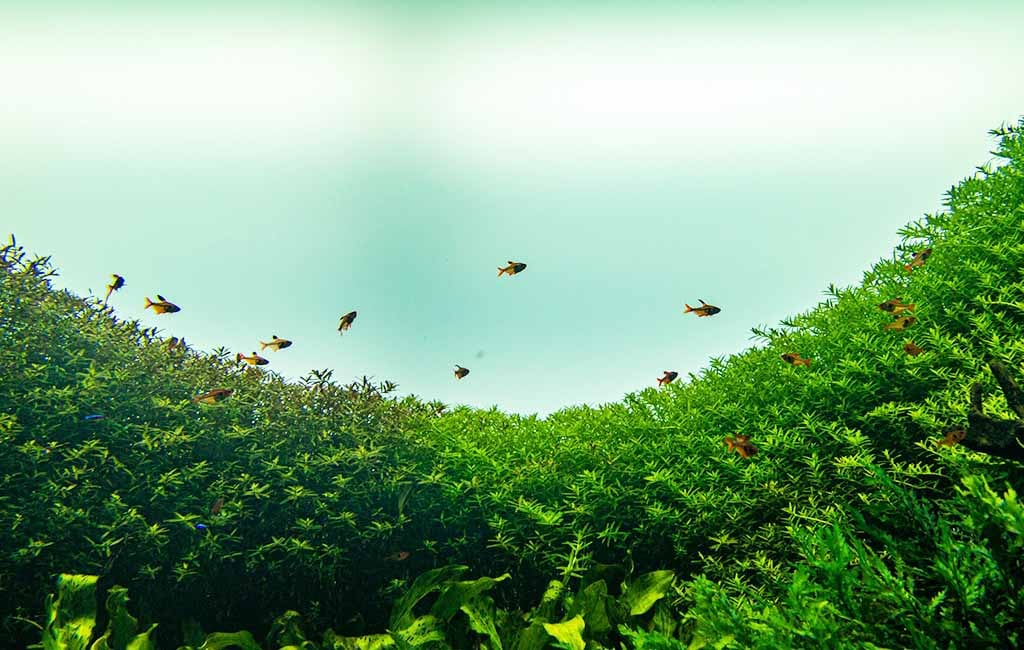
Aquarium ecology means how living and non-living things interact with each other in any aquarium. The balance between living and non-living creatures is crucial. If anything is out of balance, it will affect the entire system and cause the problem. Here is what aquarium ecology includes.
Parts and Their Roles in Aquarium Ecology
| Component | Role in the Aquarium |
| Fish | Produce bio-load (waste) |
| Beneficial bacteria | Break down harmful waste into various nutrients |
| Plants and algae | Use broken-down nutrients |
| Help to improve the water quality | |
| Filter | Removes debris |
| Supports bacteria | |
| Water | Carries oxygen |
| Carry nutrients | |
| Substrate (gravel, sand, or soil) | Home for bacteria |
| Support for plant roots | |
| Lights and Temperature | Helps plants in photosynthesis |
| Regulate the immune activity | |
| Regulate circadian rhythm among fish |
Bio-Load Capacity
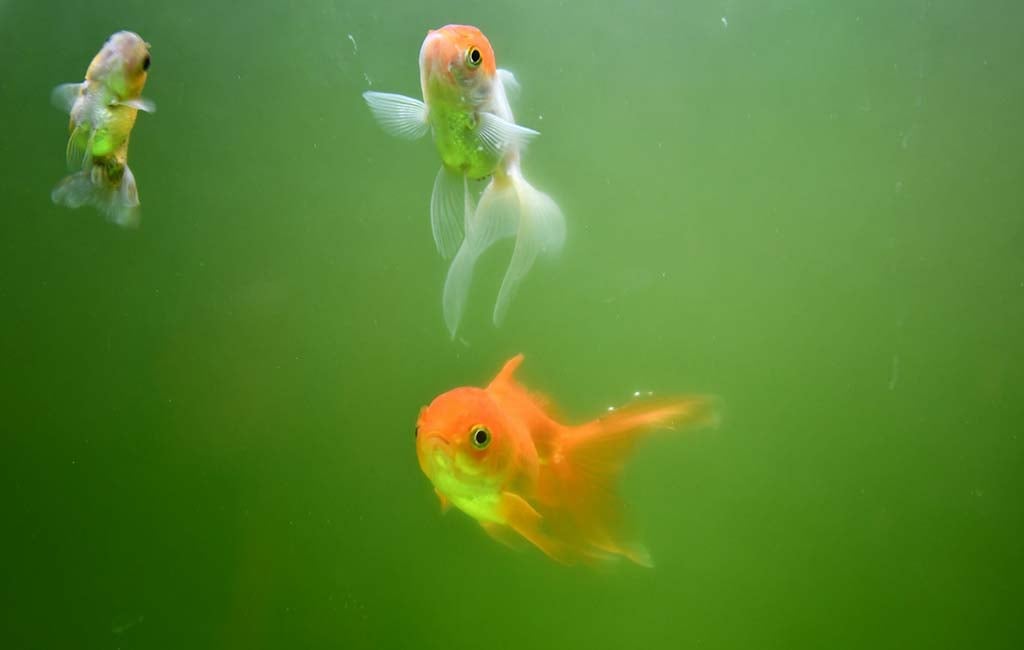
Fish tank bio-load capacity is the maximum waste handling limit of any tank without compromising water quality. Consider it like the budget of a house. The upper limit that you can afford without going into debt. Once the bio-load capacity is surpassed, you will see various problems in your tank. It includes ammonia spikes, sick fish, waste buildup, murky water, etc.
Bio-Load Capacity
Bio-load capacity depends on various factors. Here are the factors and how they affect.
| Factor | Effect on Bio-Load Capacity |
| Tank size | Bigger tanks dilute waste more effectively (Higher Capacity) |
| Filtration power | Stronger filters handle more waste (Higher Capacity) |
| Number and size of fish | More fish equals more waste (Lower Capacity) |
| Type of fish | Some fish produce much more waste than others (Lower capacity for high-waste fish) |
| Feeding habits | Overfeeding adds extra waste to the system (Lower Capacity) |
| Live plants | They absorb some waste naturally (Higher Capacity) |
What Is the Bio Load of a Tank?
It is a total biological/organic waste that fish and other aquatic pets produce in a tank. It comes from various sources.
- Fish poop
- Leftover food
- Dead plants matter
- Fish breathing (ammonia release)
How does it affect the system?
It directly relates to the nitrogen cycle of a tank. Before understanding how bio-load affects the system, learn about the nitrogen cycle in a tank.
Nitrogen Cycle
| Stage | What Happens | Danger Level |
| Fish produce ammonia (NH3) | Ammonia enters the water from fish waste and respiration | Very High — toxic to fish |
| Nitrosomonas bacteria act | Ammonia is converted into nitrite (NO2) | High — still toxic |
| Nitrobacter bacteria act | Nitrite is converted into nitrate (NO3) | Low — manageable with water changes |
| Water change removes nitrates | Nitrate levels drop to a safe level | Safe (when kept under 40 ppm) |
How Bio-Load Affects the Nitrogen Cycle In a Tank?
If bio-load is higher and not addressed properly, it affects the system in the following way.
Ammonia rises → Nitrite spikes → Fish become stressed → Diseases appear
How to calculate bio load capacity
How to Calculate Bio Load Capacity of a Tank to Avoid Overstocking?
Most beginners calculate the bio-load capacity of a tank with a simple rule, i.e., 1inch per gallon. Bio-load capacity calculation depends on various factors.
- Fish size
- Fish body mass
- Filtration of a system
Calculating the bio-load capacity is crucial for optimal fish keeping. Here is a step-by-step procedure for this.
Volume of The Tank
Calculate the volume of a tank. Use the dimension, i.e., length*width*height. 1 cubic inch is equal to 0.004329 gallons. Different tank sizes have different bio-load capacity. Usually, 10% to 15% of the water volume is replaced with plants and decorations. Therefore, subtract this volume from the calculated volume.
| Tank Size | Fish Capacity |
| 10 gallons | Light stocking |
| 20 gallons | Small community |
| 40 gallons | Medium community |
| 75+ gallons | Large community |
the best fish for bioload
Waste Production
Different fish produce different levels of waste in a tank. It does not mean that if a 1-inch fish produces, let’s say, 1 pound of waste in 6 months, it does not mean that any other 2-inch fish will produce 2 pounds of waste in 6 months. It depends on the fish’s type and body mass. You can better understand with the bio-load score system.
| Fish Category | Bio-Load Score (per fish) | Example Species |
| Small, low-waste fish (under 2 inches) | 1 point | Neon Tetra |
| Ember Tetra | ||
| Small, high-waste fish (under 2 inches) | 3 points | Fancy Guppy |
| Betta | ||
| Medium fish (2–4 inches) | 4–6 points | Platy |
| Corydoras | ||
| Large fish (4–8 inches) | 8–12 points | Angelfish |
| Cichlids | ||
| Very large fish (8+ inches) | 15–25 points | Oscar |
| Koi | ||
| Goldfish |
Filtration
Adjust the filtration according to the fish mass and bio-load score. Small and slim fish at optimal levels can live with low filtration and vice versa.
| Filter Strength | Bio-Load Handling |
| Weak filter | Low stocking |
| Standard filter | Moderate stocking |
| Heavy filtration | Higher stocking possible |
Plantation
If your tank has plants, it’ll affect the bio-load capacity as plants uptake the nitrates. In a planted tank, you can get the following benefits.
- Support a higher stocking capacity than a fish-only tank.
- Improves water quality by producing oxygen and uptaking nitrates.
- Offer a more stable ecosystem.
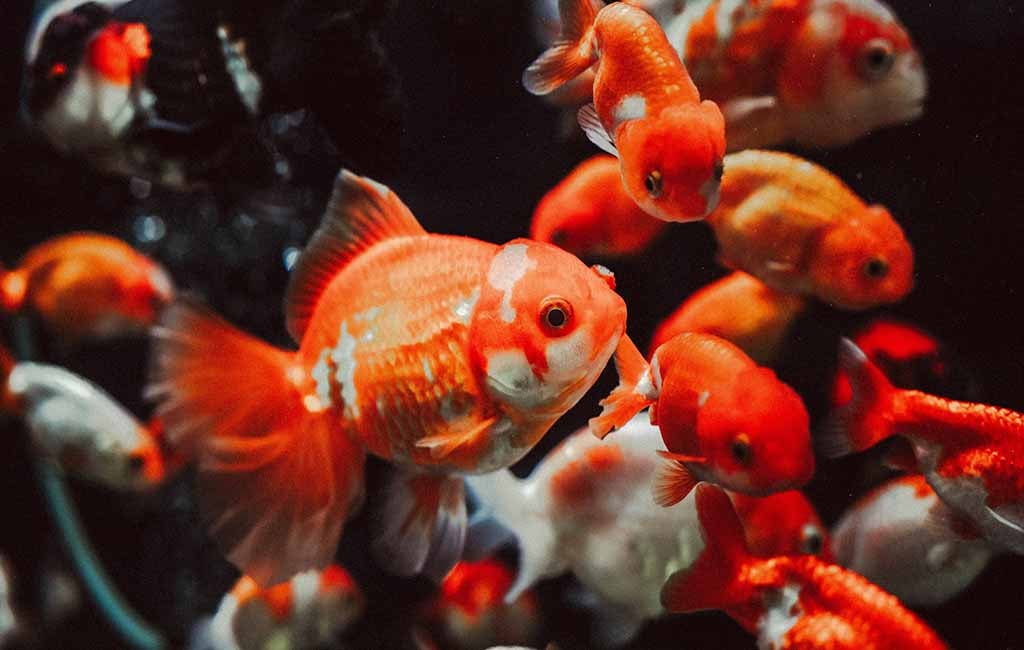
Total Bio-Load Capacity
Total Bio-Load Capacity Calculation
Once you factor all these things in, it’s time to calculate the bio-load capacity. If you have a good filtration system, allow 1 gallon volume per 1 bio-load score. However, if your tank has a strong filtration with a higher volume, you can allocate a 1.5 score for 1 gallon.
Example
A 30-gallon tank has strong filtration. It allows you to stock 45 points in your tank.
Total stocking capacity = 30*1.5 = 45
However, it is always wise to stock up to 70 – 80% of the total capacity. You can stock up to 36 points.
Safe stocking capacity = 80%*45 = 36
Here is a safe stocking option for your 30-gallon tank.
| Fish | Number of Fish | Points per Fish | Total Points |
| Neon Tetra | 8 | 1 point | 8 points |
| Platy | 5 | 5 points | 25 points |
| Betta | 1 | 3 points | 3 points |
As 35 is less than 36, you are on the safe side, and there is no over-stocking.
Filtration System and the Tank Bio-Load Capacity
The filtration system has a deep relationship with bio-load capacity. It should handle the fish waste properly. However, understand the different filters and their role in the tank.
| Filtration Type | Function |
| Mechanical | Removes debris |
| Biological | Houses beneficial bacteria |
| Chemical | Removes toxins and odors |
When you are handling the bio load, biological filters are crucial. They host the beneficial bacteria that break down the waste and avoid ammonia spikes.
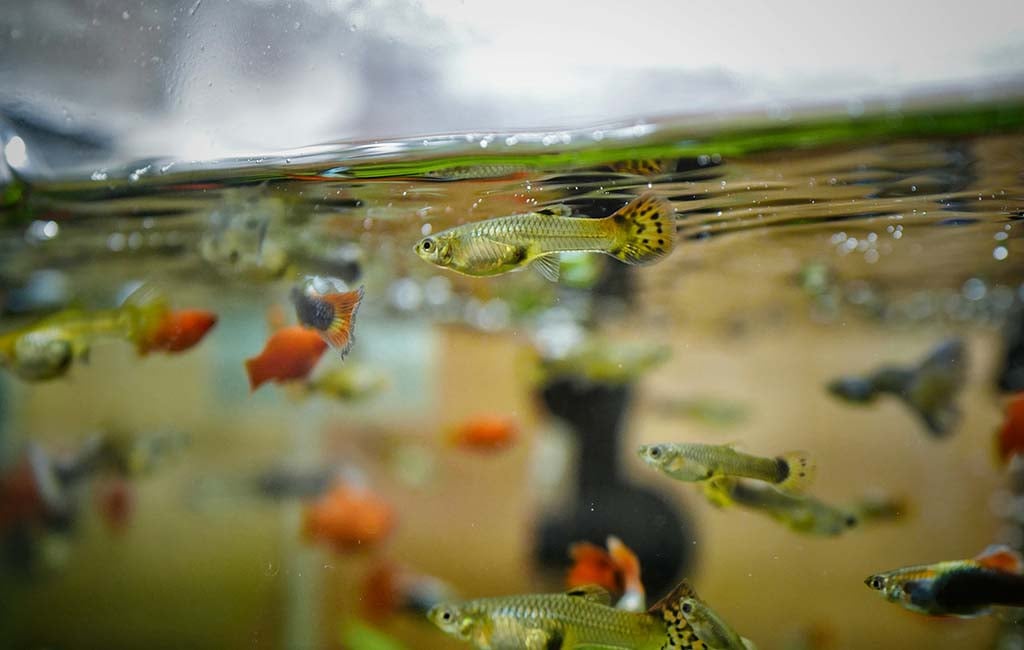
fish tank bio-load capacity
Filter Strength vs Tank Size
The filter should circulate at least 5 to 7 times the water per hour to the total tank volume.
| Tank Size | Recommended Filter Flow |
| 10 gallons | 50–70 GPH |
| 20 gallons | 100–140 GPH |
| 40 gallons | 200–280 GPH |
| 75 gallons | 375–500 GPH |
It should at least be rated according to the tank size and 2 times the tank size. A 40-gallon tank has about an 80-gallon tank for the safe side. Otherwise, a filtration system that handles a 40-gallon tank is the bare minimum.
Learn About Smaller Fish That Have a High Bioload
Small fish do not mean that it is producing small waste. Sometimes, some small produce higher waste. Therefore, it is always better to understand it.
| Fish | Max Size | Why High Bioload? |
| Fancy Goldfish | 6–8 inches (but sold small) | Produce massive amounts of ammonia |
| Messy eaters | ||
| Common Pleco | Sold at 2 inches, grows to 24 inches | Huge waste producers as they grow |
| Betta Fish | 2.5–3 inches | A protein-rich diet leads to more ammonia production |
| Oscars (juveniles) | Sold at 1–2 inches | Grow rapidly |
| Extremely heavy waste producers | ||
| Guppies (in large groups) | 1.5–2 inches | High numbers multiply waste |
| Fast breeders |
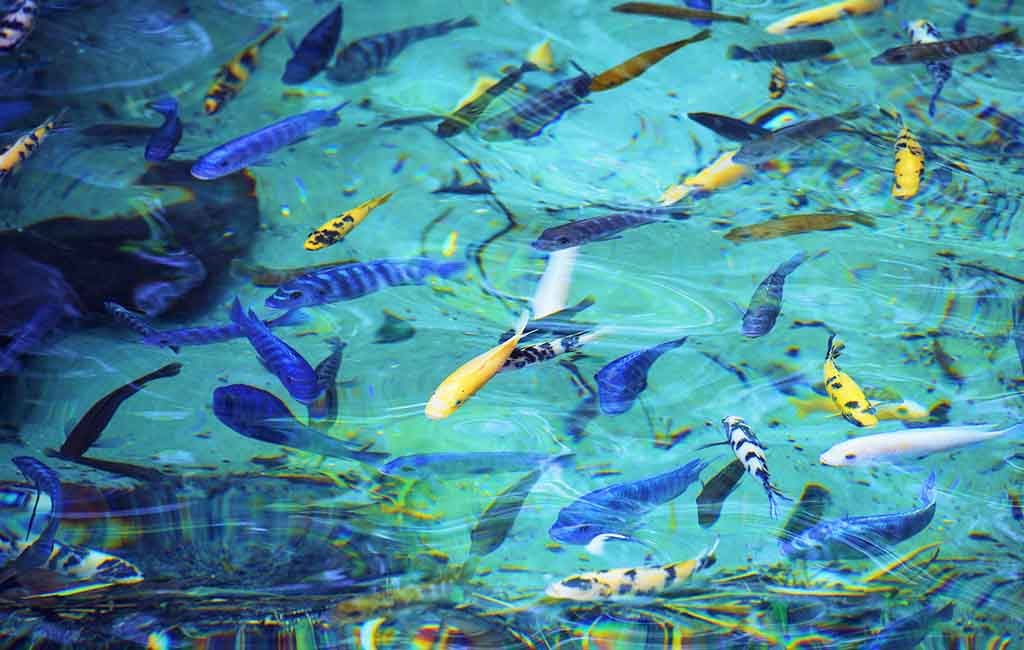
Fish Tank Bio-Load Capacity
The Best Fish for Bioload
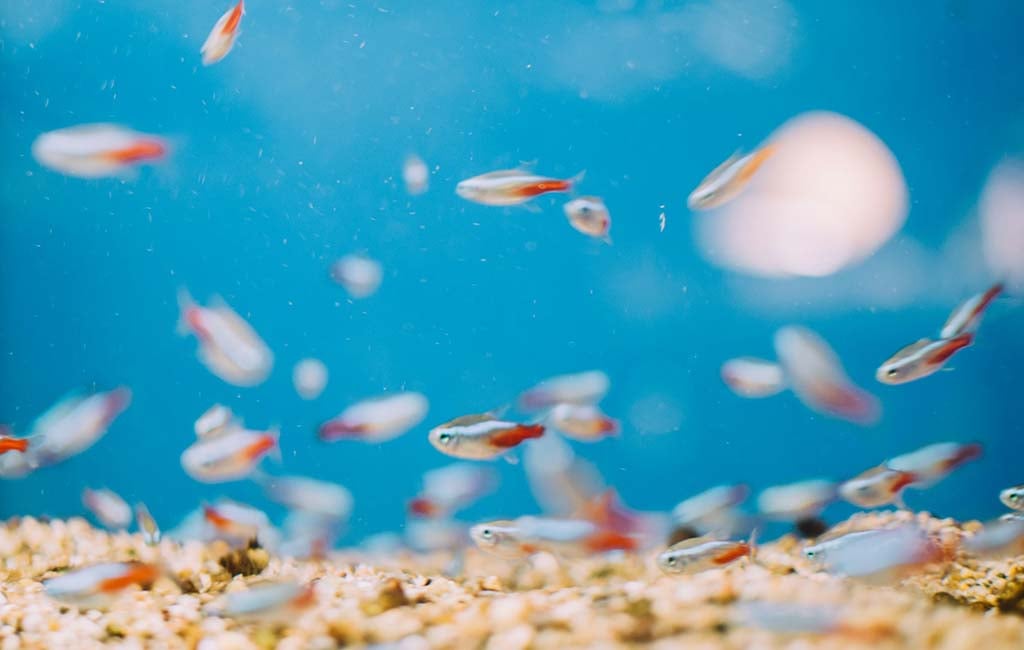
The best, according to our discussion, is such a fish that produces “Produce low waste according to their size and hardy enough to bear minor water fluctuation”.
Here is a table for such fish, optimal tank size, bio-load, and some important notes about them.
| Fish | Tank Size
(gallons) |
Bio-Load
Level |
Notes |
| Neon Tetra | 10+ | Very Low | Schooling fish |
| Peaceful | |||
| Ideal for community tanks | |||
| Corydoras Catfish | 20+ | Low | Bottom dwelling |
| Help to clean leftover food | |||
| Ember Tetra | 10+ | Very Low | Does not affect the water quality |
| Tiny and vibrant | |||
| White Cloud Minnow | 10+ | Low | Hardy |
| Undemanding | |||
| Tolerates a range of temperatures | |||
| Otocinclus Catfish | 20+ | Very Low | Algae eaters |
| Light waste producers | |||
| Celestial Pearl Danio | 10+ | Very Low | Small |
| Peaceful | |||
| Optimal for nano tanks | |||
| Endler’s Livebearer | 10+ | Low | Similar to guppies but with slightly lower waste output |
| Pygmy Corydoras | 10+ | Very Low | Tiny size |
| Manageable bio-load |
The Last Word
Aquarium ecology is the basis for calculating the bio-load capacity of any tank. Different fish produce different levels of bio-load. When calculating the fish tank bio-load capacity, consider tank size and bio-load capacity points. Moreover, filtration also affects the process of calculating bio-load capacity. If you are a beginner or want a mess-free experience, always select low-waste producing and hardy fish, as they are the best fish. They will not exhaust the bioload capacity of your tank.
Related Products

The person who wrote this should be applauded. I can now stop stressing on whether I have overstocked my aquarium. Hopefully, someone reading this will tell me if I did the calculations correctly. First, I have a custom 37 gallon tank, which is 30x17x17. The HOB filter, rated for 55 gallons, has a cycle rating of 250 GPH. The stock in the tank includes 9 GlowFish Tetras, 8 Cardinal Tetras, 8 Harlequin Rasboras, 5 Sterbai Corydoras, and 2 Otocinclus’. I assigned 1 point to each fish; therefore, my total is 32 points.
My calculation:
30x17x17 = 8,670 cubic inches
8,670 x 0.004329 = 37.53 in volume
37.53 – 15% for decorations = 31.90 calculate volume
31.90 * 1.5 = 47.85 points
80% of 47.85 = 38 points of stocking capacity
I have 32 points of fish; therefore, I am not overstocked.
Do you agree? Did I miss anything?
In advance, thank you for your help.
Scott M.