
Have you ever wondered if your fish can hear? Apparently, they don’t have ears. In reality, do fish have ears or not? In the following, you will learn about this fun learning aspect and can make your aquarium journey more entertaining.
Content Table
In the following, you will understand whether fish hear when you are talking, whether fish have ears, and the ways by which fish hear. Moreover, the sound impact and hearing test are also worth learning. At the end of the article, there are some ways to move the fish like a dog or a cat as a pet.
Can Fish Hear You Talking
Yes, fish can hear when you or someone else is talking. However, their sense of listening is not like that of dogs and cats. They don’t process the language that you are speaking like cats and dogs. However, they understand the sound of water vibration.
How Can Fish Hear?
When someone talks, sound moves in waves in the air. These sound waves generate the vibrations in water molecules. These vibrations enable fish to detect nearby sounds. They can detect frequencies from 50 to 3,000 Hz, which is similar to human speech (300 to 3,000 Hz). However, the optimal hearing range lies below 1000 Hz.
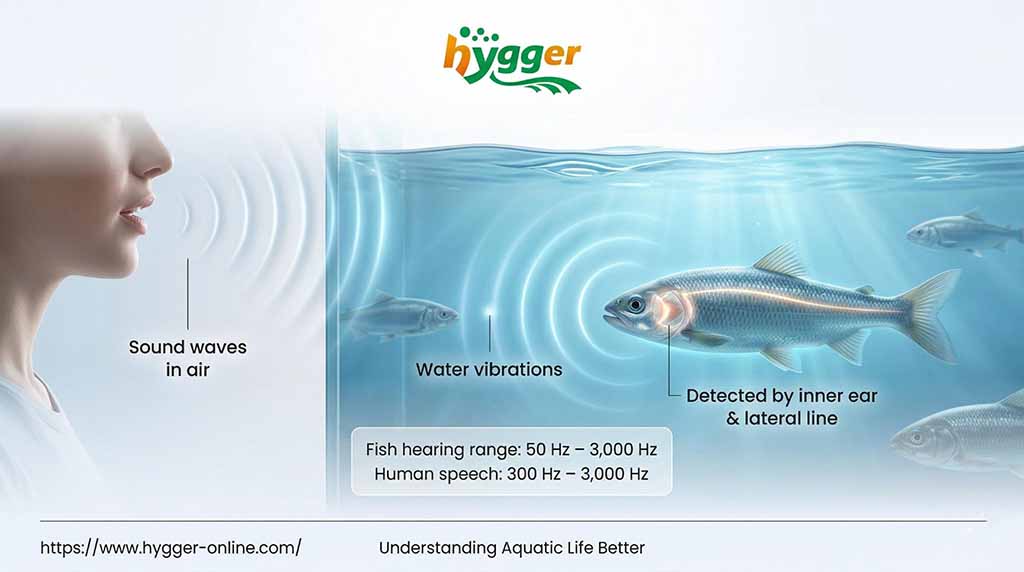
Can fish hear
However, they don’t understand when you say good morning. They just hear what the water vibration enables them to hear. So, if you are approaching your tank and your fish is approaching you, they are probably resting on your footsteps.
Do Fish Have Ears?
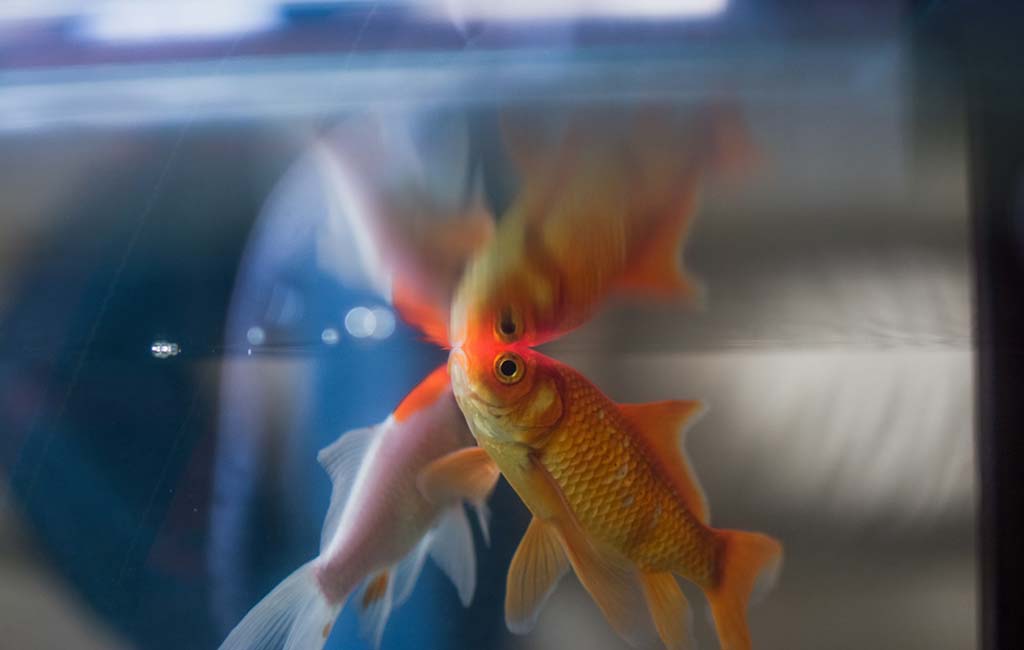
Yes, fish have ears. However, the ear structure is different from that of humans. Human ears stick out of their bodies, by which they detect sounds. On the other hand, fish have inner ears, which are known as otoliths. Otoliths are hidden inside the head side of the skull.
Introduction to Fish Ears
The word Otoliths is derived from a Greek word that means “ear stone”. It is a small, solid, and calcium-carbonated structure that is placed inside the fish’s head. This structure helps them to detect vibration. The inner structure that balances the sound is similar to that of humans.
Role of Otoliths
When sound waves pass through the water, they cause a specific sound frequency. The fish’s body moves according to the sound frequency. However, the otoliths are denser and lag slightly. This slight difference helps in understanding the fish’s brain about sound. Hearing ability works absolutely fine in underwater conditions.
Hearing Mechanism Breakdown
| Structure | Human Equivalent | Role in Fish |
| Otoliths (ear stones) | Inner ear/cochlea | Detect sound vibrations and gravity |
| Lateral line | No direct equivalent | Senses water movement and pressure |
| Swim bladder | No direct equivalent | Amplifies sounds in some species |
| Hair cells (saccule/utricle) | Hair cells in the cochlea | Convert vibrations into nerve signals |
Do fish have ears
What Are the Ways Fish Receive Sound?
Fish have several listening systems in their body. These systems help them to be alert about what’s going on around them in the environment. Here are the ways by which a fish can hear.
Otoliths
This is a common listening mechanism in all fish species. However, the size of otoliths varies among different species, which affects their listening ability. The description has already been discussed.
Lateral Line
The lateral line is a row of tiny sensory pores, i.e., neuromasts. Neuromasts are composed of ciliated hair cells. This line runs along the fish’s body. These sensors help them to understand the variation in water pressure and movement near their bodies.
Lateral line sensors help them to move the school in a specific way without bumping into each other. Moreover, it helps to keep them together even in darker and narrower spaces. It also helps them to detect and avoid predators.
Swim Bladder
Fish have a swim bladder. This air-filled organ helps them to float in the water. However, in some fish species, swim bladders are attached to otoliths through small bones, i.e., Weberian ossicles. It acts like a natural amplifier, which helps them to detect very low frequencies. Fish species that use this system are known as otophysans. Here are some otophysans.
- Goldfish (Carassius auratus)
- Tetras and other characins
- Catfish (like corydoras)
- Danios
- Barbs
| Structure | Type of Sound Detected | Specialization |
| Otoliths (Inner Ear) | Particle Motion | Universal to all fish |
| Swim Bladder | Sound Pressure | Used as a resonator/amplifier |
| Lateral Line | Local Water Movements | Near-field detection |

Do Fish Get Bothered by Noise
Do Fish Get Bothered by Noise?
Yes, fish do bother from the noise. Consistent noise can cause stress. Stress affects their feeding habits, weakens the immune system, and even shortens their life span. If you have placed your aquarium near a TV or loud speakers, which are such noise-producing sources.
Examining the Hearing and Behavior of Your Fish
You can examine the fish’s hearing ability through several tests. Here are some such tests.
Hearing Test
The Approach Test
Calmly move toward the fish tank and closely observe the fish behavior. Is it showing any reaction? If it moves toward you or in any other way, it means your fish is hearing.
The Tap Test
Tap the table or the nearby surface on which the tank is placed and observe the fish’s behavior. Does your fish show any reaction? However, in the tap test, don’t tap on the tank’s wall.
Voice Test
Speak softly near your tank and observe the fish behavior. After several days, fish will learn to recognize your voice, especially if you are feeding.
Feeding Sound Test
It is a classic test. Before feeding, tap the tank’s lid. After several days, you will observe that when you are going to feed your fish and tap the lid, the fish will gather in a short time.
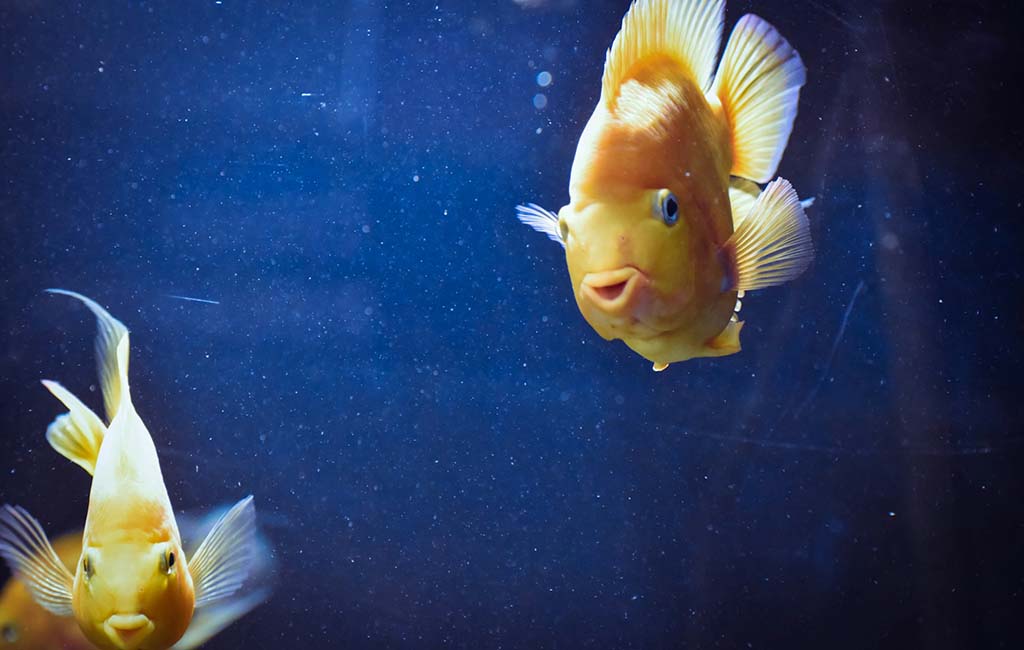
Can a fish hear
Fish Behavior Toward The Sound
| Fish Behavior | What Does It Mean? |
| Swimming toward you when you approach | Recognizing your movement or sound |
| Hiding after a loud noise | Stress response to vibration |
| Coming to the surface at feeding time sounds | Conditioned hearing response |
| Erratic swimming after tapping the glass | Startled by a sharp vibration |
| Schooling tightly when sound increases | Defensive reaction via the lateral line |
How To Avoid Noise Problems?
Avoid placing fish tanks near noise-producing sources to enhance fish life and strengthen the immune system.
- Loud music
- Bass-have speakers
- Slamming doors or nearby walls
- Power tools
- Vacuum cleaner
- Rattling filters
- Noise-producing pumps
If fish can hear you
What Should You Talk to Fish If It Can Hear You?
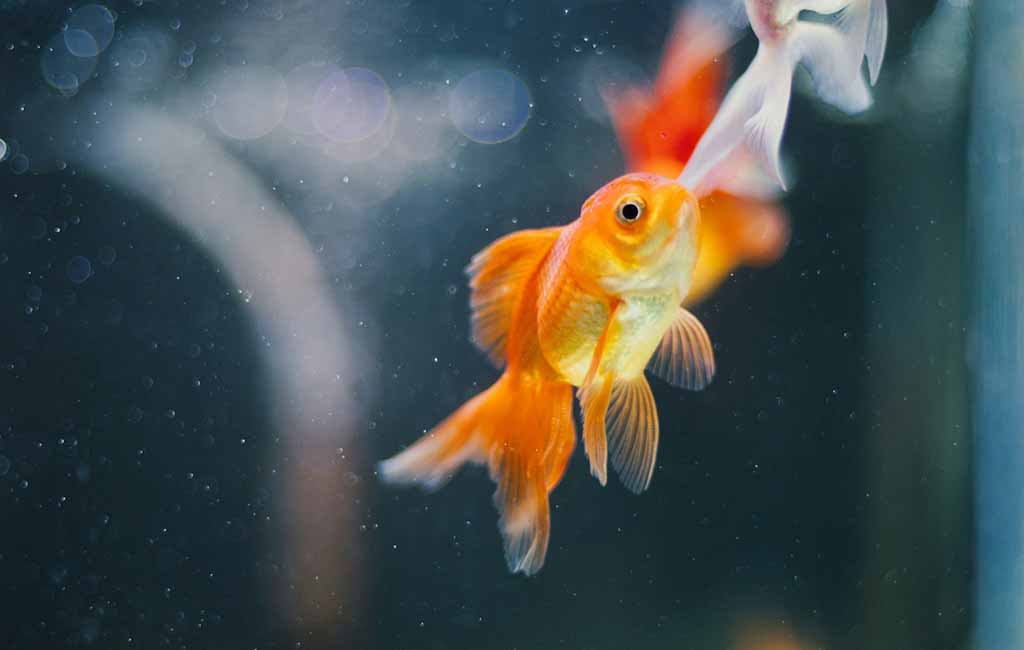
Although fish can’t understand your language. However, if you speak in a soft and gentle voice, you will see the cute reactions from your fish. Here are some suggestions regarding what you should talk to your fish about.
- Speak in a soft and gentle voice. It will act as voice therapy.
- Talk to your fish at a specific time. This will build a connection between you and your fish.
- Call your fish by name. Although they don’t get what you are saying. However, over a period, specific fish will begin to react to your calling names. This is common among highly intelligent fish species.
Rounding Out the Discussion
Fish can hear, and they have ears. Although ears are internal. They don’t understand the language, but they hear with otoliths, a lateral line, and a swim bladder. Due to this reason, constant sound can cause stress. So avoid them from constant noise. Moreover, soft speaking, calling them by name, and talking to them at a specific time allows your fish to recognise you.
Related Products


I wholeheartedly agree with everything you said in your article. I have a 10-gallon tank where I place newly acquired fish for a period of two weeks prior to moving the fish to my main tank. Usually, the new fish don’t immediately realize I put food in the water. So, I tap lightly on the aquarium light cover and then put food in the tank. By the third day, if I tap the light cover, the fish immediately come to the top and front of the tank whether I put food in the tank or not. It is obvious they hear the tap.