
Aquatic reptiles are unique reptiles that evolved to live underwater and near water. They breathe like reptiles but can dive for long hours in the water. They have certain peculiarities. Moreover, general groups and the list of aquatic reptiles from that group are as follows. The history of the evolution of aquatic reptiles is also very interesting. Scroll and enjoy the history, and find an aquatic reptile pet if you want to start an aquatic reptile pet journey.
Content Table
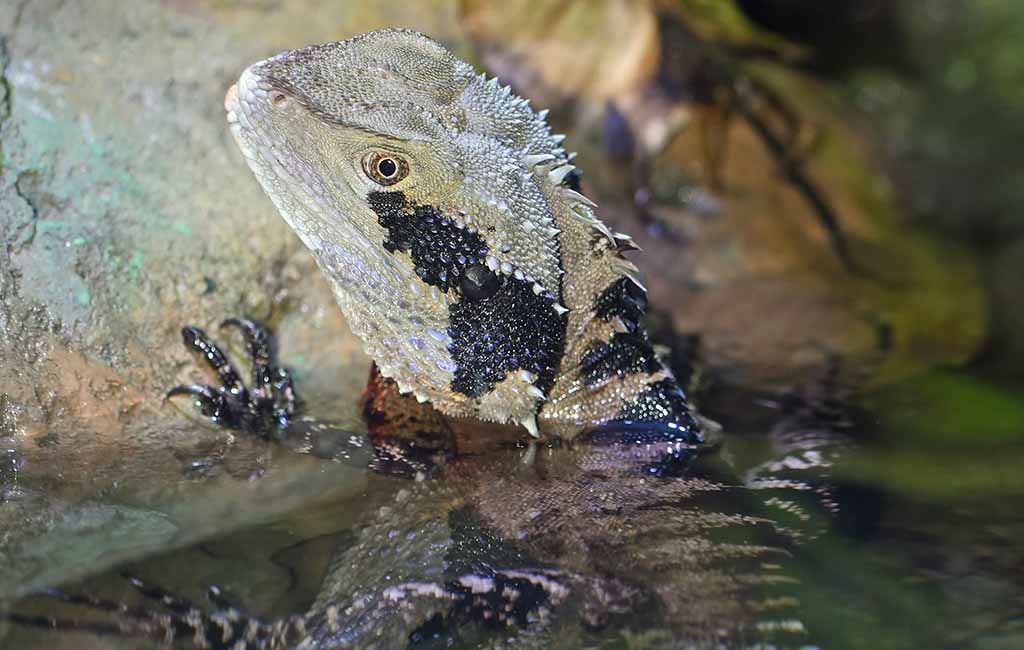
aquatic reptile
Aquatic Reptiles
These are the air-breathing vertebrates that have adapted to live in the water, i.e., marine and freshwater. They breathe through the lungs, but they are evolved to deep dive for longer periods. They feed, breed, and survive in a marine environment.
Includings
They are divided into different orders. Here is the list of aquatic reptiles.
- Testudines
- Squamata
- Crocodilia
Testudines
It includes mainly the following reptiles.
- Turtles
- Tortoises
They show the following traits.
- Streamlined shells
- Webbed feet or flippers
- Long underwater breath-holding capacity
- Keratinized Beak (No Teeth)
- Strong Orientation & Navigation
- Egg-Layers
- Long Lifespan
Squmata
It includes the following reptiles.
- Snakes
- blind shingles
- Lizards
Here are some traits of aquatic reptiles.
- Flexible skull and jaws
- Periodic skin shedding
- Scaly, Keratinized Skin
- Paired Hemipenes
- Super diverse body form
- Flexible Vertebral Column
Crocodilia
Here are the types of reptiles under this category.
- Crocodiles
- Alligators
- Caimans
They have specific, unique traits.
- Streamlined and powerful bodies
- Eyes, Ears, and Nostrils on Top of the Head
- Nictitating membrane for underwater eye protection
- Powerful Jaws and Conical Teeth
- Thick, Armored Skin
- Semi-Aquatic Lifestyle
- Exceptional Sensory Capabilities
Peculiarities
- They breathe air, instead of water
- They are evolved with specialized body adaptations. It includes flippers or webbed feet, streamlined bodies, flattened tails in snakes and crocodilians, and Salt glands for extra salt removal.
- Popular pet aquatic reptiles rely on external heat. For that, they migrate to long distances, e.g., sea turtles.
- Mostly aquatic reptiles reproduce on land.
- They have exceptional sensory abilities. Crocodiles sense with their jaws, and sea turtles rely on Earth’s magnetic field for navigation.
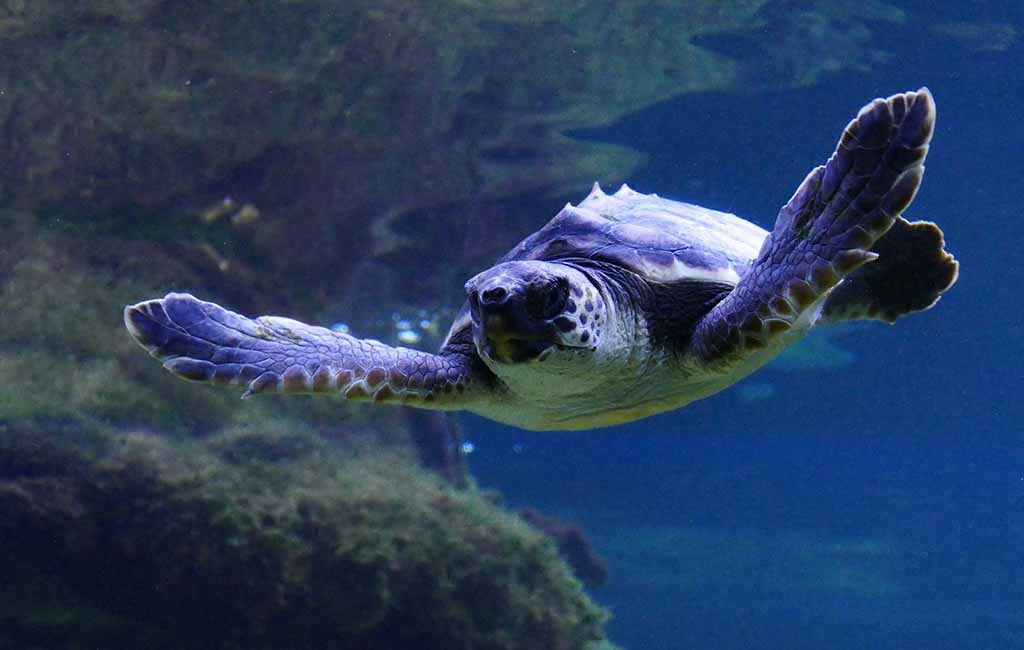
Ancient Aquatic Reptiles
Ancient Aquatic Reptiles
Ancient aquatic reptiles were the initial links between land and water. They were present in the water even before the dinosaur era. They evolved in a specialized way to swim, dive, prey underwater, etc. Here are different ancient aquatic reptiles.
Main Groups of Ancient Reptiles
Ancient reptiles had about six major groups. Here is the brief about them.
Ichthyosaurs
These aquatic reptiles mimic dolphins with streamlined bodies, large eyes, and a powerful tail. It is found that they are present from the Triassic to the Cretaceous period. They lived in warm, open oceans and in the depths of oceans.
Plesiosaurs
Long-necked and broad-bodied Plesiosaurs were the other type of ancient aquatic reptiles. They also have four large flippers. Based on the neck, they were divided into two further classes, i.e., long-necked and short-necked pliosaurs. Short-necked were powerful predators. Shallow seas and continental shelf water were their home. They mostly roam around the coastline.
Mosasaurs
These were the snake-like, large reptiles with unique paddle-shaped limbs. They were super predators of the late Cretaceous oceans. It was found that they are up to 15 meters long. They were used in warm coastal seas, coral reefs, and open oceans.
Thalattosuchians
They were like crocodile reptiles. Some of them are more unique-looking with flippers and fish-like tail fins. They were housed near the coastline in oceans, lagoons, and shallow marine parts.
Nothosaurs
Long bodies and webbed limbs, Nothosaurs were the initial semi-aquatic reptiles, like turtles and crocodiles. Researchers said that plesiosaurs were descendants of Nothosaurs. They were present during the Triassic period and built habitats around the shallow coastal areas.
Placodonts
They have the unique, broad, and flat teeth. They used them for crushing shellfish. Some of the placodonts had an armored and turtle-like appearance. They lived around the coastal zones, the seafloor, where they found their food, i.e., shellfish and crustaceans.
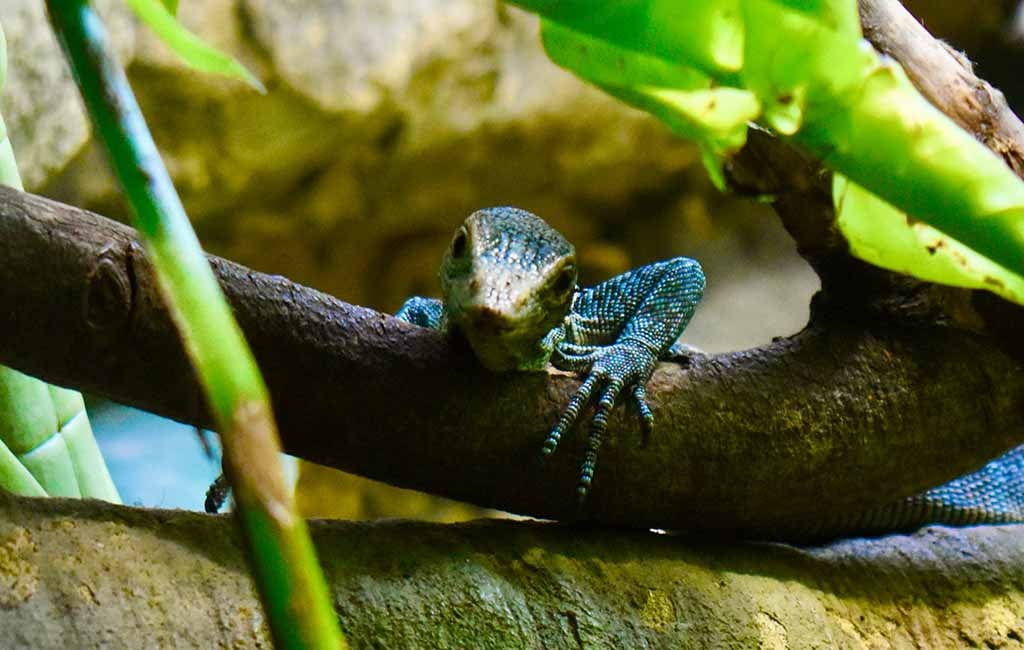
list of aquatic reptiles
List of Aquatic Reptile Families
| Family | Common Name | Popular Species |
| Cheloniidae | Sea Turtles | Green sea turtle |
| Loggerhead turtle | ||
| Hawksbill turtle | ||
| Dermochelyidae | Leatherback Sea Turtle | Leatherback turtle |
| Emydidae | Freshwater Turtles | Red-eared slider |
| Map turtle | ||
| Painted turtle | ||
| Chelidae | Side-necked Turtles | Mata mata turtle |
| Snake-necked turtle | ||
| Trionychidae | Softshell Turtles | Asiatic softshell turtle |
| Florida softshell turtle | ||
| Crocodylidae | Crocodiles | Saltwater crocodile |
| Nile crocodile | ||
| Alligatoridae | Alligators & Caimans | American alligator |
| Spectacled caiman | ||
| Gavialidae | Gharials | Gharial |
| Acrochordidae | File Snakes | Elephant trunk snake |
| File snake | ||
| Homalopsidae | Mud / Water Snakes | Olive sea snake |
| Keelback water snake | ||
| Elapidae | Sea Snakes | Belcher’s sea snake |
| Yellow-bellied sea snake | ||
| Varanidae | Water Monitors | Asian water monitor |
| Nile monitor | ||
| Iguanidae | Marine Iguanas | Galapagos marine iguana |
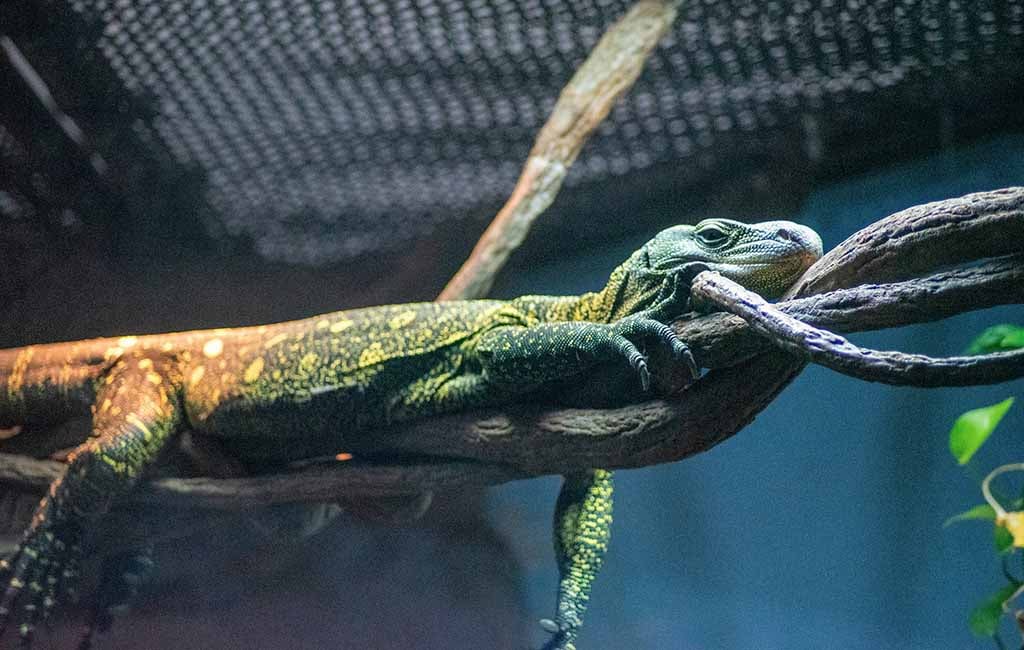
popular pet aquatic reptile
Popular Pet Aquatic Reptile
If you want to keep aquatic reptiles as pets in your tank, here are some of the popular pet aquatic reptiles. Go with some of the following, as you can find the community that is already raising these ectothermic reptiles.
| Reptile | Type/Family | Reason for Popularity | Tank Size (gallons) |
| Red-Eared Slider | Freshwater Turtle / Emydidae | Hardy | 75–120 |
| Easy to care for | |||
| Colorful | |||
| active | |||
| Painted Turtle | Freshwater Turtle / Emydidae | Small | 55–75 |
| Colorful | |||
| Easy to keep | |||
| Softshell Turtle | Freshwater Turtle / Trionychidae | Unique smooth shell | 75–100 |
| calm nature | |||
| Mata Mata Turtle | Freshwater Turtle / Chelidae | Exotic appearance | 100+ |
| Slow-moving | |||
| Camouflaged | |||
| Asian Water Monitor | Water Monitor / Varanidae | Intelligent | 150–300 |
| Interactive | |||
| Large size | |||
| Burmese Python (Semi-Aquatic) | Snake / Pythonidae | Semi-aquatic | 120–200+ |
| Impressive | |||
| Interactive | |||
| Elephant Trunk Snake | Snake / Acrochordidae | Fully aquatic | 55–100 |
| Calm | |||
| Unique appearance | |||
| Belcher’s Sea Snake | Sea Snake / Elapidae | Rare | Specialized marine tank (not recommended for general hobbyists) |
| Highly adapted to water | |||
| Galápagos Marine Iguana (Juveniles) | Lizard / Iguanidae | Unique semi-aquatic behavior | 100–200 gallons (for juveniles) |
The History of the Aquatic Reptile
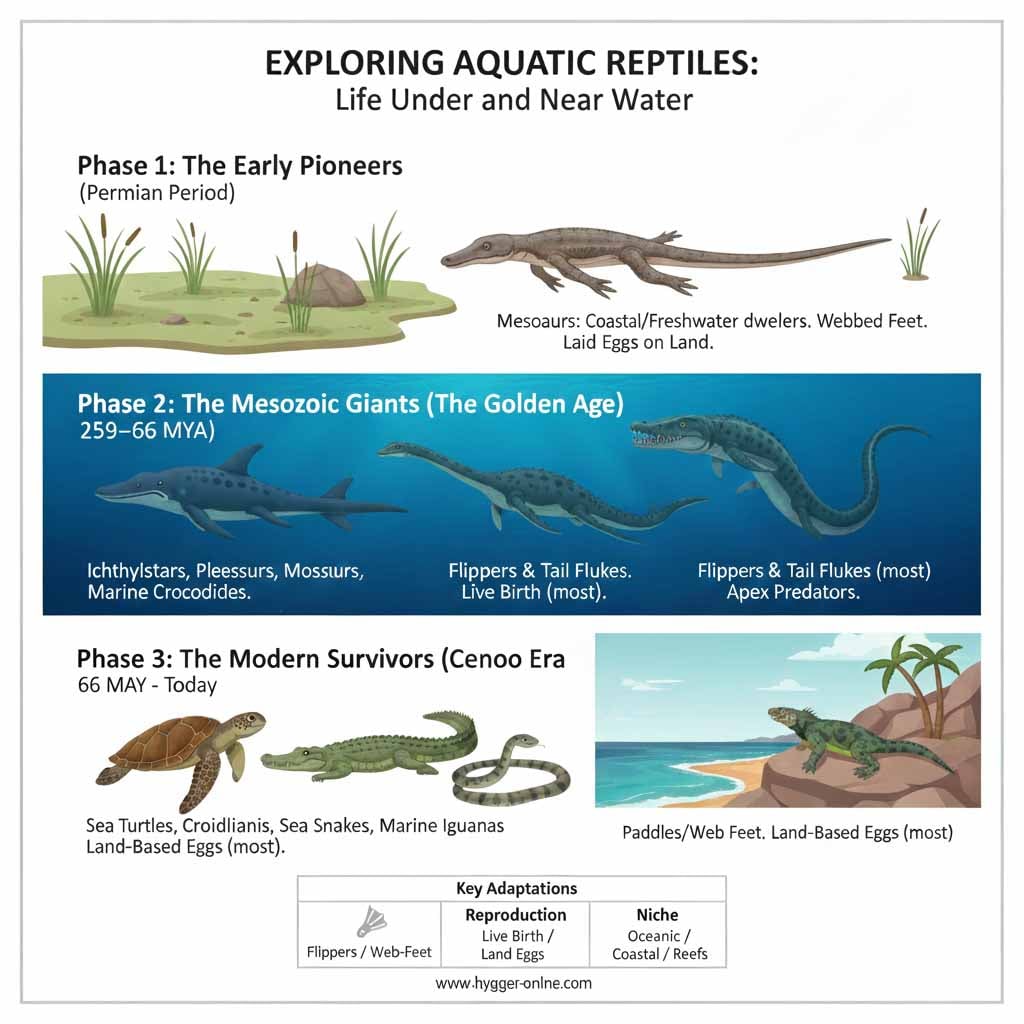
The current shape of aquatic reptile families is not a one-day story. It started about 250 million years ago. Aquatic reptiles have been through several evolutionary stages and have reached where they are right now. Here is a brief history of the aquatic reptiles.
Why Did Reptiles Turn Into Aquatic Reptiles?
Here are some reasons why reptiles become aquatic.
- In the early days, aquatic bodies, i.e., seas, rivers, and wetlands, had less competition and more food.
- Water helped to save the reptiles from the reptiles.
- Water bodies offer a more stable temperature than land. This stable temperature helped the cold-blooded reptiles to regulate their bodies with ease.
- Back in the days, oceans were not stacked with more predators than the land. This offered a large survival opportunity, and some reptiles became aquatic.
History of the Aquatic Reptile
Evolutionary History of Aquatic Reptiles
It contains 4 different stages.
Triassic Period
It was the first evolutionary period and a story from 252 million years ago. At this stage, they were confined to shallow coastal regions, lagoons, and estuaries. In this stage, the following development happened.
- Nothosaurs became semi-aquatic.
- Their bodies became streamlined, which helped in swimming.
- Later in this period, they became as large as a blue whale.
Jurassic-Cretaceous
It was the golden era for the marine reptiles. They were dominant in the waters. In those days, they were mainly grouped into 4 categories.
- Ichthyosaurs
- Pleasiosaurs and Pliosaurs
- Metriorhynchids
During this period, they had numerous adaptations that made them dominant in the oceans.
- Their legs were replaced with flippers.
- They begin to use their tails for propulsion in water.
- They learned to dive as they had high levels of myoglobin.
- They began to give birth in the water.
End of Cretaceous
It was the mass extinction and decline period of aquatic reptiles. It happened about 66 million years ago. Only small, adaptable, and semi-aquatic reptiles survived in this era.
Cenozoic to Today
The modern aquatic reptiles are the descendants of surviving and re-adapted reptiles. They are divided into 3 key groups.
- Testudines
- Crocdilia
- Aquatic sqamates
Currently, they have adapted in the following aspects.
- Flipper and web-feet
- Salt-excreting gland
- Advanced sensory underwater
- Long breathing capacity underwater
A Call to Action
It is hard to wrap a history of 256 million years in a few words. If you want to learn more about the specific evolutionary era, please let us know a comment. Otherwise, start your reptile journey with some popular pet aquatic reptiles.
Related Products




Leave a comment