
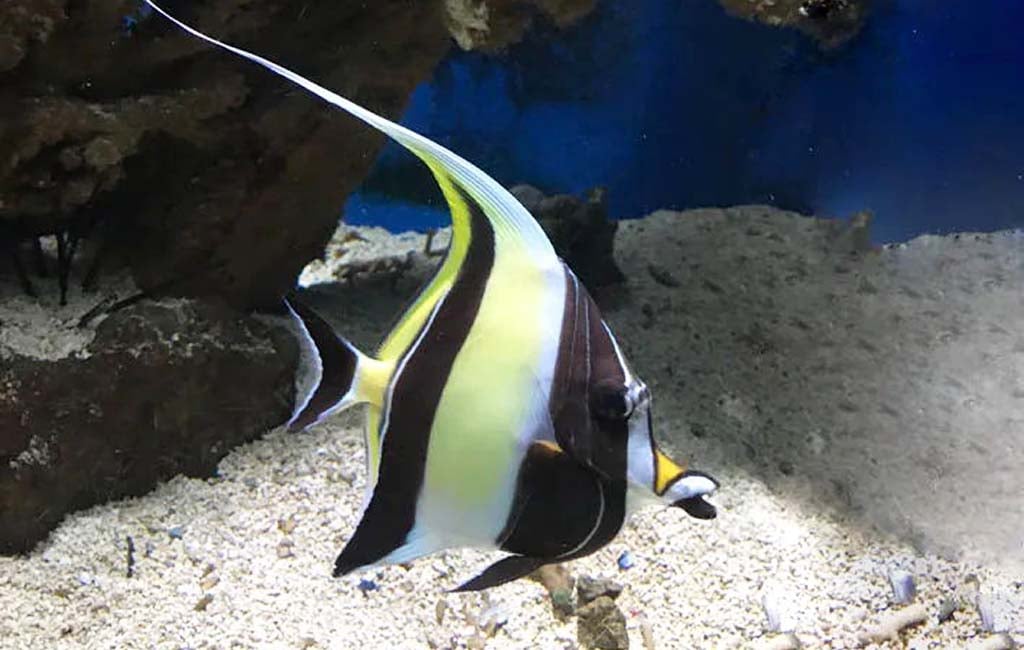
The first time I saw a Moorish idol inside a reef tank, I stopped walking mid-step. That fish looks almost too deliberate, as if someone painted it carefully by hand. The bold black, white, and yellow banding, the long trailing dorsal fin, and the snout that curves and points sharply downward.
Content Table
It is genuinely one of the most striking animals in the entire ocean. But keeping one at home is a completely different conversation. Before anything else, there are some important things worth knowing about this species, starting from the very basics.
moorish idol
Moorish Idol Fish: Profile and Natural Habitat
The Moorish idol, known scientifically as Zanclus cornutus, is the only living member of the family Zanclidae. It is a marine ray-finned fish belonging to the order Perciformes, and it holds one of the widest geographic ranges of any reef fish on the planet.
You will find it across the Indo-Pacific, the Red Sea, the east coast of Africa, and stretching all the way to the eastern Pacific near Mexico and the Galapagos Islands.
In the wild, Moorish idols inhabit shallow coastal reefs, rocky shorelines, and lagoons. They typically occupy depths between 3 and 180 meters, though most sightings happen in shallower zones with high coral density and encrusting organic growth. They are diurnal (meaning active during daylight hours) and tend to move in small groups or loose pairs rather than alone. Solitary individuals are seen far less frequently.
Physical Structure
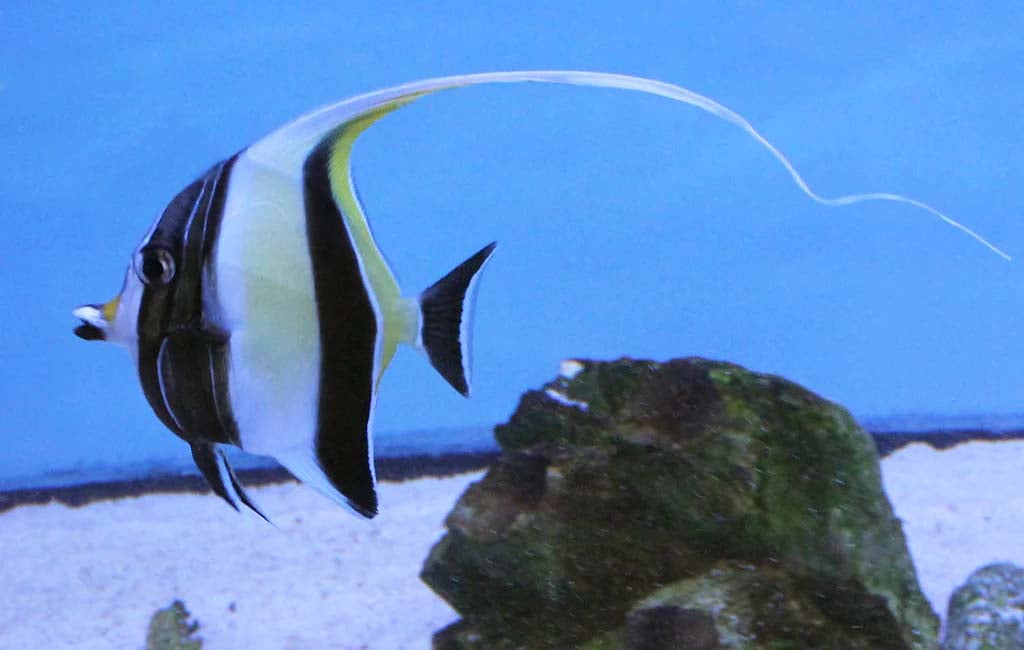
The body is laterally compressed and disc-shaped, which gives it a flat, almost two-dimensional appearance when viewed head-on. The most recognizable feature is the elongated dorsal filament that streams behind the fish as it moves through open water. In a healthy, well-nourished individual, this filament extends well beyond the body length itself. The snout is long, tubular, and built specifically for pushing into narrow coral crevices to access food that most other reef fish simply cannot reach.
Moorish Idol Lifespan
In the wild, Moorish idols typically live between 5 and 7 years. Some individuals are believed to reach up to 10 years under particularly stable reef conditions, though that sits on the upper end of what is documented.
In captivity, the numbers tell a harder story. Most Moorish idols kept in home aquariums do not survive past 12 months. The core problem is not always water chemistry or poor filtration, though those matter significantly.
The primary issue is replicating a wild diet that is almost entirely built around sponge tissue, which is genuinely difficult to source with any consistency. Chronic stress from incompatible tank mates also plays a measurable role in the shortened lifespan seen in captive individuals of this species.
Moorish Idol Diet
What Do Moorish Idols Eat
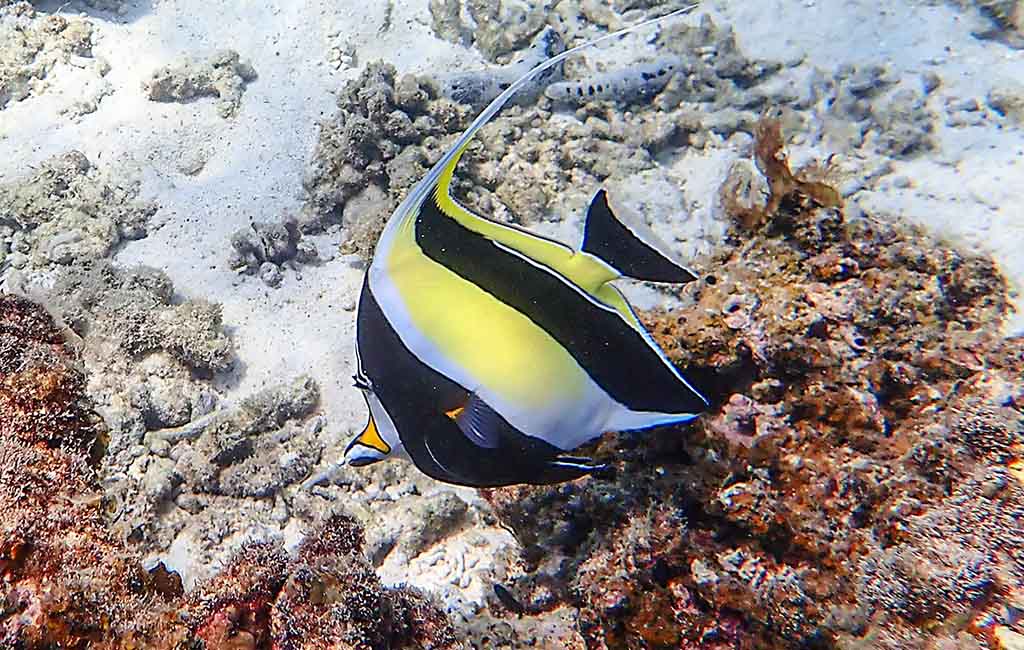
The moorish idol diet in the wild centers on sponges. This is the single most critical feeding fact about this species, and it is the detail that most general aquarium guides either skip over entirely or treat far too lightly.
Sponges make up the majority of their daily food intake. Beyond sponge tissue, they also consume tunicates, encrusting algae, and small invertebrates lodged inside rock formations. The tubular snout is built specifically for this purpose, pushing into tight gaps in coral to scrape out organisms that are inaccessible to most other reef fish.
In captivity, Moorish idol feeding becomes a real and ongoing challenge. Consistent access to live sponge is not a realistic option for most home aquariums. Some experienced keepers have had measured success transitioning their fish onto the following:
- Frozen mysis shrimp (accepted by some individuals after a slow adjustment period)
- Sponge-infused frozen foods from specialty marine fish suppliers
- Spirulina-enriched pellets or algae wafers
- Nori sheets and dried algae
- Natural encrusting growth from established, mature live rock
That last point is not just a supporting option. It is arguably the most important foundation a Moorish idol setup can have. A tank stocked with mature, densely colonized live rock gives a newly introduced fish something biologically familiar to graze on from day one.
Without it, the shift to prepared foods can drag on for weeks, and some individuals never fully make that transition at all. I have read accounts from experienced marine aquarists where the presence of established live rock made the difference between a fish grazing within three days versus one that refused all food for over two weeks. That gap is significant for a species this sensitive.
How big a tank do Moorish Idols need?
Ideal Tank Size Across Growth Stages
Moorish Idol Tank Size for Juveniles
Juvenile Moorish idols under 3 inches in body length can be housed temporarily in a 75-gallon tank. Temporarily is the keyword here. This species grows at a steady pace, and a cramped enclosure adds avoidable stress to an already sensitive fish.
Moorish Idol Tank Size for Adults
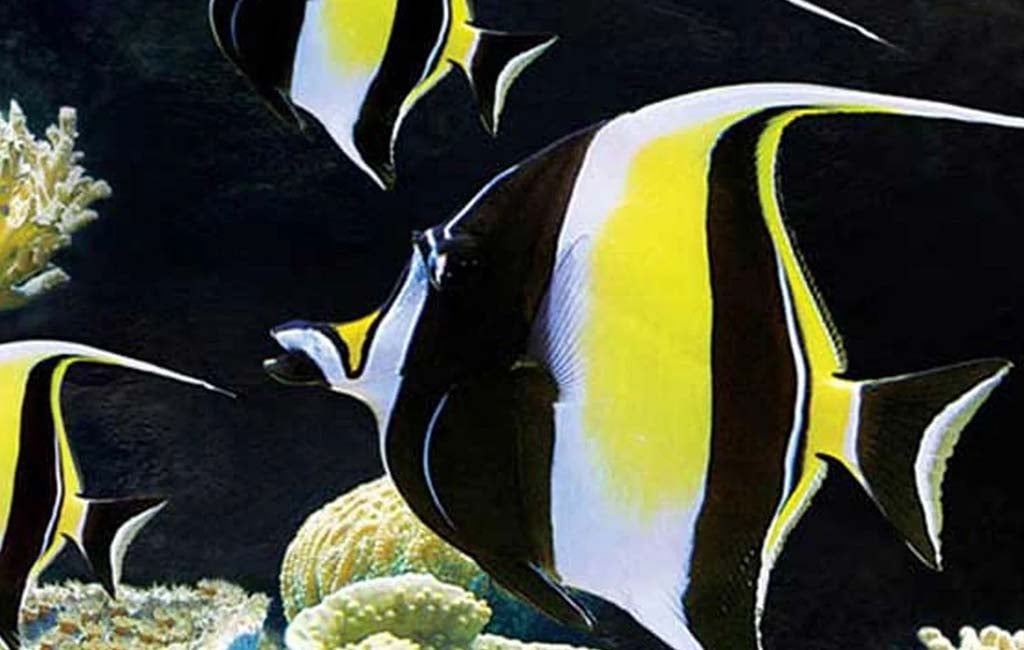
Adult Moorish idols reach around 9 inches (roughly 23 centimeters) in total body length, not including the dorsal filament. For a single adult, the minimum recommended Moorish idol tank size is 100 gallons. However, a 125- to 150-gallon setup is a more practical and realistic target if the goal is supporting natural behavior, reducing background stress, and leaving room for compatible tank mates.
Tank geometry matters as well. A longer tank (six feet or more in horizontal length) is far more suitable than a tall, narrow alternative. Moorish idols are consistent, active swimmers that cover ground throughout the day. They need horizontal space above everything else.
Moorish Idol Tank Size
Are Moorish Idols Reef Safe
The short answer is: partially. The fuller answer depends heavily on what is already sharing the water.
In terms of corals, Moorish idols do not typically target stony corals the way certain angelfish species do. However, because sponges, tunicates, and encrusting organic material are central to their natural diet, they will graze on soft biological matter found in a reef tank over time. Zoanthids and certain soft coral species tend to be the most frequently affected.
In terms of general temperament, Moorish idols are peaceful fish. They do not stake out or defend territory aggressively, and they tend to leave most tank mates alone. The concern actually runs in the opposite direction. Placing a Moorish idol alongside highly territorial or aggressive species creates chronic background stress, which leads directly to appetite suppression.
For this particular fish, a disrupted feeding pattern is one of the fastest and most consistent paths toward decline in a captive setting.
Moorish Idol Fish Fun Facts
Some Moorish idol fish facts that genuinely caught my attention while researching this species:
- The name is believed to trace back to the Moors of West Africa, who considered the fish a symbol of good fortune and prosperity.
- Zanclus cornutus is the only member of the entire family Zanclidae, which makes it taxonomically singular among all known reef fish.
- Juvenile Moorish idols have small bony spines near the corners of their eyes that become far less visible as the fish matures.
- Despite their striking visual resemblance to butterflyfish, Moorish idols share no close taxonomic relationship with that family.
- The character Gill from the animated film Finding Nemo is a Moorish idol.
- In well-maintained individuals, the dorsal filament grows longer and more prominent over time and is considered a visible indicator of overall health.
- Moorish idols are among the few reef fish that appear to maintain extended pair bonds in the wild over long periods.
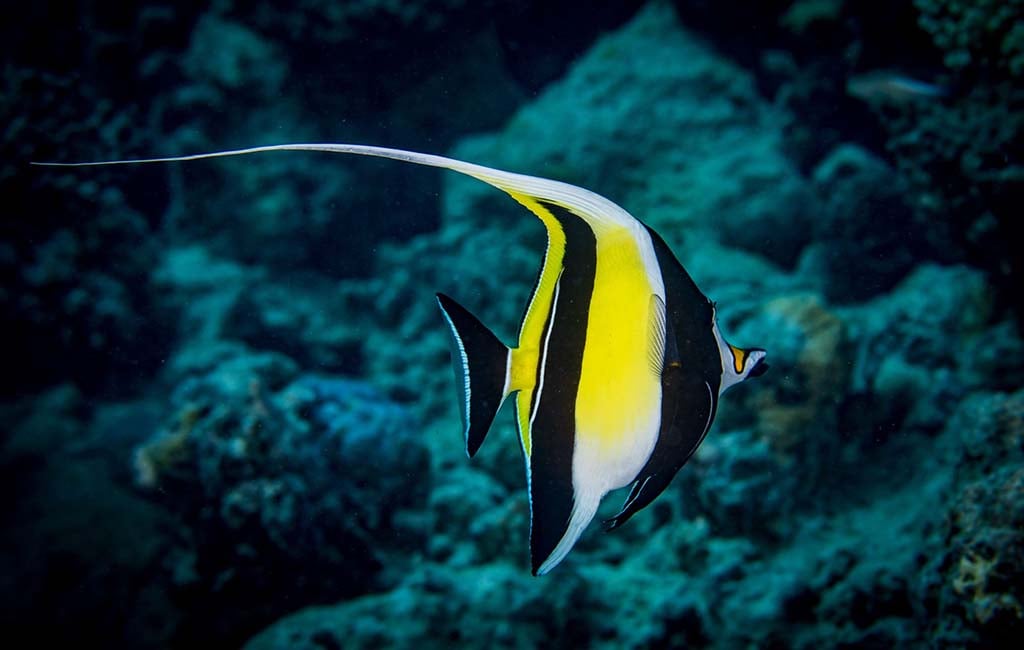
Moorish idol fish facts
You Can Create Something Beautiful
Keeping a Moorish idol successfully is not common, and I think that matters to know upfront. This is not a forgiving species for beginners. The demands around diet and space are specific and real. But for an aquarist who builds the right environment first, sources appropriate food, and monitors feeding behavior with genuine attention, success is possible.
A healthy Moorish idol in a well-maintained reef tank is one of the most visually remarkable things you can keep at home. For the right person with the right setup, the effort is absolutely worth it.
Related Products


Leave a comment