
Are you searching for a unique, peaceful, and attractive fish to place in your nano or plant tank? The halfbeak fish is a wonderful but little-known friend in the aquarium world. Its thin body, unusual jaw, and style of living make the halfbeak a favorite and unique addition to any small tank. As well as being eye-catching, they like calm tanks with plants, which is why they can do well in small aquariums with other types of fish.
Content Table
In this hygger blog, we’ll help you understand the halfbeak fish, including their habits, appearance, and tank needs, so you can think about whether they will fit into your aquarium.
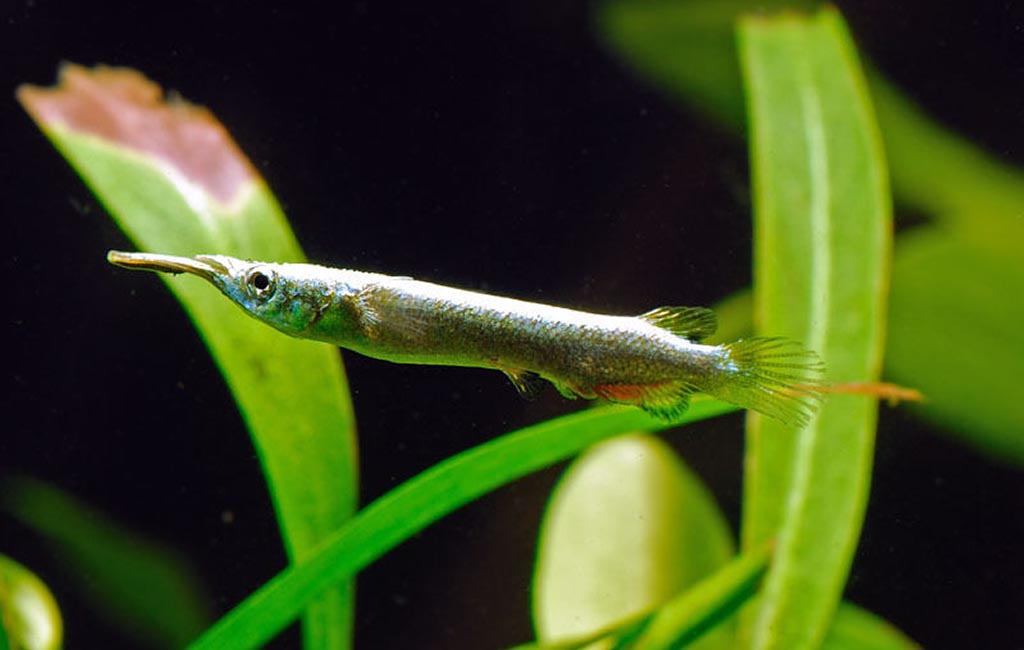
halfbeak fish
What Is a Halfbeak Fish?
The halfbeak fish is a member of the Hemiramphidae family, and its lower jaw is so much longer than its upper jaw that it looks half-beaked. They are recognized for living near the water surface and having special ways of feeding. Aquarists usually keep freshwater halfbeak species in their tanks rather than marine types.
Popular Halfbeak Fish Species
They are livebearers, which means their young can swim from birth like guppies or mollies, rather than being born as eggs. Most of the time, they are mild-mannered, but males may become territorial and aggressive while trying to mate. Putting one male in a group of females can help lessen aggression and reduce stress among females.
- Celebes Halfbeak (Nomorhamphus liemi)– This Halfbeak (Nomorhamphus liemi) is found in Sulawesi, Indonesia, and is famous for its striking color, easy-going nature, and ability to adjust to living in tanks with plants. This species survives best in water that is a bit acidic and likes a stable habitat decked with floating plants.
- Wrestling Halfbeak (Dermogenys pusilla)– The small and gentle Wrestling Halfbeak (Dermogenys pusilla) is very popular among aquarists because of how it acts during courtship. It does well in most water conditions, even slightly brackish water, allowing you to place it in a range of tank environments.
- Golden Halfbeak – The golden halfbeak is a beautiful shape of the wrestling halfbeak, noted for its glistening, golden color. It adds color to small aquariums and feels most comfortable in peaceful conditions with a lot of room on top.
- Dermogenys sumatrana– Dermogenys sumatrana doesn’t work well in community tanks, since it is larger and braver. But you can keep it with other similarly sized and docile micro fish. It is most suitable for enthusiasts who enjoy seeing lively interactions among various animals.
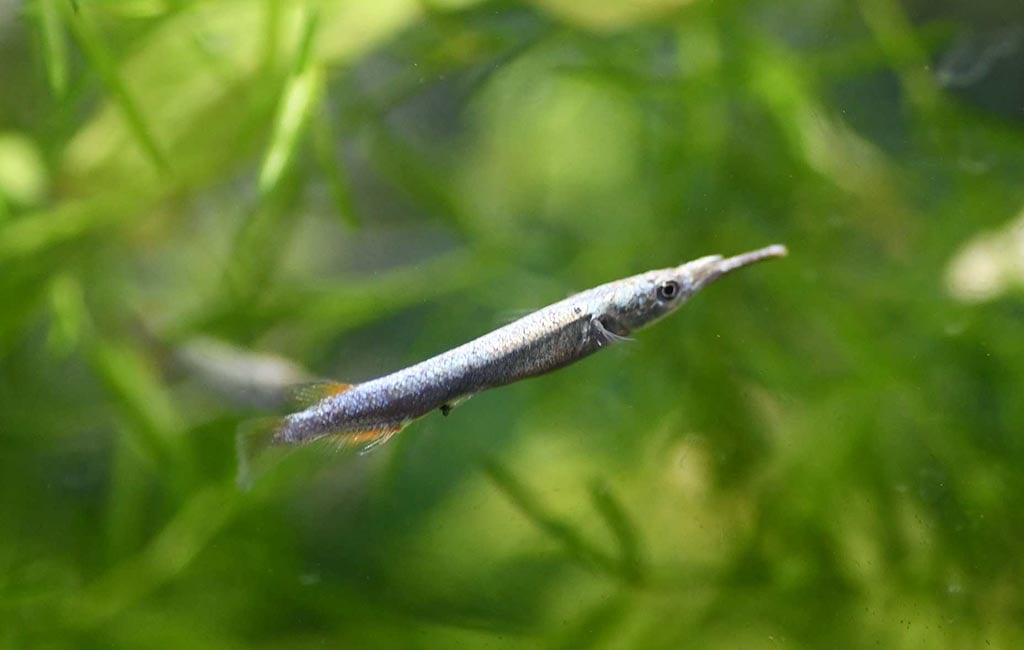
How Big is a Halfbeak Fish
How Big Does a Halfbeak Fish Get?
Halfbeaks remain relatively small, which makes them ideal for nano aquariums.
- Size: Most freshwater halfbeaks grow to 2 to 3 inches in length, although some species may reach up to 4 inches.
- Lifespan: They typically live for 3 to 5 years when cared for properly.
- Habitat: Halfbeaks are frequently found in slow-moving water such as rivers, ponds, and streams, commonly close to surface weeds.
- Feeding & Food Chain: They mostly feed on small insects, crustaceans, mosquito larvae, and floating food pellets. You can feed your fish high-quality flakes, frozen bloodworms, brine shrimp, and tiny insects like fruit flies. This gives them a diet similar to what they’d get in nature.
Even though halfbeaks tend to live close to the water’s surface, they are not aggressive and get along well with peaceful tank mates.
The Halfbeak Fish Aquarium
What Is a Halfbeak Fish Aquarium?
Any tank that offers space for these surface-dwelling and shy fish counts as a halfbeak fish aquarium. As halfbeaks prefer calm waters and plants to drift on, they are happiest in small tanks or peaceful aquariums.
Ideal Features:
- Tank Size: A 10 to 20-gallon aquarium is sufficient for a small group of halfbeaks.
- Tank Shape: Long, horizontal tanks are preferred over tall ones due to their surface orientation.
- Cover: A tight-fitting lid is essential — halfbeaks are skilled jumpers!
- Water Parameters:
Temperature: 72–80°F (22–27°C)
pH: 6.5–7.5
Hardness: Soft to moderately hard water
- Aquascaping: Put floating plants like hornwort, frogbit, or water lettuce in the tank to closely reproduce their home and give them a feeling of safety.
- Filtration: Try to select a soft-flow filter that does not create strong water movement, since halfbeaks like tranquil currents.
- Lighting: Don’t go too bright; moderate light is suitable for keeping your plants green and their colors visible.
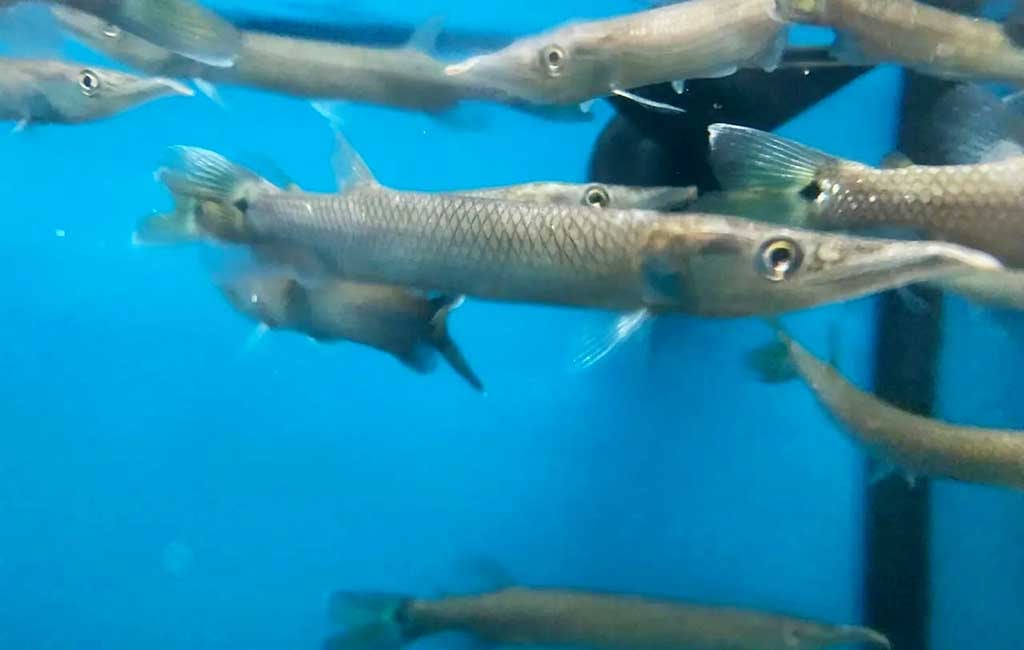
halfbeak fish with shrimp
Setup Tips:
- Cycle the Tank Thoroughly: Fully complete the cycling process in the aquarium before you add halfbeaks to the tank. Check the water to make sure the ammonia and nitrite levels are at zero, and nitrates are almost not present.
- Minimize Surface Agitation: As halfbeaks like to stay near the surface, try not to use filters that make the water too agitated. To keep the water on the surface calm, use a sponge filter or a hang-on-back filter that you can adjust.
- Feed at the Surface: For quick feeding, try floating options like micro pellets, freeze-dried insects, or crushed flakes. Don’t feed sinking foods because halfbeaks generally stay near the top of the water. Feed a little bit of food at a time, several times a day, according to their natural eating habits.
- Provide Floating Plants: Consider adding duckweed, frogbit, or Salvinia to your tank. Since they help reduce stress, give shelter, and inspire goldenrods to surface swim.
Halfbeak Fish with Shrimp
Can you keep halfbeaks and shrimp together? The answer is yes, but with caution.
Halfbeaks will not harm adult shrimp. But they might eat baby shrimp that can fit inside their mouths. Still, if you add plenty of plants, moss, and shelters, keeping both species alive is achievable.
Compatible Shrimp Types:
- Amano Shrimp: Large, active, and less likely to be harassed by halfbeaks.
- Cherry Shrimp: Colorful and peaceful, but keep them in densely planted areas.
- Ghost Shrimp: Transparent and slightly larger, making them a decent choice.
Tip:
Ensure your shrimp population has a secure hiding environment, especially during molting and breeding periods. Moss balls, Java moss, and driftwood help create safe zones in a halfbeak fish tank.
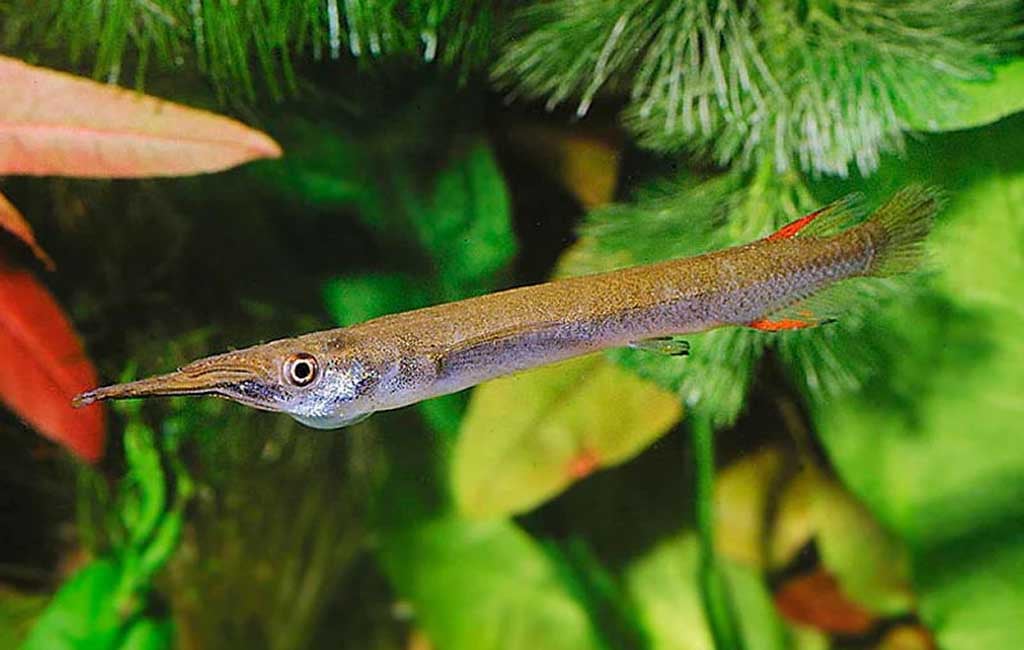
halfbeak fish tank mates
Halfbeak Fish Tank Mates
Halfbeaks are not aggressive and tend to be shy when they find themselves in places they aren’t familiar with or in noisy or busy spots. So, it is essential to pick suitable tank mates so neither fish becomes stressed or aggressive.
Best Tank Mates for Halfbeak Fish:
You should pick tank mates carefully because halfbeaks are surface swimmers and can get easily stressed. These fish are happy among species that do not fight or try to take over the surface area of the tank.
- Small Tetras (like Ember Tetras or Neon Tetras): With their rich colors, they give the fish tank a new look and stay low, avoiding sharing the top spot with others. They both are tranquil and do best when the water is similar.
- Corydoras Catfish: Corydoras Catfish are great for setting up with other fish in a group, as they are gentle creatures. They eat whatever is left in the tank and don’t bother other fish, which is why they are good for the bottom area.
- Otocinclus Catfish: Otocinclus Catfish eat a lot of algae and are very gentle fish. Otos prefer sticking to glass and plants, and they help maintain order in a planted tank without bothering other fish.
- Dwarf Rasboras (like Chili Rasboras): These fish are tiny, not bold, and ideal for planted tanks. They live peacefully and tend to inhabit the middle and lower levels.
- Kuhli Loaches: These bottom-dwelling eel-like loaches are simple and calm pets and cause no trouble for halfbeaks in the tank.
- Harlequin Rasboras: Harlequin Rasboras are active swimmers that increase the activity in the aquarium. They live peacefully and don’t bite fins, so halfbeaks like having them around.
- Guppies or Endlers: Guppies and Endlers go nicely in a community tank, giving your aquarium an exciting, colorful, and thrilling upper level. Try to balance the number of males and females to prevent increased stress during mating.
- Sparkling Gouramis: Sparkling Gouramis are a nice option for planted tanks. As they are gentle and like the same water conditions as most plants.
- Amano or Cherry Shrimp (with caution): Larger adult shrimp can live comfortably with one another. Although younger shrimp may turn into food for them.
Avoid These:
- Fin-nippers like tiger barbs or serpae tetras
- Large or aggressive fish like cichlids
- Overly boisterous swimmers who dominate the surface level
When pairing halfbeaks with others, consider tank level zones (top, middle, bottom) to avoid competition and stress.
To Summarize
Halfbeak fish are a good fit for nano or planted tanks, even though they are not chosen as often as others. Their friendly nature, small size and lifestyle near the surface help make them distinctive and simple to handle. They live best in static, planted tanks along with smaller fish and shrimp. Which is why they fit well into community tanks.
Quick Highlights of halfbeak fish:
- Size: 2–3 inches
- Lifespan: 3–5 years
- Diet: Omnivore (insects, small crustaceans, flakes)
- Behavior: Peaceful, surface-dwelling
- Ideal tank mates: Corydoras, rasboras, shrimp (with care), guppies
- Aquarium type: Planted, nano tanks with floating vegetation and calm water
If you’re just starting or have been keeping fish for years, the halfbeak fish can still give you a unique addition to your collection. Remember that halfbea loves its surface, give it a peaceful environment, and you can savor its beautiful movements.
Related Products





Great little article. Covers all areas of the species. Basic and too the point no technical jargon