
Aquarium keeping is as much about beauty as it is about balance. Clear water, healthy fish, and a thriving ecosystem all depend on proper filtration—and that’s where filter floss plays a vital role. Though it might look simple, this soft white material is a cornerstone of modern aquarium maintenance. It quietly captures debris, supports biological balance, and enhances the clarity that every aquarist loves to see.
Content Table
In this article, we’ll explore what aquarium filter floss is, how it differs from other filtration media like sponges and bio balls, and why products like the hygger Aquarium Filter Floss have become must-have essentials for both beginner and expert aquarists.
filter floss
What Is Filter Floss?
Filter floss, also known as filter fiber or filter padding, is a fine, fibrous mechanical filtration material used in aquariums to trap particles suspended in the water. It works much like a net—catching uneaten food, fish waste, plant debris, and other floating impurities before they cloud your tank or overload your biological filtration.
When water passes through filter floss, solid waste is physically trapped in the fibers, leaving the water clearer and easier to maintain. Unlike sponges, which have larger pores designed to hold bacteria, filter floss has an ultra-dense structure that captures even tiny particles, providing polished, crystal-clear water as a result.
Filter floss typically serves as the first stage of filtration—a mechanical pre-filter that removes dirt before the water reaches the biological and chemical filtration stages. By doing this, it extends the lifespan of your filter media and prevents clogging in pumps or biological chambers.
Why Aquarists Use Filter Floss
- It improves water clarity by trapping fine particles that other filters might miss.
- It reduces maintenance by keeping debris from reaching the biological filter media.
- Filter floss is easy to replace—you can cut it to size and discard it once it’s dirty.
- It’s affordable and customizable, fitting any filter type: canister, sump, hang-on-back, or top filter.
- It’s safe for all fish and plants, as it’s non-toxic and doesn’t alter water chemistry.
The hygger Filter Floss Advantage
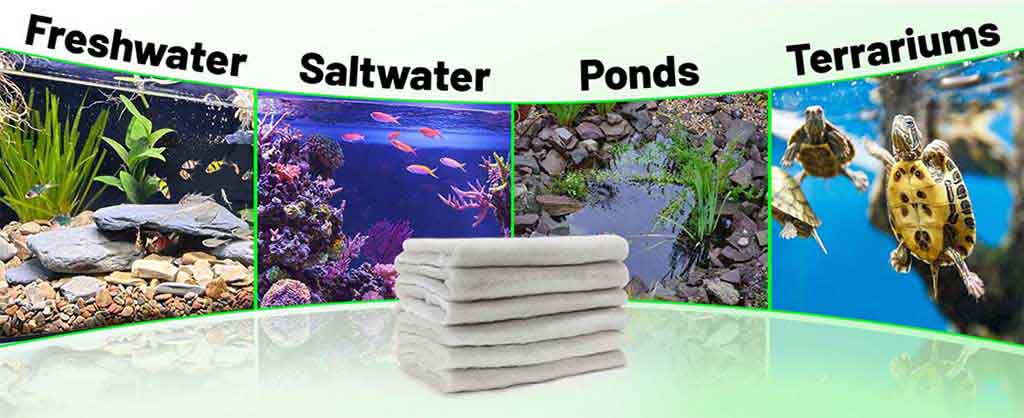
The hygger Aquarium Filter Floss exemplifies how this simple material can be elevated through thoughtful engineering. hygger’s filter floss is made of high-quality synthetic fibers with a dense yet breathable weave that ensures efficient particle capture without impeding water flow. It is suitable for both freshwater and saltwater aquariums, and its thickness and durability allow it to perform consistently even under heavy filtration systems.
Unlike disposable sponge pads that compress or disintegrate quickly, hygger’s floss maintains its structure over time, giving hobbyists reliable mechanical filtration and longer intervals between replacements.
filter media vs filter floss vs sponge
Aquarium Filter Media vs. Filter Floss vs. Sponge
Understanding how filter floss fits into the broader filtration system requires comparing it to other types of aquarium filter media. All three—filter media, filter floss, and sponge—play critical roles in maintaining clean and balanced aquarium water, but they do so in different ways.
1. Filter Media
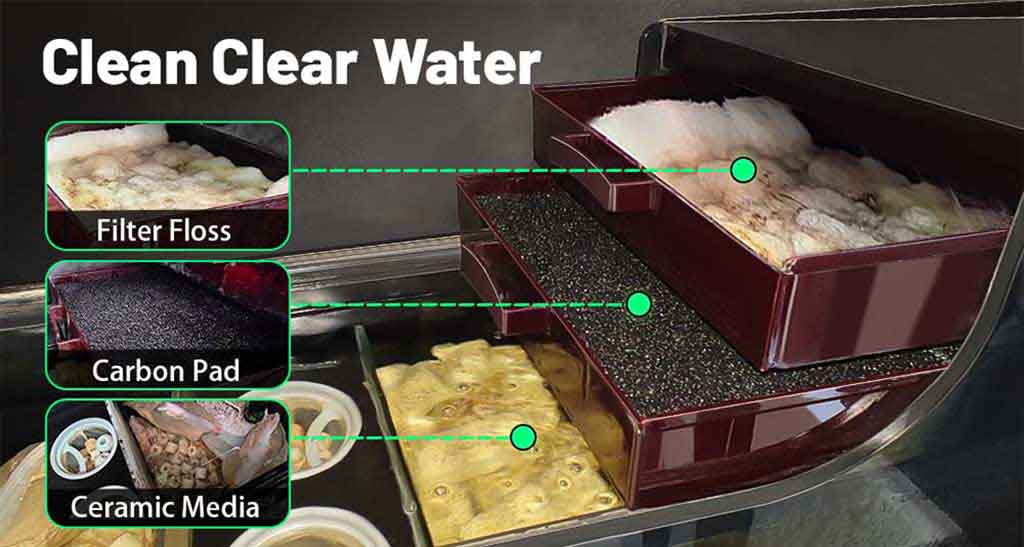
Filter media is a general term that refers to any material used in aquarium filters to remove impurities. There are three main types of filtration media:
- Mechanical media (like filter pads or floss): Remove physical debris.
- Biological media (like ceramic rings, bio balls, or lava rock): Hosts beneficial bacteria that convert harmful ammonia and nitrite into less toxic nitrate.
- Chemical media (like activated carbon or resin): Removes dissolved toxins, odors, and discoloration.
Together, these components create a complete filtration system. Filter floss fits under the mechanical media category, serving as the first line of defense to keep solid waste out of the biological stage.
2. Filter Floss
Filter floss specializes in fine mechanical filtration. It is designed to trap minute particles that even sponge filters might miss. Because it captures micro-debris so efficiently, filter floss is often referred to as the “polisher” of the aquarium world.
When used correctly, it ensures the biological media downstream can focus on nutrient conversion rather than getting clogged with physical waste. The hygger’s filter floss, for instance, features a balance of density and permeability, ensuring that water passes smoothly while even the smallest impurities are caught in the fibers.
3. Sponge Filters
Sponge filters are versatile devices that provide both mechanical and biological filtration. The sponge’s porous surface traps larger particles (mechanical), while also offering a habitat for beneficial bacteria to colonize (biological). Sponges are reusable and can be rinsed multiple times, making them cost-effective for long-term use.
However, their pore size limits how much fine debris they can catch—this is where filter floss excels. While sponges handle larger waste, filter floss polishes the water to perfection, removing finer particles that make it look cloudy.
filter floss for aquarium
Comparing Their Roles in Aquarium Filtration
Each filtration material contributes something unique to maintaining a healthy aquarium, and they often work best when combined.
Filter media forms the foundation of your filter system. It’s the complete setup that includes mechanical, biological, and chemical stages—each performing a specific role. Mechanical media like pads and floss trap physical waste, biological media like ceramic rings convert harmful toxins into safer compounds, and chemical media remove odors and discoloration. Together, they create the full ecosystem of water purification.
Filter floss focuses exclusively on the mechanical side, acting as a fine pre-filter that catches particles before they can clog the rest of the system. Think of it as the polishing cloth of your tank—it removes the smallest impurities, leaving the water sparkling clear. While it doesn’t host much beneficial bacteria due to frequent replacement, it’s crucial for keeping your filter running efficiently and your aquarium looking pristine.
Sponges, by contrast, combine both mechanical and biological functions. They trap larger particles while serving as a safe home for beneficial bacteria. This makes them ideal for gentle filtration setups like shrimp, betta, or fry tanks where a delicate flow is needed. They can be reused repeatedly and are easy to clean with aquarium water.
In summary, filter floss and sponge filters complement each other beautifully. The floss provides precision cleaning, while the sponge ensures biological stability. Add in your broader filter media setup, and you have a complete, balanced filtration system that keeps every part of your aquarium thriving.
How Often to Change Filter Floss in Aquarium Maintenance
While filter floss is simple to use, regular replacement is key to keeping your aquarium clean and healthy. Because it works by trapping solid waste, it eventually becomes saturated and clogged with debris, which can restrict water flow and reduce efficiency.
Filter floss replacement schedule
General Replacement Schedule
Most aquarists replace filter floss every one to two weeks, depending on:
- Bioload: Heavily stocked tanks produce more waste, requiring more frequent changes.
- Feeding habits: Overfeeding can cause excess debris.
- Filter type and flow rate: Higher flow filters may clog faster.
In high-maintenance tanks, such as those with large fish or messy eaters, it’s best to check the floss weekly. If water starts bypassing the floss or flowing more slowly through the filter, it’s time to change it.
Maintenance Tips
- Always replace only the filter floss, not the biological media, to avoid disrupting beneficial bacteria.
- Rinse reusable parts of the filter with old tank water (never tap water) to preserve healthy microbes.
- Cut the floss to fit your filter snugly—hygger’s version is easily trimmable and fits canister, hang-on, sump, and internal filters.
- Replace immediately if it begins to disintegrate or smell foul.
With hygger Aquarium Filter Floss, maintenance becomes even easier thanks to its dense and resilient fibers. Unlike cheaper alternatives that collapse quickly, hygger’s floss retains its shape and filtration efficiency longer, reducing waste and effort for aquarists.
Can You Put Filter Floss Behind a Heater?
A common question among fish keepers is whether filter floss can be placed near or behind an aquarium heater. While technically possible, it’s not recommended to put filter floss directly behind or in contact with the heater.
Here’s why:
- Flow Restriction: The heater needs open water circulation to distribute heat evenly. If the filter floss blocks that flow, it can create uneven heating or cause the heater to overwork.
- Material Risk: Though the floss is heat-resistant to a degree, direct contact with a heater’s glass or metal surface could cause melting or degradation over time.
- Reduced Efficiency: Filter floss works best in areas with consistent water movement. Placing it behind a heater reduces the flow of water through its fibers, limiting its filtration capacity.
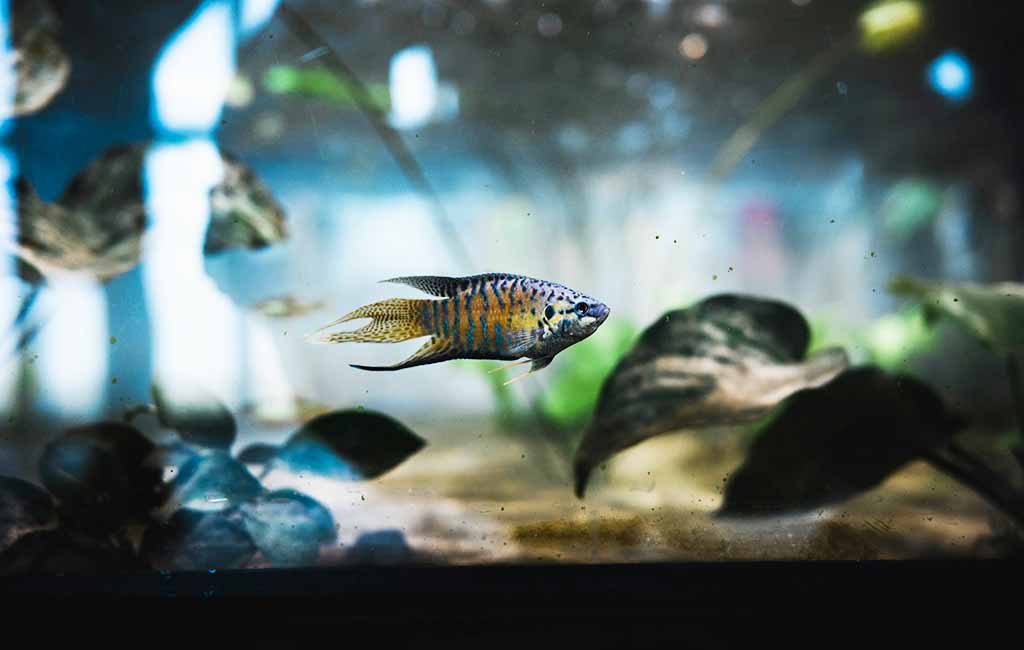
Don’t put filter floss behind a heater
Best Placement Practices
- Position the filter floss in the filter chamber or flow path of your pump, not behind stationary equipment.
- If you have a small tank with limited space, use hygger’s flexible filter floss sheets that can be safely trimmed to fit around equipment without blocking flow.
- Always maintain a clear space around heaters (typically 1–2 inches) to allow water to circulate freely.
By using the right placement strategy, you can ensure that both your filter and your heater perform efficiently—keeping your aquarium clean, clear, and at the ideal temperature.
To Conclude
Filter floss may seem like a humble component in your filtration system, but its role in aquarium maintenance is indispensable. Acting as a fine mechanical barrier, it captures the smallest impurities that cloud your tank and stress your fish. It protects your biological media, extends the life of your filter, and keeps water polished to brilliance.
When comparing filtration materials, remember:
- Filter floss = precision mechanical filtration.
- Sponges = dual mechanical and biological support.
- Filter media = the full system of mechanical, biological, and chemical purification.
Among the many choices available, the hygger Aquarium Filter Floss stands out for its quality, density, and adaptability. It’s safe for all aquatic environments, easy to trim and replace, and made from durable synthetic fibers designed to perform consistently across freshwater and marine tanks. With hygger’s focus on innovation and reliability, this filter floss isn’t just another consumable—it’s a key to a clearer, healthier, and more enjoyable aquarium experience.
Whether you’re maintaining a nano tank or a large display setup, never underestimate the power of good filtration. Behind every sparkling aquarium is a simple, effective tool quietly doing its job—just like hygger’s filter floss.
Related Products


Thank you for this article. I did not know anything about filter floss, so now I will buy some floss and put it in both of my HOB filters. Good stuff….