
Growing plants in a fish tank appears easy initially. As the tank ages, problems begin to surface. Algae grows on the glass. Leaves yellow. A once clean underwater garden becomes a tangled mess. Most hobbyists quit at this point because they have not learned the aquarium matching formula for a healthy planted tank.
Content Table
Understanding how to make a planted tank flourish does not require rare equipment or advanced chemistry. It requires a working system, applied consistently, and adjusted as the tank matures.
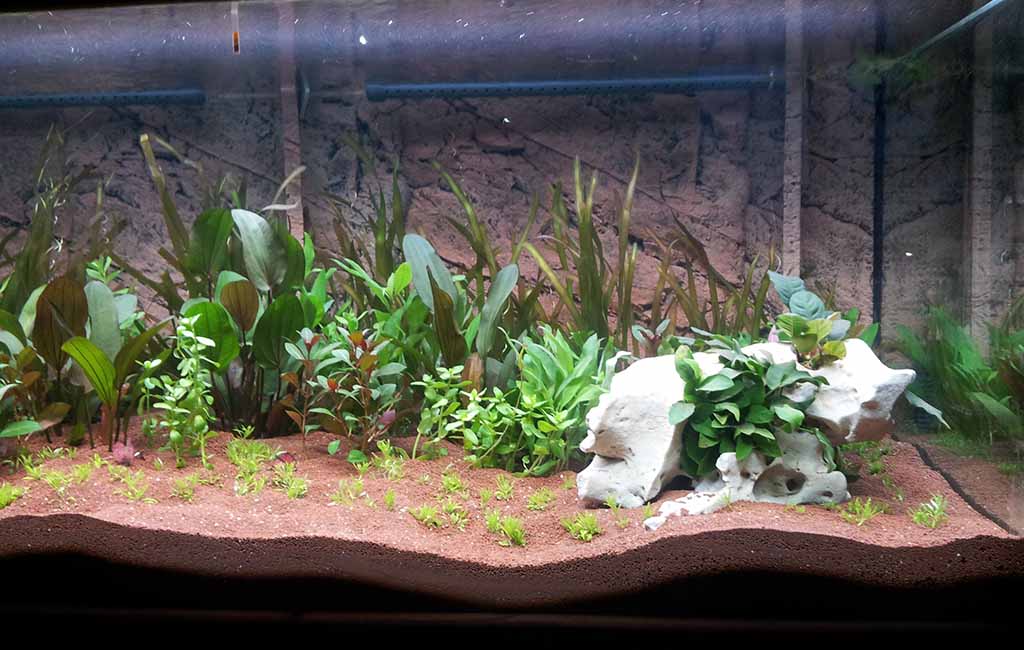
How to make a planted tank easy to maintain
Why Do Planted Tanks Become Harder to Keep
A newly set-up tank behaves differently from one that has been running for six months. Substrate nutrients get depleted at uneven rates, plant roots compete for space, and the water chemistry shifts as biomass increases. Three problems tend to appear together.
- Initially, the structure seems balanced. Stem plants grow taller and faster than expected, overtaking hardscape and disrupting the visual layout.
- Chaotic parameters: Nitrate, phosphate, and potassium levels fluctuate as fish waste increases. Plants absorb nutrients unevenly, leading to deficiency symptoms in some species and excessive algae growth in others.
- An inconsistent maintenance schedule leads to skipped water changes. Water changes, trimming, and filter cleaning are skipped during busy weeks. Planted tanks respond to neglect faster than fish-only setups.
None of these problems is unusual. They are the natural result of a living system that keeps changing, and the fix is a routine built around that fact rather than a one-time setup.
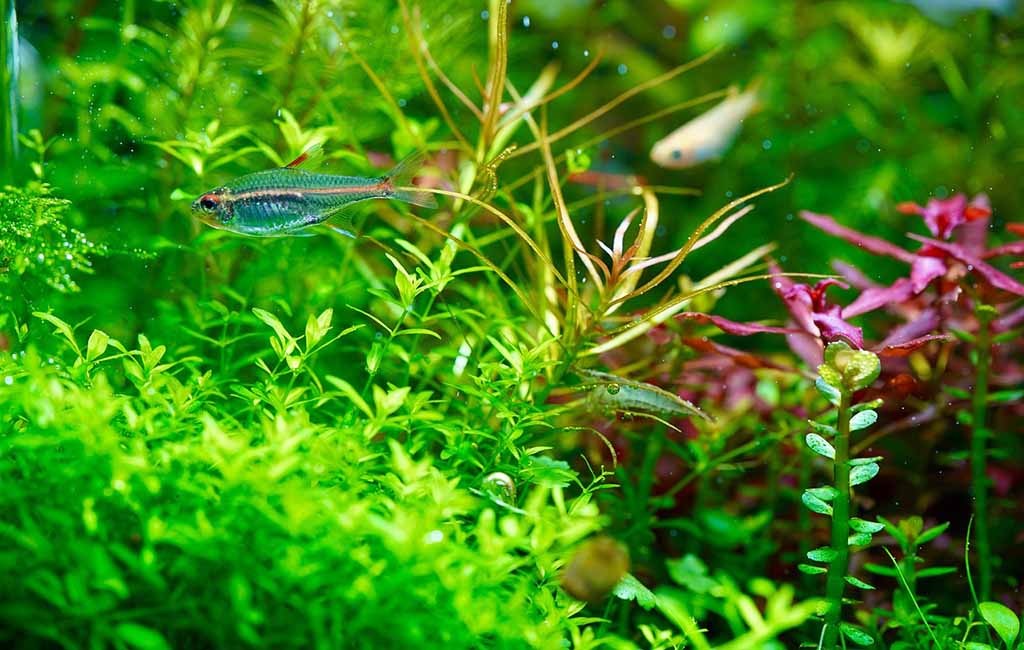
How to make a planted tank flourish
How to Make a Planted Tank Flourish
Aquatic plants respond to three inputs working together: light, nutrition, and water movement, paired with carbon dioxide. When you balance these three inputs correctly, plants grow steadily and resist algae competition. People often call this balance the aquarium matching formula, because it depends on matching light intensity to nutrient availability and CO2 to both.
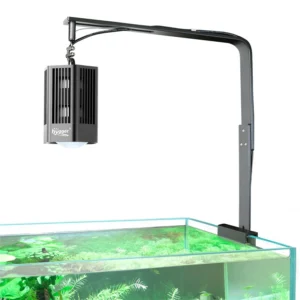
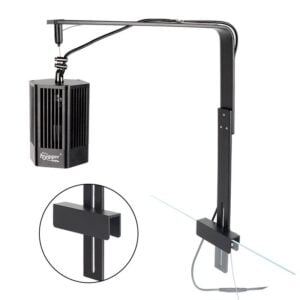
Light. A tank with 6 to 8 hours of moderate-intensity light produces better long-term results than one running high-output LEDs for 10 hours a day. Excess light without matching nutrients is the biggest cause of algae outbreaks in home aquariums.
Nutrition. Root-feeding plants such as Cryptocoryne and Amazon sword need nutrient-rich substrate, whereas stem plants absorb most of their nutrients from the water column. A liquid fertilizer dosed two to three times weekly, alongside a root tab every six to eight weeks, covers most community setups.
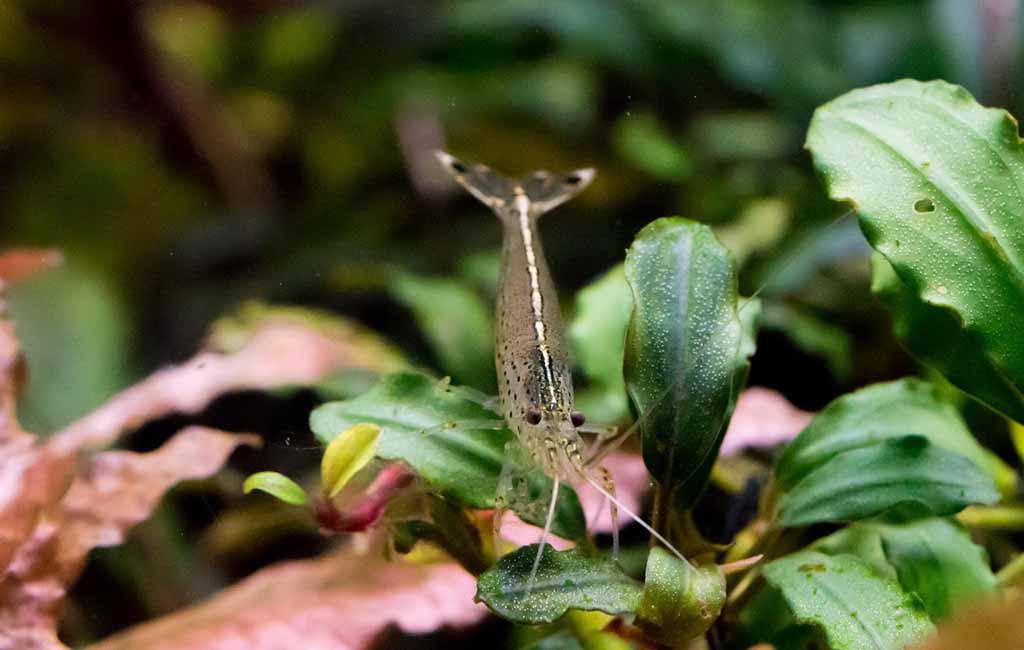
Making Aquatic Plant Maintenance Easy
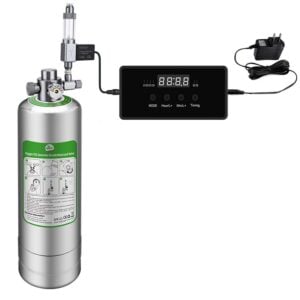
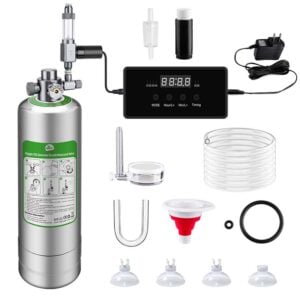
Water flow and carbon dioxide. CO2 is often the missing piece in a struggling tank. Without adequate CO2, plants cannot use the light and nutrients available to them, even if both are perfectly dosed. A drop checker showing a consistent lime-green color, combined with gentle yet even water flow across the tank, keeps plants supplied without stressing fish.
Getting these three inputs to work together is the actual answer to how to make a planted tank flourish. Skipping any one of them, even while doubling down on the other two, usually leads to disappointing results.
Making Aquatic Plant Maintenance Easy
Hobbyists often assume that a flourishing tank must also be a demanding one. That is not accurate. The real question of how to make a planted tank easy to maintain comes down to setting up systems that reduce daily decision-making.
- Automate CO2 with a solenoid tied to the light timer, so gas only runs during daylight hours.
- Use a dosing pump or pre-measured weekly fertilizer packets instead of guessing amounts each time.
- Choose a substrate that holds nutrients for 12 months or longer, reducing how often root tabs are needed.
- Set a fixed weekly slot, even 20 minutes, for trimming and a partial water change rather than doing it whenever time allows.
A tank built around these habits practically runs itself after the first two months, once plant mass stabilizes, and the nutrient uptake pattern becomes predictable.
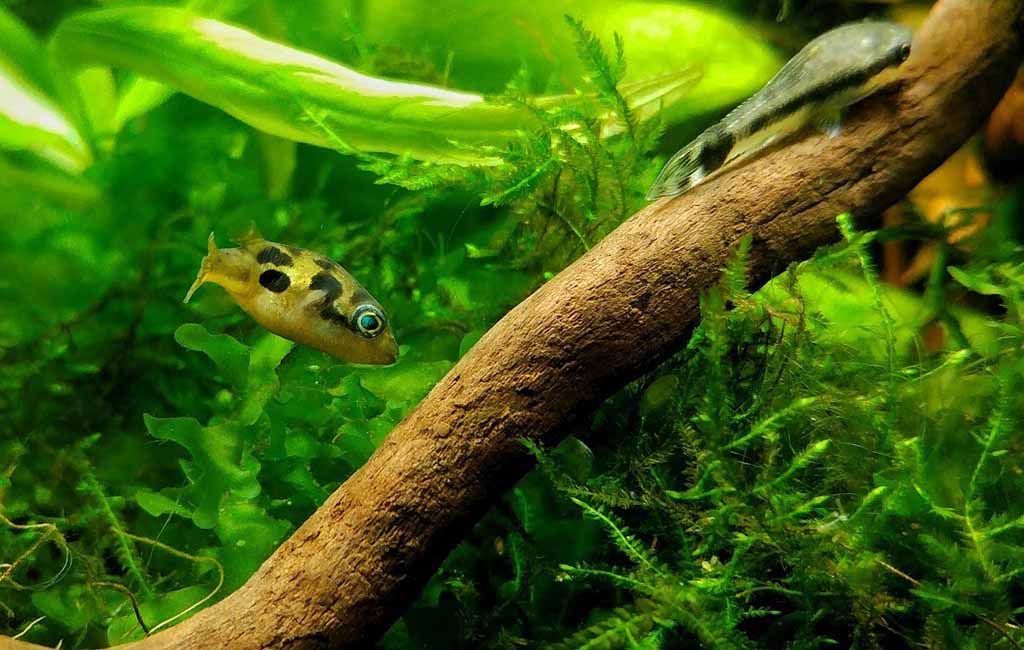
aquarium matching formula
Beginner-Friendly Principle for Aquatic Plants
New aquarists often overcomplicate their first planted tank by mixing species with wildly different care needs. A simpler and more reliable principle is choosing a plant combination that is highly adaptable and complementary from the start.
Pair easy-to-learn grass species, such as dwarf hairgrass or Monte Carlo, with stem plants that grow at a different rhythm, like Rotala or Ludwigia. This combination avoids one type of plant shading out or outcompeting another, since fast growers and slow growers occupy different zones of the tank at different rates. It also gives a natural buffer, because if one species struggles temporarily, the others continue absorbing excess nutrients and prevent algae from taking hold.
Pruning and Aquascaping Daily Maintenance
Regular trimming keeps a planted tank visually sharp without disturbing the biological balance that has already formed. The goal is to maintain shape, not to strip the tank back to bare substrate.
- Trim stem plants just above a node, allowing lateral growth rather than a single tall stalk.
- Remove only the oldest, most shaded leaves from carpeting plants instead of clearing large patches at once.
- Clean the front glass weekly, but leave a portion of the back and side glass untouched, since light algae buildup there supports shrimp and snail populations.
- Avoid replanting large sections in one session. Spread structural changes across two or three weeks so the ecosystem does not experience a sudden shock.
This approach protects the beneficial bacteria and microfauna that have already established themselves, while still keeping the aquascape presentable.
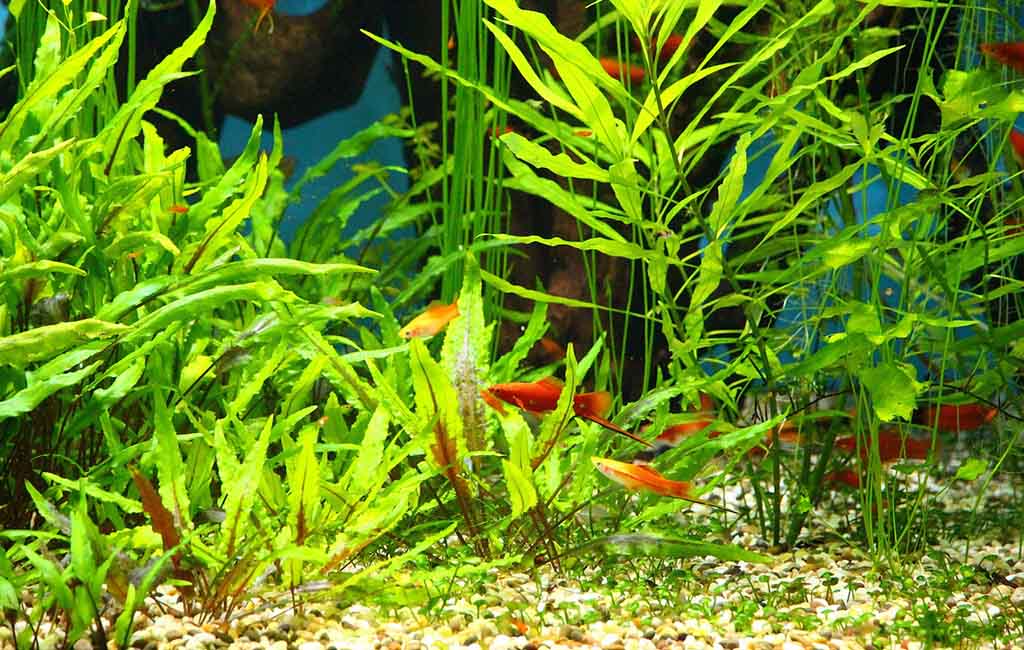
Low-Light Aquarium Plants for Beginners
Low-Light Aquarium Plants for Beginners to Succeed In
For anyone still building confidence, starting with species that tolerate lower light and inconsistent CO2 removes much of the early pressure. These plants forgive small mistakes while a routine is still being developed.
- Java fern – Attaches to wood or rock, grows slowly, and tolerates a wide range of water conditions.
- Anubias – Extremely hardy, resistant to most algae issues, and requires no substrate planting.
- Cryptocoryne wendtii – Adapts well to different light levels once established, though it may shed leaves temporarily after transplanting.
- Java moss – Useful for breeding tanks and shrimp setups, growing steadily under almost any lighting.
- Amazon frogbit – A floating plant that reduces excess light penetration and absorbs nitrates quickly, indirectly helping other plants below.
Starting with two or three of these species builds a stable foundation before moving toward more demanding carpeting or high-tech setups.
Now Is the Time to Act
A planted tank does not need constant intervention to look good. It needs a working balance of light, nutrients, and CO2, paired with a maintenance rhythm that fits the time actually available. Once the aquarium matching formula is applied consistently, the tank begins to stabilize on its own, and the daily guesswork disappears.
The principles covered here, from plant selection to pruning habits, cover the full picture of how to make a planted tank easy to maintain without sacrificing the lush appearance most aquarists are aiming for. The best time to apply a system is before problems appear, not after algae has already taken hold.
FAQs of Aquarium Plants Maintenance
FAQs of Aquarium Plants Maintenance
How often should fertilizer be dosed in a planted tank?
Most community tanks do well with liquid fertilizer two to three times per week, combined with a root tab every six to eight weeks for root-feeding species.
Can a planted tank thrive without added CO2?
Yes, particularly with low light and undemanding species such as Anubias or Java fern, though growth will be noticeably slower compared to a CO2-supplemented setup.
What causes algae to spread quickly in a planted tank?
Algae usually spreads when light output exceeds what nutrients and CO2 can support, creating an imbalance that algae exploits faster than plants can respond to it.
Is trimming necessary even in a low-maintenance tank?
Yes, though less frequently. Even slow-growing species benefit from occasional trimming to prevent shading and to keep the overall layout balanced.
How long does it take for a newly planted tank to stabilize?
Most tanks reach a workable balance within two to three months, once plant mass increases and nutrient uptake becomes more predictable.
Related Products
Leave a comment