
Botanical-style aquariums are interesting and offer a more natural aesthetic than regular planted tanks. They are easy to build and manage. If you are a beginner and want to start your aquarium journey with a natural, botanical vibe, botanical-style aquariums are a great starting point.
Content Table
For this, scroll down to read about what a botanical method aquarium is and how it is different from regular tanks.
Moreover, a step-by-step guide to starting a botanical aquarium is also waiting for you. Sometimes, people confuse a blackwater aquarium with a botanical-style aquarium. At the end, you’ll also learn about the differences and common aspects of both tanks.
botanical style aquarium
What Is a Botanical Style Aquarium?
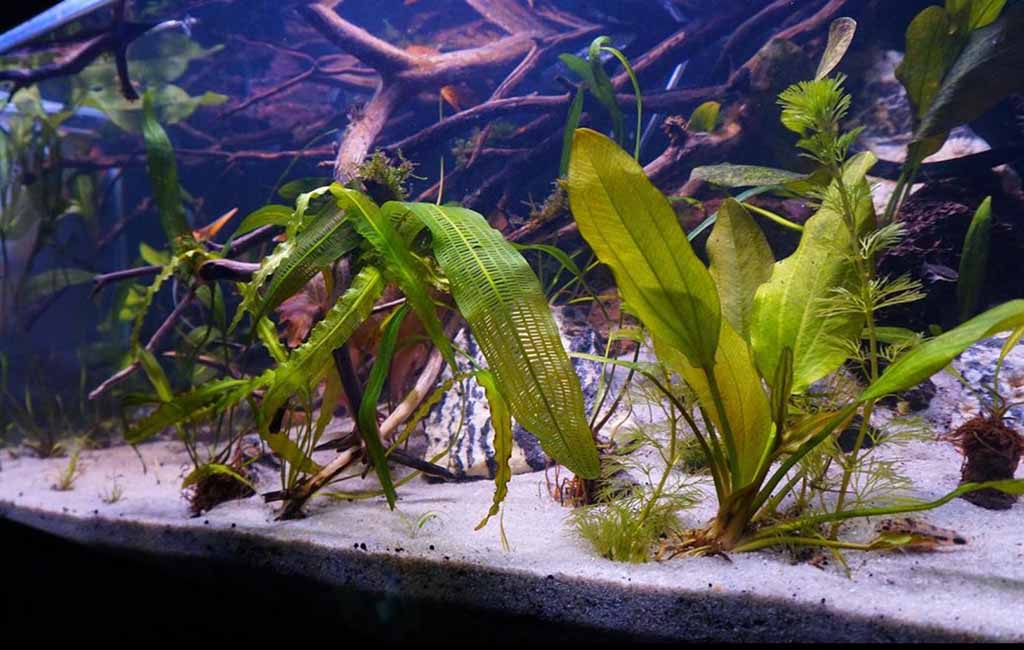
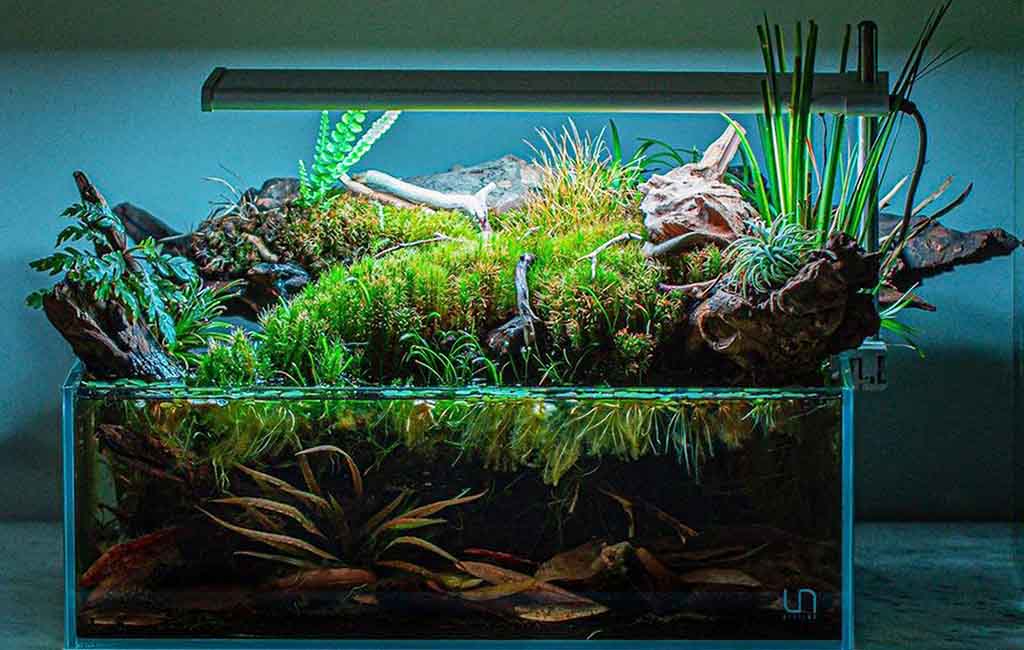
Botanical-style aquariums replicate a natural ecosystem instead of just having plants. A botanical style aquarium characterized by slightly tea-colored water, leaf litter, higher microbial activity, seed pods, plants, etc. Plants are optional. On looking at a botanical method aquarium, you’ll get a feel of a minimalistic version of a freshwater ecosystem near to rivers or floodplains.
Why Is It Called Botanical?
It is called a botanical-style aquarium because it consists of plants and plant-based materials. These items increase the microbial activity in the tank and make it similar to a natural ecosystem.
How Does the Botanical Method of Aquariums Differ?
Botanical-style aquariums are different from planted or aquascaping aquariums. Although they consist of plants, they are not completely plant-based. Here are the differences between the planted aquarium and the botanical style aquarium.
Botanical Style Aquarium VS Planted Aquarium
| Botanical Style Aquiarum | Planted Aquarium |
| Its primary focus is on replicating the natural ecosystem. | It mainly focuses on growing plants in the tank. |
| It contains plants optionally or minimally. | Plants are necessary for these tanks. |
| It has a substrate containing sand, soil, or leaf litter. | It has nutrient-rich, i.e., N, P, K, etc., substrates. |
| The botanical method aquarium requires gentle and observational maintenance. | It requires regular trimming and maintenance, i.e., daily, weekly, monthly, etc. |
| It has tinted water. | It has crystal clear water. |
| It does not require fertilizer for plant growth as it has higher microbial activity. | It requires fertilizers for healthy plant growth in the tank. |
Botanical Style Aquairum VS Aquascaping Aquairum
Sometimes, botanical-style aquariums are confused with aquascaping aquariums. Here are some key differences between them.
| Botanical Style Aquarium | Aquascape Aquarium |
| It portrays natural realism in the tank. | It is more focused on creating an artistic layout in the tank. |
| It has a random and organic hardscape. | It has carefully arranged aquascapes in the tank. |
| The botanical shows irregular symmetry that is a characteristic of natural layout. | It offers a balanced symmetry in the tank. |
| It has no competition standard. | It has competition standards. |
| It has very minute human intervention in creating styles. | It has high human intervention. |
Start a Botanical Style Aquarium by Yourself
Setting up a botanical-style aquarium is easier than other aquarium styles, i.e., planted aquariums, aquascaping aquariums, etc. It does not require too many things to build and manage. You don’t need a CO2 supply, some high-tech lights, etc. However, you need to follow a step-by-step procedure to have a well-established botanical-style aquarium.
Tank Size
Tank size selection depends on your experience. If you are a veteran aquarist, a 5 to 10-gallon tank will be easy for you. However, if you are a beginner, a 15 to 30-gallon tank is suitable for you. If your goal is to have a very stable ecosystem, select a 40-gallon tank. Large tanks are more forgiving and can easily absorb the mistakes of aquarists.
Substrate Selection
After having a suitable tank, the next step is to lay the foundation of the tank. For that, select a suitable substrate and lay it on the tank’s bottom. Some of the best substrates are as follows.
- Fine river sand
- Pool filter sand
- Natural clay-based sandy soil
However, there are some issues with sand, as it compacts over time. If you follow my suggestion, go with sand mixed with leaf litter. It will increase microbial activity and help to avoid substrate compactness. Moreover, you can go without a substrate. However, it will produce a less natural ecosystem in the tank.

start a botanical aquarium
Hardscapeing
After adding the substrate to the bottom, add the hard scapes to the tank. These hardscape don’t contain artificial objects, but natural items. Hard scapes contain driftwood and other plant-based items. The hardscapes help to provide shelter to fish, release tannins to create a natural vibe, and support biofilm growth. However, always boil and soak the driftwood to avoid accidental introduction of unnecessary things to the tank.
Here are some options for hard scapes.
- Mopani wood
- Malaysian driftwood
- Spider wood
- Local hardwood (properly cured)
Botanical Items Introduction
After that, it’s time to introduce the most important things to the tank. These items decay, which causes a smell and color in the tank after adding water. So, please don’t panic. It is the core of the botanical style aquarium.
| Botanical | Purpose |
| Indian almond leaves | Tannins, fish health |
| Oak leaves | Long-lasting leaf litter |
| Catappa bark | Natural shelter |
| Alder cones | Mild acidification |
| Seed pods | Microhabitats |
Water Addition
After that, add the water to the tank. Always use dechlorinated water as chlorine is not good for fish’s health. Moreover, you will observe the change in water color. It is completely natural and a sign that everything is going on the right track. Fill the tank up to 70% of its volume.
Filtration and Water Flow
They don’t require aggressive filtration in the tank and crystal-clear water. However, use the filter to keep things under control. Sponge filters do very well with these tanks. The Hang-On-Back filters go well with normal flow, and canister filters with adjusted flow rates go well in the tanks.
Cycling
Once you have added everything, it’s time to cycle the tank. It will take time to establish the parameters compared to other tanks. Initially, you’ll see an ammonia spike and high nitrite. After that, it’ll begin to reduce. Once you see 0 ppm ammonia, 0 ppm nitrite, and less than 20 ppm nitrate, your tank is ready to host the fish. Usually, it takes about 2 months to establish the parameters.
botanical method aquarium
Fish Selection
Select the fish species that you want to see in your tank. Usually, soft water fish go well with botanical aquarium-style tanks. Here is a list of such fish species.
- Tetras (Cardinal, Neon, Rummy-nose)
- Corydoras Catfish
- Discus
- Angelfish
- Apistogramma (Dwarf Cichlids)
- Betta Fish
- Gouramis
- Rasboras
Tank Maintenance
It has fewer maintenance requirements, which are as follows.
- Observe the fish behavior
- Change only 10 to 15% weekly water.
- Remove only excessive debris that is blocking the fish’s movement or unnecessarily filling the tank.
Blackwater Aquarium vs Botanical Style Aquarium
Blackwater aquariums are different from botanical-style aquariums. Blackwater aquariums focus on replicating the Amazonian rivers, while botanical-style aquariums have a wide range. Here are some differences between the two styles as well as commonalities.
Differences
| Blackwater aquarium | Botanical style aquarium |
| It mainly replicates the water chemistry. | It focuses on replicating the ecosystem. |
| Botanicals are optional. | Botanicals, i.e., leaf litter, driftwood, etc., are necessary. |
| It has dark, tea-like water. | It has amber to dark color water. |
| Blackwater has minimal organic decay. | It has main focus on organic decay, i.e., main feature of the style. |
| It appears clean but tinted. | Botanical appears wild but more like natural. |
Similarities
Both styles share some aspects. Here are some of the common things in both tanks.
- Tannin-rich water
- Soft, acidic conditions
- Fish from tropical regions
- Reduced lighting

Blackwater Aquarium vs Botanical Style Aquarium
Concluding Remarks
Botanical-style aquariums are more focused on replicating an entire ecosystem instead of crystal clear water. It’s easy to manage, and fish are happier in this system. Moreover, it is easy to build. Sometimes, blackwater aquariums and botanical style aquaria appear similar, but they are completely different, although they share some commonalities. If you are a beginner and want a natural vibe at home, go with the botanical-style aquarium, as it is easy to build and manage.
Related Products

Leave a comment